988368
Wed, Oct 7, 2026

Volume 24, Issue 2 (June 2026)
Iranian Rehabilitation Journal 2026, 24(2): 157-166 |
Back to browse issues page




Download citation:
BibTeX | RIS | EndNote | Medlars | ProCite | Reference Manager | RefWorks
Send citation to:


BibTeX | RIS | EndNote | Medlars | ProCite | Reference Manager | RefWorks
Send citation to:
S M, Malarvizhi D. Effects of Whole-body Vibration on Balance in Children With Spastic Diplegic Cerebral Palsy. Iranian Rehabilitation Journal 2026; 24 (2) :157-166
URL: http://irj.uswr.ac.ir/article-1-2584-en.html
URL: http://irj.uswr.ac.ir/article-1-2584-en.html

1- SRM College of Physiotherapy, SRM Institute of Science and Technology, Kattankulathur, India.
2- SRM College of Physiotherapy, Faculty of Medical and Health Sciences, SRM Institute of Science and Technology, Kattankulathur, India.
2- SRM College of Physiotherapy, Faculty of Medical and Health Sciences, SRM Institute of Science and Technology, Kattankulathur, India.
Keywords: Balance, Cerebral palsy (CP), Pediatric balance scale, Spastic diplegic, Whole-body vibration (WBV)
Full-Text [PDF 503 kb]
(250 Downloads)
| Abstract (HTML) (2215 Views)
Full-Text: (144 Views)
Introduction
Cerebral palsy (CP) refers to a group of permanent, non-progressive disorders of muscle tone, movement, and posture resulting from damage to the developing brain. It is categorized under chronic motor disability in children [1].
According to research findings, the prevalence of CP among children is estimated to range from approximately 15% to 20%, and the incidence rate is reported to be approximately 2 to 3 cases per 1,000 live births. Spastic CP is the most prevalent type of CP, comprising 70-75% of the population, while dyskinetic CP accounts for 10-15%, and ataxic CP less than 5%. Regarding the topographical distribution of CP, diplegia is the most prevalent subtype, representing approximately 30-40% of cases, followed by hemiplegia at 20% to 30%, and quadriplegia at 10-15%. These findings shed light on the distribution patterns of CP subtypes and are crucial for devising appropriate interventions and care strategies for affected individuals [2].
Spastic diplegia, like other forms of CP, results from brain injury that may occur before, during, or shortly after birth. Infants who are born prematurely or have a low birth weight have a higher likelihood of developing spastic diplegic CP [3, 4].
Spastic CP mostly affects balance because of increased muscle tone and stiffness caused by brain damage in the motor control centers. This leads to difficulties in coordinating muscle movements and maintaining stability. Individuals may experience an unsteady gait, making it challenging to maintain an upright posture while standing or walking. Asymmetrical movements due to spasticity can further impact balance. However, the specific impact on balance varies depending on the severity and distribution of spasticity in each case [5, 6]. In the context of children with CP, it is noteworthy that they may exhibit distinct biomechanical deviations while walking. These deviations manifest as a reduced degree of knee flexion during the swing phase of gait, hyperextension of the knee, or excessive flexion (crouch) during the stance phase of gait, limited dorsiflexion, and leg crossing (scissoring). During the swing phase, internal hip rotation and excess hip adduction, in conjunction with challenges in maintaining balance and reduced trunk control, can result in modifications to foot placement and the appropriate alignment of the body‘s center of mass. Consequently, these deviations lead to decreased stability and an increased risk of falling [7].
Physical therapy (PT) plays a pivotal and significant role in the management of spastic diplegic CP. Its primary emphasis lies in enhancing function, facilitating movement, and maximizing the child‘s inherent capabilities. By employing physical interventions, PT endeavors to foster, sustain, and reinstate the child‘s physical, psychological, and social wellbeing. Moreover, physiotherapists actively engage in instructing parents on effective techniques and providing guidance on the appropriate usage of mobility aids. These interventions are intended to optimize the child‘s overall development and independence, both within clinical settings and in the comfort of their own home [8].
In the realm of PT, a multitude of advanced approaches are employed to meet the specific needs of patients. Among these notable techniques are the Bobath method, sensory integration therapy, proprioceptive neuromuscular facilitation, and the Brunnstrom approach. Therapists adeptly utilize techniques, such as cryotherapy (cold therapy), thermotherapy (heat therapy), strategic positioning, targeted stretching exercises, and the application of orthotic devices. The judicious incorporation of these diverse modalities is geared towards optimizing the outcomes and promoting the well-being of the individuals undergoing treatment [9]. A selection of advanced methodologies implemented approaches, namely, constraints-induced therapy, neuromuscular electrical stimulation, Vojta method, body weight support treadmill training, exercise therapy, hydrotherapy, and conductive education [10].
Whole-body vibration (WBV) is a relatively new intervention that offers a unique way to improve proprioceptive acuity. It specifically applies vibration to improve motor skills, balance, and bone density. Notably, the application of vibration can directly activate muscle spindles and Golgi tendon organs, rendering it a valuable tool for proprioceptive and balance enhancement. This innovative technique holds promising potential for augmenting various aspects of physical function and performance [11, 12].
WBV constitutes a comprehensive approach that engages the entire body in experiencing vibrations through a specialized vibrating platform. This modality elicits a tonic vibration reflex, in which the mechanical stimuli delivered by the vibrating platform are transmitted to the body, resulting in the stimulation of muscle spindles and the activation of alpha motor neurons. This, in turn, triggers reflexive muscle contractions, leading to lengthened muscle activity and strengthened weaker muscles. Consequently, whole body vibration plays a pivotal role in reestablishing balance, ultimately enhancing gait and posture in individuals [13].
To date, only a limited number of studies have investigated the potential impact of WBV on spastic diplegic children concerning various aspects, such as reducing lower extremity spasticity, improving muscle strength, increasing joint mobility, promoting postural stability, enhancing balance ability, and refining gross motor ability and motor performance [14-16]. Several studies have demonstrated that various treatments can improve balance in children with spastic diplegic CP. While some research has investigated WBV for balance enhancement, this approach has not been explored in India, particularly for the middle childhood age group. This study aimed to evaluate the effects of WBV on balance in children with spastic diplegic CP and aligns with the third sustainable development goal of promoting good health and well-being.
Materials and Methods
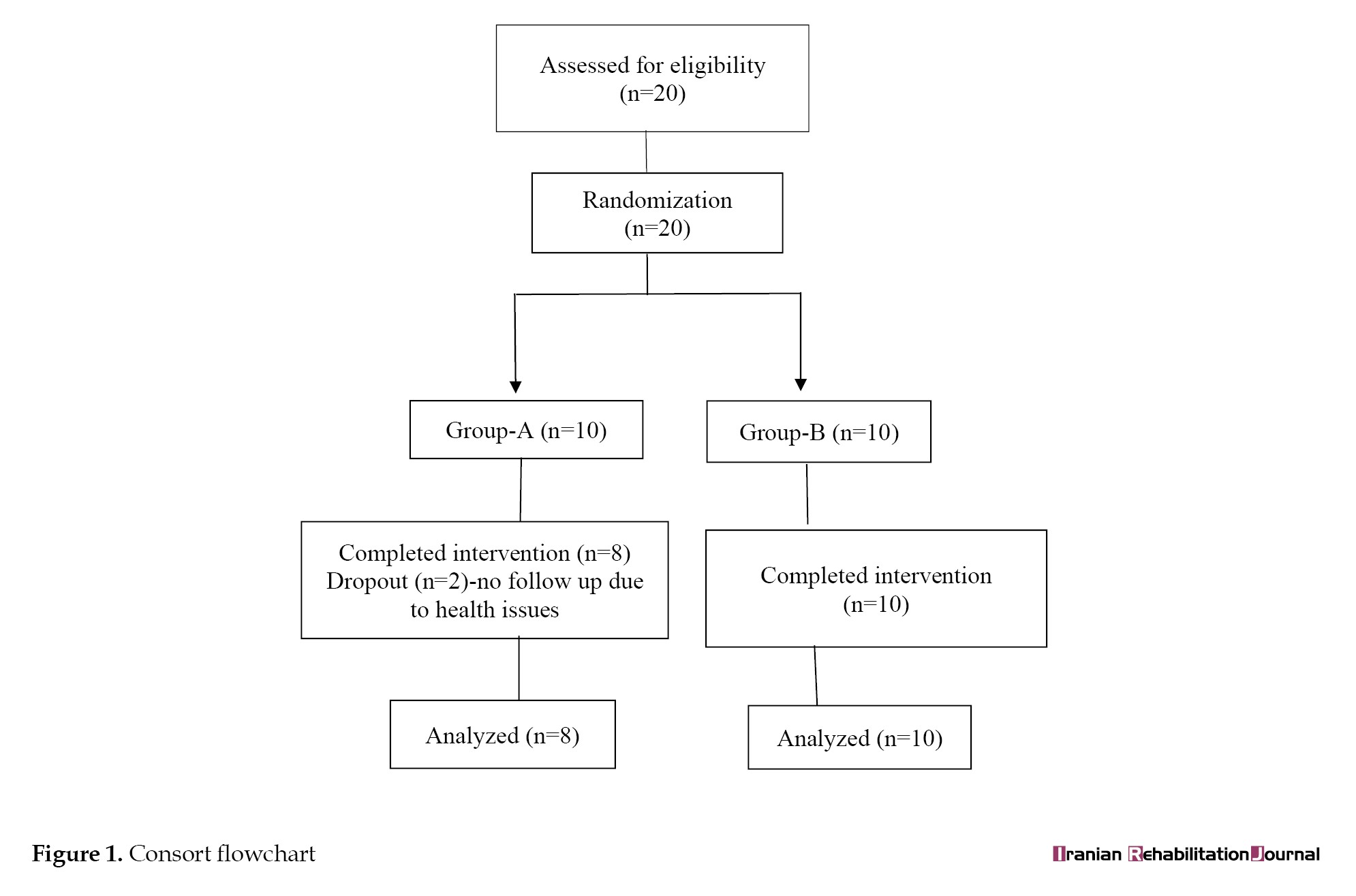
This experimental study employed a pre-test, post-test design to evaluate the effect of WBV on balance in children with spastic diplegic CP. A total of 20 participants, selected through convenience sampling, were assigned to two groups of 10 children each, designated as Group A and Group B. Participants were randomly allocated to the two groups using a simple randomization method (lottery method) to minimize selection bias and ensure equal distribution. Participants were selected based on strict adherence to the inclusion criteria. Informed consent was obtained from all parents or caregivers.
Sample size calculation
The sample size was determined based on previous studies evaluating WBV in children with spastic diplegic CP. Assuming an effect size of d=1.0, a significance level of α=0.05, and 80% statistical power (β=0.20), a minimum of 8 participants per group was required. To account for potential dropouts, 10 participants were recruited per group, resulting in a total of 20 children. Post hoc power analysis confirmed a study power of >95%, indicating sufficient sample size to detect statistically significant differences in balance outcomes.
Participants
Twenty diagnosed children with spastic diplegic CP, including both boys and girls, were selected from the Pediatric Physiotherapy Department at SRM Medical College Hospital and Research Center, Kattankulathur, and the EXE_SIO Physiotherapy Clinic, Korattur, Chennai. The Children were diagnosed by a pediatric neurologist. Participants were aged between 6 and 12 years and had pediatric balance scale (PBS) scores ranging from 21 to 40. All children were capable of understanding and following simple instructions. Children were excluded if they had any recent injuries or fractures to the upper or lower limbs, other types of CP, metal implants in the spine or lower limbs, recent surgeries, severe visual or hearing impairments, recent botulinum toxin treatment, or any congenital cardiac or severe respiratory conditions.
Materials
PBS: The PBS is highly valid and reliable for assessing balance in children with CP [17]. It consists of 14 distinct tasks, each scored from 0 (indicating poor performance) to 4 points (indicating excellent performance), with a maximum possible total score of 56 [18]. The scores are interpreted as follows: 41-56 indicates a low fall risk, 21-40 denotes a medium fall risk, and 0-20 reflects a high fall risk.
WBV intervention: WBV was delivered using a Lifelong vibration plate machine (LLM234), which provides side-alternating (pivotal/oscillatory) vibration, where one side of the platform moves upward while the other moves downward, resembling a teeter-totter motion.
Procedure
The Ethics Committee approved the study. Parents or guardians were informed about the study‘s objectives, benefits, and potential risks, and informed consent was obtained. Demographic data were then collected using assessment forms. Before the intervention began, the children were educated about the exercises, and familiarization was provided, including video demonstrations to aid understanding. Pre-tests were performed using the PBS. Twenty children with spastic diplegic CP, both boys and girls, were conveniently assigned to two groups.
Group A (experimental group)
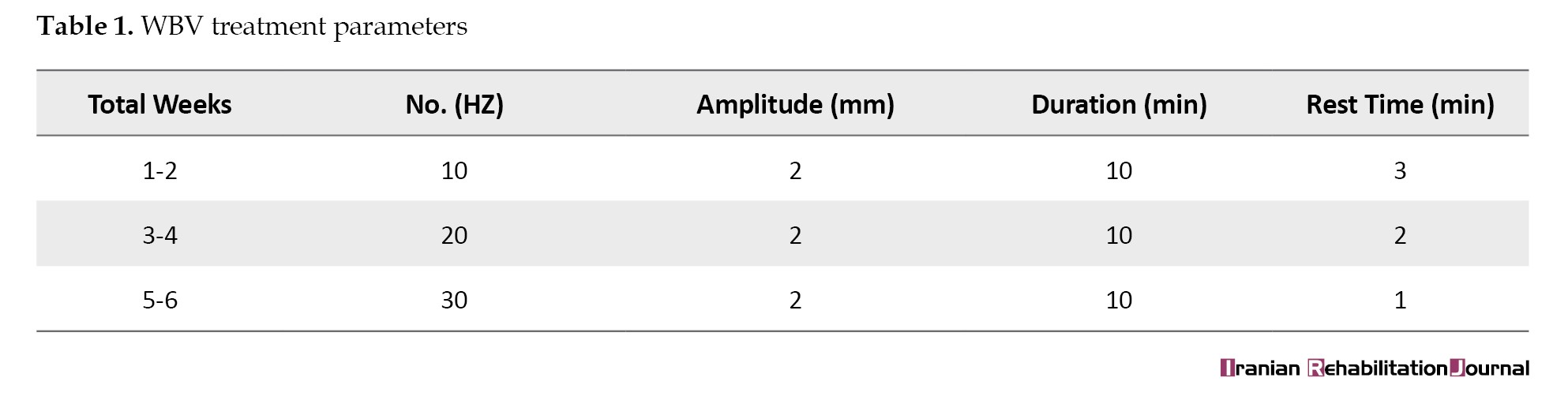
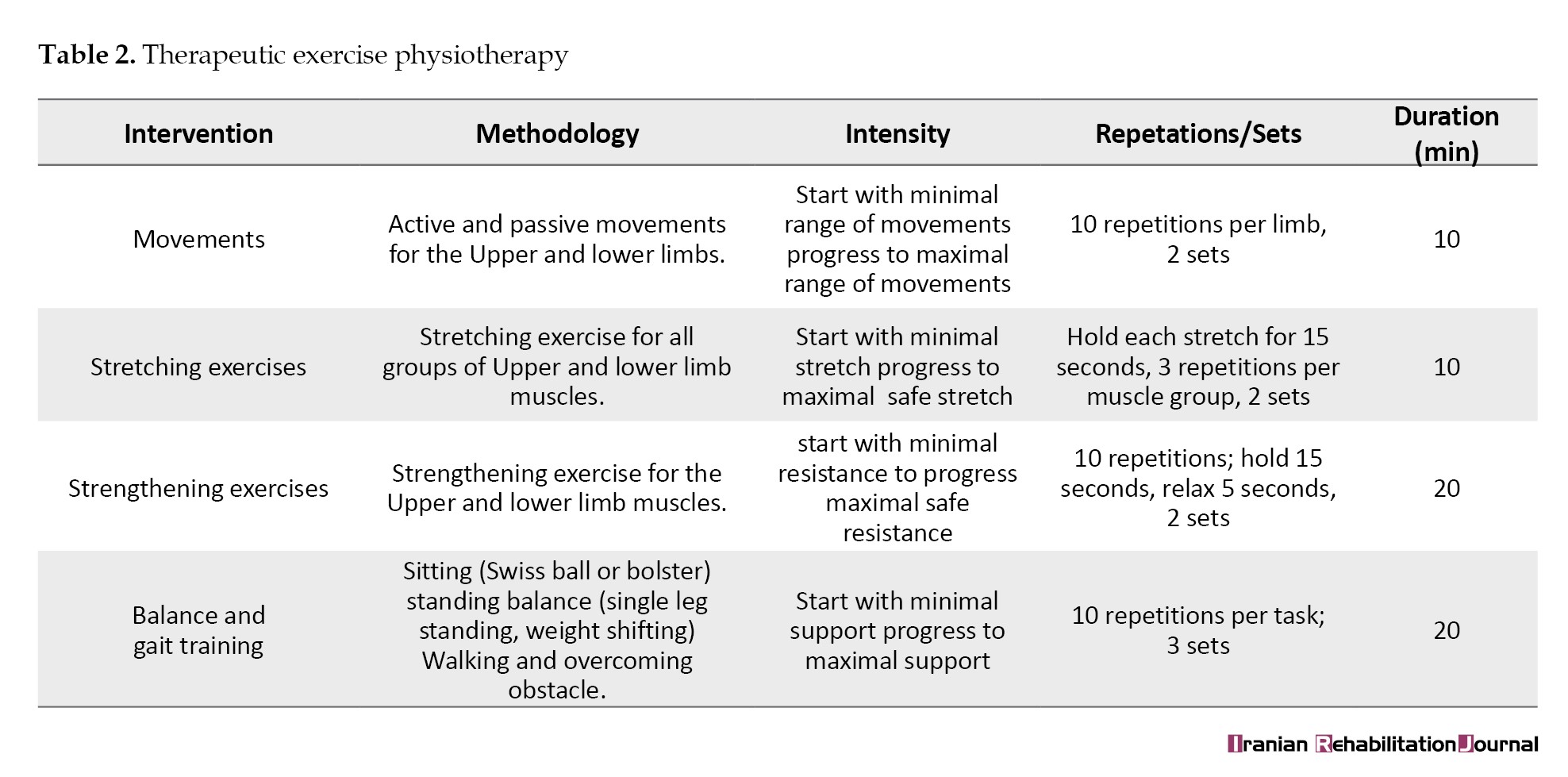
Ten children were included in Group A. Prior to treatment, the children were made to adopt the WBV for one week. After the familiarization, WBV training was provided for 10 minutes per session (Table 1) along with regular therapeutic exercise physiotherapy (Table 2) for one hour daily, three days per week for six weeks.
The duration was selected based on previous studies showing that neuromuscular adaptations and improvements in balance and functional mobility in children with spastic diplegic CP can be achieved within this timeframe, while ensuring participant adherence and practical feasibility.
WBV
The children were made to stand on a vibration platform with footwear, with the support of a therapist behind. The apparatus was turned on with a frequency of 10 Hz, an amplitude of 2 mm, and a duration of 5 minutes. After 5 minutes, the vibration was turned off. The children rested for 1 minute. Then, they were asked to stand on the vibration platform with the same parameters for 5 minutes. Thus, the total time spent for the WBV in each session was 10 minutes. As the child gets adapted and familiarised, the frequency is increased every week (Table 1).
Group B (control group)
Ten children were included in Group B and received regular therapeutic exercise physiotherapy for one hour daily, three days per week for six weeks, which was chosen based on evidence that this duration is sufficient to produce measurable improvements in balance and functional mobility in children with spastic diplegic CP. The therapeutic exercises included a neurodevelopmental approach, strengthening exercises, proprioceptive training, facilitation of righting and equilibrium to improve postural mechanisms and balance, and gait training (Table 2).
After the six-week training session, post-test assessments were conducted for both groups using the PBS. The collected data were tabulated and analyzed using both descriptive and inferential statistics. All parameters were assessed using SPSS software, version 20.
Results
Participants’ characteristics
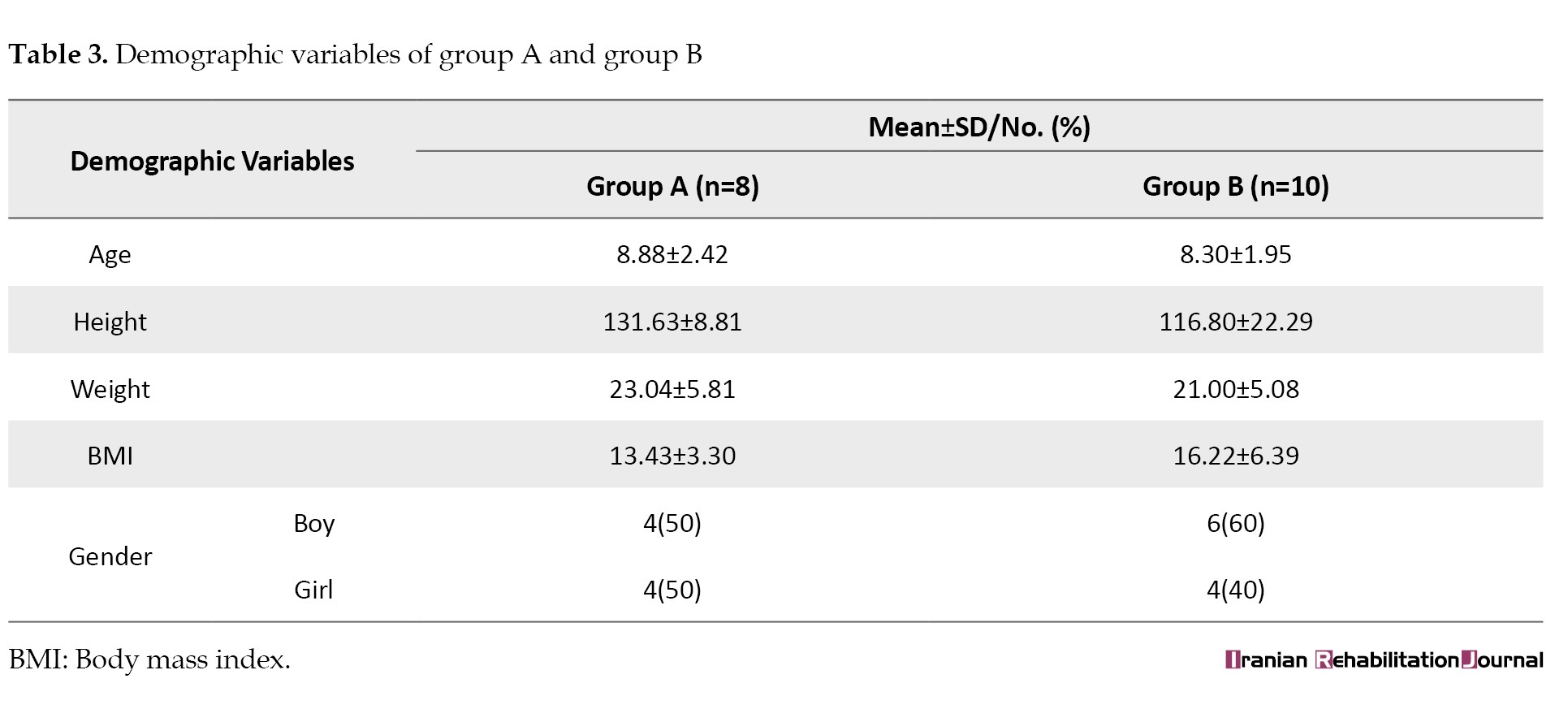
A total of 18 children with spastic diplegic CP completed the study. Group A included four boys and four girls, while Group B included six boys and four girls. The mean age of participants in Group A was 8.88±2.42 years, and in Group B, 8.30±1.95 years. The mean height was 131.63±8.81 cm in Group A and 116.80±22.29 cm in Group B, while the mean weight was 23.04±5.81 kg and 21.00±5.08 kg, respectively. The mean body mass index (BMI) was 13.43±3.30 kg/m² in Group A and 16.22±6.39 kg/m² in Group B.
Demographic characteristics, including age, height, weight, and BMI, were compared between groups using the independent t-test, and gender distribution was analyzed using the chi-square test. No significant differences were found between groups (P>0.05), indicating that both groups were comparable at baseline (Table 3).
Two participants were excluded from the analysis due to irregular attendance and health issues, which prevented them from completing the intervention. Therefore, data from 18 participants were included in the final evaluation.
Baseline balance comparison
At baseline, the mean PBS score was 31.63±4.27 in Group A and 23.40±2.07 in Group B. An independent t-test revealed a significant difference between the groups (P<0.05), indicating that Group A had higher baseline balance scores. To control for this initial difference, analysis of covariance (ANCOVA) was conducted using pre-test scores as a covariate in the final analysis.
Normality of data
The normality of PBS scores was assessed using the Shapiro–Wilk test. The results showed that the data were normally distributed in both groups (P>0.05), supporting the use of parametric statistical methods.
Within-group comparisons
In Group A (WBV combined with therapeutic exercises), the mean PBS score increased from 31.63±4.27 at pre-test to 39.38±4.14 at post-test. A paired t-test demonstrated a statistically significant improvement in balance within the group (P<0.001, Table 4).
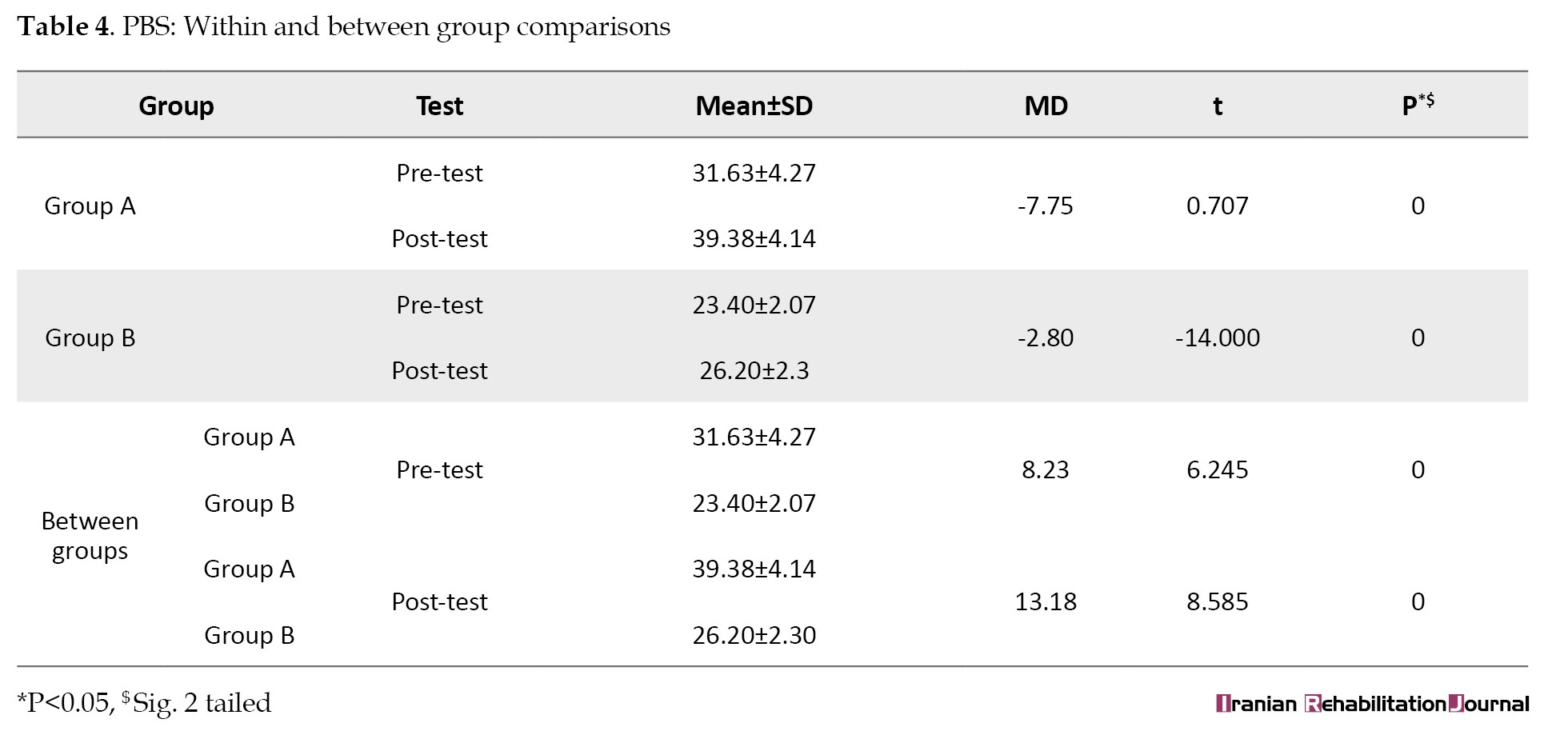
In Group B (therapeutic exercises only), the mean PBS score increased from 23.4±2.07 at pre-test to 26.20±2.30 at post-test. A paired t-test also showed a significant improvement within the group (P<0.001, Table 4).
Between-group comparison (post-test)
After adjusting for baseline differences using ANCOVA, Group A showed significantly higher post-test PBS scores than Group B (adjusted mean: 39.38 vs 26.20, P<0.001, Table 4). This indicates that WBV combined with therapeutic exercises produced significant improvements in balance compared to therapeutic exercises.
Discussion
This study aimed to evaluate the effects of a six-week WBV training protocol, combined with therapeutic exercises, on balance in children with spastic diplegic CP. The results indicated a significant improvement in balance for both groups, with Group A (therapeutic exercise and WBV) showing a greater enhancement compared to Group B (therapeutic exercise) (Figure1).
Cerebral palsy (CP) refers to a group of permanent, non-progressive disorders of muscle tone, movement, and posture resulting from damage to the developing brain. It is categorized under chronic motor disability in children [1].
According to research findings, the prevalence of CP among children is estimated to range from approximately 15% to 20%, and the incidence rate is reported to be approximately 2 to 3 cases per 1,000 live births. Spastic CP is the most prevalent type of CP, comprising 70-75% of the population, while dyskinetic CP accounts for 10-15%, and ataxic CP less than 5%. Regarding the topographical distribution of CP, diplegia is the most prevalent subtype, representing approximately 30-40% of cases, followed by hemiplegia at 20% to 30%, and quadriplegia at 10-15%. These findings shed light on the distribution patterns of CP subtypes and are crucial for devising appropriate interventions and care strategies for affected individuals [2].
Spastic diplegia, like other forms of CP, results from brain injury that may occur before, during, or shortly after birth. Infants who are born prematurely or have a low birth weight have a higher likelihood of developing spastic diplegic CP [3, 4].
Spastic CP mostly affects balance because of increased muscle tone and stiffness caused by brain damage in the motor control centers. This leads to difficulties in coordinating muscle movements and maintaining stability. Individuals may experience an unsteady gait, making it challenging to maintain an upright posture while standing or walking. Asymmetrical movements due to spasticity can further impact balance. However, the specific impact on balance varies depending on the severity and distribution of spasticity in each case [5, 6]. In the context of children with CP, it is noteworthy that they may exhibit distinct biomechanical deviations while walking. These deviations manifest as a reduced degree of knee flexion during the swing phase of gait, hyperextension of the knee, or excessive flexion (crouch) during the stance phase of gait, limited dorsiflexion, and leg crossing (scissoring). During the swing phase, internal hip rotation and excess hip adduction, in conjunction with challenges in maintaining balance and reduced trunk control, can result in modifications to foot placement and the appropriate alignment of the body‘s center of mass. Consequently, these deviations lead to decreased stability and an increased risk of falling [7].
Physical therapy (PT) plays a pivotal and significant role in the management of spastic diplegic CP. Its primary emphasis lies in enhancing function, facilitating movement, and maximizing the child‘s inherent capabilities. By employing physical interventions, PT endeavors to foster, sustain, and reinstate the child‘s physical, psychological, and social wellbeing. Moreover, physiotherapists actively engage in instructing parents on effective techniques and providing guidance on the appropriate usage of mobility aids. These interventions are intended to optimize the child‘s overall development and independence, both within clinical settings and in the comfort of their own home [8].
In the realm of PT, a multitude of advanced approaches are employed to meet the specific needs of patients. Among these notable techniques are the Bobath method, sensory integration therapy, proprioceptive neuromuscular facilitation, and the Brunnstrom approach. Therapists adeptly utilize techniques, such as cryotherapy (cold therapy), thermotherapy (heat therapy), strategic positioning, targeted stretching exercises, and the application of orthotic devices. The judicious incorporation of these diverse modalities is geared towards optimizing the outcomes and promoting the well-being of the individuals undergoing treatment [9]. A selection of advanced methodologies implemented approaches, namely, constraints-induced therapy, neuromuscular electrical stimulation, Vojta method, body weight support treadmill training, exercise therapy, hydrotherapy, and conductive education [10].
Whole-body vibration (WBV) is a relatively new intervention that offers a unique way to improve proprioceptive acuity. It specifically applies vibration to improve motor skills, balance, and bone density. Notably, the application of vibration can directly activate muscle spindles and Golgi tendon organs, rendering it a valuable tool for proprioceptive and balance enhancement. This innovative technique holds promising potential for augmenting various aspects of physical function and performance [11, 12].
WBV constitutes a comprehensive approach that engages the entire body in experiencing vibrations through a specialized vibrating platform. This modality elicits a tonic vibration reflex, in which the mechanical stimuli delivered by the vibrating platform are transmitted to the body, resulting in the stimulation of muscle spindles and the activation of alpha motor neurons. This, in turn, triggers reflexive muscle contractions, leading to lengthened muscle activity and strengthened weaker muscles. Consequently, whole body vibration plays a pivotal role in reestablishing balance, ultimately enhancing gait and posture in individuals [13].
To date, only a limited number of studies have investigated the potential impact of WBV on spastic diplegic children concerning various aspects, such as reducing lower extremity spasticity, improving muscle strength, increasing joint mobility, promoting postural stability, enhancing balance ability, and refining gross motor ability and motor performance [14-16]. Several studies have demonstrated that various treatments can improve balance in children with spastic diplegic CP. While some research has investigated WBV for balance enhancement, this approach has not been explored in India, particularly for the middle childhood age group. This study aimed to evaluate the effects of WBV on balance in children with spastic diplegic CP and aligns with the third sustainable development goal of promoting good health and well-being.
Materials and Methods
This experimental study employed a pre-test, post-test design to evaluate the effect of WBV on balance in children with spastic diplegic CP. A total of 20 participants, selected through convenience sampling, were assigned to two groups of 10 children each, designated as Group A and Group B. Participants were randomly allocated to the two groups using a simple randomization method (lottery method) to minimize selection bias and ensure equal distribution. Participants were selected based on strict adherence to the inclusion criteria. Informed consent was obtained from all parents or caregivers.
Sample size calculation
The sample size was determined based on previous studies evaluating WBV in children with spastic diplegic CP. Assuming an effect size of d=1.0, a significance level of α=0.05, and 80% statistical power (β=0.20), a minimum of 8 participants per group was required. To account for potential dropouts, 10 participants were recruited per group, resulting in a total of 20 children. Post hoc power analysis confirmed a study power of >95%, indicating sufficient sample size to detect statistically significant differences in balance outcomes.
Participants
Twenty diagnosed children with spastic diplegic CP, including both boys and girls, were selected from the Pediatric Physiotherapy Department at SRM Medical College Hospital and Research Center, Kattankulathur, and the EXE_SIO Physiotherapy Clinic, Korattur, Chennai. The Children were diagnosed by a pediatric neurologist. Participants were aged between 6 and 12 years and had pediatric balance scale (PBS) scores ranging from 21 to 40. All children were capable of understanding and following simple instructions. Children were excluded if they had any recent injuries or fractures to the upper or lower limbs, other types of CP, metal implants in the spine or lower limbs, recent surgeries, severe visual or hearing impairments, recent botulinum toxin treatment, or any congenital cardiac or severe respiratory conditions.
Materials
PBS: The PBS is highly valid and reliable for assessing balance in children with CP [17]. It consists of 14 distinct tasks, each scored from 0 (indicating poor performance) to 4 points (indicating excellent performance), with a maximum possible total score of 56 [18]. The scores are interpreted as follows: 41-56 indicates a low fall risk, 21-40 denotes a medium fall risk, and 0-20 reflects a high fall risk.
WBV intervention: WBV was delivered using a Lifelong vibration plate machine (LLM234), which provides side-alternating (pivotal/oscillatory) vibration, where one side of the platform moves upward while the other moves downward, resembling a teeter-totter motion.
Procedure
The Ethics Committee approved the study. Parents or guardians were informed about the study‘s objectives, benefits, and potential risks, and informed consent was obtained. Demographic data were then collected using assessment forms. Before the intervention began, the children were educated about the exercises, and familiarization was provided, including video demonstrations to aid understanding. Pre-tests were performed using the PBS. Twenty children with spastic diplegic CP, both boys and girls, were conveniently assigned to two groups.
Group A (experimental group)
Ten children were included in Group A. Prior to treatment, the children were made to adopt the WBV for one week. After the familiarization, WBV training was provided for 10 minutes per session (Table 1) along with regular therapeutic exercise physiotherapy (Table 2) for one hour daily, three days per week for six weeks.
The duration was selected based on previous studies showing that neuromuscular adaptations and improvements in balance and functional mobility in children with spastic diplegic CP can be achieved within this timeframe, while ensuring participant adherence and practical feasibility.
WBV
The children were made to stand on a vibration platform with footwear, with the support of a therapist behind. The apparatus was turned on with a frequency of 10 Hz, an amplitude of 2 mm, and a duration of 5 minutes. After 5 minutes, the vibration was turned off. The children rested for 1 minute. Then, they were asked to stand on the vibration platform with the same parameters for 5 minutes. Thus, the total time spent for the WBV in each session was 10 minutes. As the child gets adapted and familiarised, the frequency is increased every week (Table 1).
Group B (control group)
Ten children were included in Group B and received regular therapeutic exercise physiotherapy for one hour daily, three days per week for six weeks, which was chosen based on evidence that this duration is sufficient to produce measurable improvements in balance and functional mobility in children with spastic diplegic CP. The therapeutic exercises included a neurodevelopmental approach, strengthening exercises, proprioceptive training, facilitation of righting and equilibrium to improve postural mechanisms and balance, and gait training (Table 2).
After the six-week training session, post-test assessments were conducted for both groups using the PBS. The collected data were tabulated and analyzed using both descriptive and inferential statistics. All parameters were assessed using SPSS software, version 20.
Results
Participants’ characteristics
A total of 18 children with spastic diplegic CP completed the study. Group A included four boys and four girls, while Group B included six boys and four girls. The mean age of participants in Group A was 8.88±2.42 years, and in Group B, 8.30±1.95 years. The mean height was 131.63±8.81 cm in Group A and 116.80±22.29 cm in Group B, while the mean weight was 23.04±5.81 kg and 21.00±5.08 kg, respectively. The mean body mass index (BMI) was 13.43±3.30 kg/m² in Group A and 16.22±6.39 kg/m² in Group B.
Demographic characteristics, including age, height, weight, and BMI, were compared between groups using the independent t-test, and gender distribution was analyzed using the chi-square test. No significant differences were found between groups (P>0.05), indicating that both groups were comparable at baseline (Table 3).
Two participants were excluded from the analysis due to irregular attendance and health issues, which prevented them from completing the intervention. Therefore, data from 18 participants were included in the final evaluation.
Baseline balance comparison
At baseline, the mean PBS score was 31.63±4.27 in Group A and 23.40±2.07 in Group B. An independent t-test revealed a significant difference between the groups (P<0.05), indicating that Group A had higher baseline balance scores. To control for this initial difference, analysis of covariance (ANCOVA) was conducted using pre-test scores as a covariate in the final analysis.
Normality of data
The normality of PBS scores was assessed using the Shapiro–Wilk test. The results showed that the data were normally distributed in both groups (P>0.05), supporting the use of parametric statistical methods.
Within-group comparisons
In Group A (WBV combined with therapeutic exercises), the mean PBS score increased from 31.63±4.27 at pre-test to 39.38±4.14 at post-test. A paired t-test demonstrated a statistically significant improvement in balance within the group (P<0.001, Table 4).
In Group B (therapeutic exercises only), the mean PBS score increased from 23.4±2.07 at pre-test to 26.20±2.30 at post-test. A paired t-test also showed a significant improvement within the group (P<0.001, Table 4).
Between-group comparison (post-test)
After adjusting for baseline differences using ANCOVA, Group A showed significantly higher post-test PBS scores than Group B (adjusted mean: 39.38 vs 26.20, P<0.001, Table 4). This indicates that WBV combined with therapeutic exercises produced significant improvements in balance compared to therapeutic exercises.
Discussion
This study aimed to evaluate the effects of a six-week WBV training protocol, combined with therapeutic exercises, on balance in children with spastic diplegic CP. The results indicated a significant improvement in balance for both groups, with Group A (therapeutic exercise and WBV) showing a greater enhancement compared to Group B (therapeutic exercise) (Figure1).
Prior to the intervention, the children received thorough education and familiarization through video demonstrations to ensure they understood and could correctly perform the exercises. Overall adherence was high, with 18 out of 20 participants completing the study, while two children withdrew due to irregular attendance and health issues. This suggests that WBV is generally feasible and well-tolerated in this population. Initial challenges with WBV were overcome through increased supervision and support, which also enhanced participant engagement and enjoyment of the sessions.
The improvements in balance observed in this study can be attributed to neuromuscular activation induced by WBV. The vibration stimulus likely activated muscle spindles and reflexive contractions, enhancing muscle tone, coordination, and proprioceptive feedback factors critical for postural control and functional balance. Therapeutic exercises, including techniques from neurodevelopmental therapy (NDT) and neuromuscular stimulation, likely acted synergistically to further improve these outcomes [19]. Repeated WBV exposure may also have enhanced motor control, postural awareness, and proprioceptive feedback, while increased blood circulation contributed to muscle relaxation and reduced spasticity [20].
These findings are consistent with recent studies reporting positive effects of WBV on balance and motor function in children with CP. Hussein et al. (2025) observed significant improvements in muscle tone and sensory-motor function following WBV in children with spastic diplegic CP, [21] while Okur et al. (2025) reported enhancements in gait and balance in a similar population [22]. Earlier research has produced mixed results; for instance, Ibrahim et al. (2014) found that WBV improved muscle strength and reduced spasticity but did not significantly affect walking balance [14]. This highlights the need for further research to optimize WBV protocols and clarify its mechanisms.
The therapeutic exercise program used in this study aligns with the findings of Gbonjubola et al. (2021), who validated various interventions, including NDT, neuromuscular electrical stimulation, and exercise therapy, for managing CP [10]. Additionally, Ko et al. (2016) emphasized that WBV can improve ankle joint perception and gait characteristics, underscoring the importance of long-term follow-up [11]. The current study further supports these observations, demonstrating that WBV combined with therapeutic exercises is safe and effective for enhancing balance in children with spastic diplegic CP.
This study primarily addressed the body functions and structures and activity domains of the international classification of functioning, disability, and health (ICF) in relation to balance. The limitations include the use of a single outcome measure, a small sample size, and a short intervention duration. Consequently, these findings should be interpreted with caution. Future research should include larger samples, extended follow-up periods, and multiple outcome measures to assess the sustainability of WBV therapy. Moreover, incorporating factors related to participation, environmental influences, and personal aspects from the ICF framework would provide a more comprehensive evaluation. Expanding research to include other types of CP, different neurological conditions, various age groups, and diverse WBV parameters could further enhance the understanding and clinical application of this therapeutic approach.
In conclusion, the six-week WBV training protocol combined with therapeutic exercises led to meaningful improvements in balance among children with spastic diplegic CP. These results add to the growing evidence supporting WBV as a valuable adjunctive therapy, while highlighting the need for future studies to refine its protocols and investigate long-term outcomes.
Ethical Considerations
Compliance with ethical guidelines
This study was approved by the Ethics Committee of SRM Medical College and Research Center Potheri, India (Code: SRMIEC-ST0523-670 on July 5, 2023). Additionally, the study is registered with the Clinical Trial Registry-India (Code: CTRI/2024/01/061595).
Funding
This study was extracted from master thesis of Malathi S, approved by College of Physiotherapy, SRM Institute of Science and Technology, Kattankulathur, India. The study received no funding from any public, commercial, or not-for-profit funding agencies.
Authors' contributions
Methodology: Malathi S; Data collection, visualization and writing the original draft: Malathi S; Supervision: D. Malarvizhi; Conceptualization, Review, editing, software, validation, formal analysis, investigation, resources and project administration: All authors.
Conflict of interest
The authors declared no conflict of interest.
Acknowledgments
The authors acknowledge and appreciate the children who participated in the study, as well as the professors and staff members of SRM College of Physiotherapy for their assistance and support throughout the research.
The improvements in balance observed in this study can be attributed to neuromuscular activation induced by WBV. The vibration stimulus likely activated muscle spindles and reflexive contractions, enhancing muscle tone, coordination, and proprioceptive feedback factors critical for postural control and functional balance. Therapeutic exercises, including techniques from neurodevelopmental therapy (NDT) and neuromuscular stimulation, likely acted synergistically to further improve these outcomes [19]. Repeated WBV exposure may also have enhanced motor control, postural awareness, and proprioceptive feedback, while increased blood circulation contributed to muscle relaxation and reduced spasticity [20].
These findings are consistent with recent studies reporting positive effects of WBV on balance and motor function in children with CP. Hussein et al. (2025) observed significant improvements in muscle tone and sensory-motor function following WBV in children with spastic diplegic CP, [21] while Okur et al. (2025) reported enhancements in gait and balance in a similar population [22]. Earlier research has produced mixed results; for instance, Ibrahim et al. (2014) found that WBV improved muscle strength and reduced spasticity but did not significantly affect walking balance [14]. This highlights the need for further research to optimize WBV protocols and clarify its mechanisms.
The therapeutic exercise program used in this study aligns with the findings of Gbonjubola et al. (2021), who validated various interventions, including NDT, neuromuscular electrical stimulation, and exercise therapy, for managing CP [10]. Additionally, Ko et al. (2016) emphasized that WBV can improve ankle joint perception and gait characteristics, underscoring the importance of long-term follow-up [11]. The current study further supports these observations, demonstrating that WBV combined with therapeutic exercises is safe and effective for enhancing balance in children with spastic diplegic CP.
This study primarily addressed the body functions and structures and activity domains of the international classification of functioning, disability, and health (ICF) in relation to balance. The limitations include the use of a single outcome measure, a small sample size, and a short intervention duration. Consequently, these findings should be interpreted with caution. Future research should include larger samples, extended follow-up periods, and multiple outcome measures to assess the sustainability of WBV therapy. Moreover, incorporating factors related to participation, environmental influences, and personal aspects from the ICF framework would provide a more comprehensive evaluation. Expanding research to include other types of CP, different neurological conditions, various age groups, and diverse WBV parameters could further enhance the understanding and clinical application of this therapeutic approach.
In conclusion, the six-week WBV training protocol combined with therapeutic exercises led to meaningful improvements in balance among children with spastic diplegic CP. These results add to the growing evidence supporting WBV as a valuable adjunctive therapy, while highlighting the need for future studies to refine its protocols and investigate long-term outcomes.
Ethical Considerations
Compliance with ethical guidelines
This study was approved by the Ethics Committee of SRM Medical College and Research Center Potheri, India (Code: SRMIEC-ST0523-670 on July 5, 2023). Additionally, the study is registered with the Clinical Trial Registry-India (Code: CTRI/2024/01/061595).
Funding
This study was extracted from master thesis of Malathi S, approved by College of Physiotherapy, SRM Institute of Science and Technology, Kattankulathur, India. The study received no funding from any public, commercial, or not-for-profit funding agencies.
Authors' contributions
Methodology: Malathi S; Data collection, visualization and writing the original draft: Malathi S; Supervision: D. Malarvizhi; Conceptualization, Review, editing, software, validation, formal analysis, investigation, resources and project administration: All authors.
Conflict of interest
The authors declared no conflict of interest.
Acknowledgments
The authors acknowledge and appreciate the children who participated in the study, as well as the professors and staff members of SRM College of Physiotherapy for their assistance and support throughout the research.
References
- Ghai OP, Gupta P, Paul VK. Ghai essential pediatrics. 9th ed. New Delhi: CBS Publishers and Distributors; 2019. [Link]
- Patel DR, Bovid KM, Rausch R, Ergun-Longmire B, Goetting M, Merrick J. Cerebral palsy in children: A clinical practice review. Current Problems in Pediatric and Adolescent Health Care. 2024; 54(11):101673. [DOI:10.1016/j.cppeds.2024.101673] [PMID]
- Basaran A, Kilinc Z, Sari H, Gunduz E. Etiological risk factors in children with cerebral palsy. Medicine(Baltimore). 2023; 102(15):e33479. [DOI:10.1097/MD.0000000000033479] [PMID]
- Gowda VK. Recent advances in cerebral palsy. Karnataka Paediatric Journal. 2020; 35(1):4-18. [DOI:10.25259/KPJ_1_2020]
- Panibatla S, Kumar V, Narayan A. Relationship between trunk control and balance in children with spastic cerebral palsy: A cross-sectional study. Journal of Clinical and Diagnostic Research. 2017; 11(9):YC05-8. [DOI:10.7860/JCDR/2017/28388.10649] [PMID]
- Bhilwade A, Ganvir S. Effect of spasticity on gait parameters and physiological cost index in patients with spastic cerebral palsy. International Journal of Science and Research. 2020; 9(9):1475-8. [Link]
- Bonanno M, Militi A, La Fauci Belponer F, De Luca R, Leonetti D, Quartarone A, et al. Rehabilitation of gait and balance in cerebral palsy: A scoping review on the use of robotics with biomechanical implications. Journal of Clinical Medicine. 2023; 12(9):3278. [DOI:10.3390/jcm12093278] [PMID]
- Anttila H, Autti-Ramo I, Suoranta J, Makela M, Malmivaara A. Effectiveness of physical therapy interventions for children with cerebral palsy: A systematic review. BMC Pediatrics. 2008; 8:14. [DOI:10.1186/1471-2431-8-14] [PMID]
- Shamsoddini A, Amirsalari S, Hollisaz MT, Rahimnia A, Khatibi-Aghda A. Management of spasticity in children with cerebral palsy. Iranian Journal of Pediatrics. 2014; 24(4):345-51. [PMID]
- Gbonjubola YT, Muhammad DG, Elisha AT. Physiotherapy management of children with cerebral palsy. Adesh University Journal of Medical Sciences & Research. 2021; 3(2):64-8. [DOI:10.25259/AUJMSR_29_2021]
- Ko MS, Sim YJ, Kim DH, Jeon HS. Effects of three weeks of whole-body vibration training on joint-position sense, balance, and gait in children with cerebral palsy: A randomized controlled study. Physiotherapy Canada. 2016; 68(2):99-105. [DOI:10.3138/ptc.2014-77] [PMID]
- Ali MS, Awad AS, Elassal MI. The effect of two therapeutic interventions on balance in children with spastic cerebral palsy: A comparative study. Journal of Taibah University Medical Sciences. 2019; 14(4):350-6. [DOI:10.1016/j.jtumed.2019.05.005] [PMID]
- Pin TW, Butler PB, Purves S. Use of whole body vibration therapy in individuals with moderate severity of cerebral palsy: A feasibility study. BMC Neurology. 2019; 19(1):80. [DOI:10.1186/s12883-019-1307-5] [PMID]
- Ibrahim MM, Eid MA, Moawd SA. Effect of whole-body vibration on muscle strength, spasticity, and motor performance in spastic diplegic cerebral palsy children. Egyptian Journal of Medical Human Genetics. 2014; 15(2):173-9. [DOI:10.1016/j.ejmhg.2014.02.007]
- El-Shamy SM. Effect of whole-body vibration on muscle strength and balance in diplegic cerebral palsy: A randomized controlled trial. American Journal of Physical Medicine & Rehabilitation. 2014; 93(2):114-21. [DOI:10.1097/PHM.0b013e3182a541a4] [PMID]
- Peungsuwan P, Chatchawan U, Donpunha W, Malila P, Sriboonreung T. Different protocols for low whole-body vibration frequency for spasticity and physical performance in children with spastic cerebral palsy. Children (Basel). 2023; 10(3):458. [DOI:10.3390/children10030458] [PMID]
- Yi SH, Hwang JH, Kim SJ, Kwon JY. Validity of Pediatric Balance Scales in children with spastic cerebral palsy. Neuropediatrics. 2012; 43(6):307-13. [DOI:10.1055/s-0032-1327774] [PMID]
- Jeon YJ, Kim GM. Comparison of the psychometric properties of two balance scales in children with cerebral palsy. Journal of Physical Therapy Science. 2016; 28(12):3432-4. [DOI:10.1589/jpts.28.3432] [PMID]
- Kalaoglu E, Bucak OF, Kokce M, Ozkan M, Cetin M, Atasoy M, et al. Whole body vibration activates the tonic vibration reflex during voluntary contraction. Journal of Physical Therapy Science. 2023; 35(6):408-13. [DOI:10.1589/jpts.35.408] [PMID]
- Tekin F, Kavlak E. Short and long-term effects of whole-body vibration on spasticity and motor performance in children with hemiparetic cerebral palsy. Perceptual and Motor Skills. 2021; 128(3):1107-29. [DOI:10.1177/0031512521991095] [PMID]
- Hussein HM, Dakheel N, Alshammari HZM, Alshammari AA, Gabr AM, El-Shamy SM, et al. The impact of whole body vibration on muscle tone and sensory motor function in children with spastic diplegic cerebral palsy. Journal of Multidisciplinary Healthcare. 2025; 18:4353-63. [DOI:10.2147/JMDH.S538583] [PMID]
- Okur EO, Kurt G, Afsar E, Okur I, Saracoglu I, Gokpinar HH. The effects of whole-body vibration on gait and balance in children with diplegic spastic cerebral palsy: A randomized controlled pilot study. Developmental Neurorehabilitation. 2025; 28(2-3):95-102. [DOI:10.1080/17518423.2025.2526354] [PMID]
Article type: Original Research Articles |
Subject:
Physiotherapy
Received: 2025/07/25 | Accepted: 2025/12/7 | Published: 2026/04/1
Received: 2025/07/25 | Accepted: 2025/12/7 | Published: 2026/04/1
Send email to the article author

Copyright © The Author(s);
This is an open access article distributed under the terms of the Creative Commons Attribution-NonCommercial 4.0 (CC-By-NC 4.0), which permits use, distribution, and reproduction in any medium, provided the original work is properly cited and is not used for commercial purposes.
Contact Information
