
988368
Sat, Oct 3, 2026

Volume 24, Issue 2 (June 2026)
Iranian Rehabilitation Journal 2026, 24(2): 177-184 |
Back to browse issues page



Ethics code: KET-1750/UN2.F1/ETIK/PPM.00.02/2024


Download citation:
BibTeX | RIS | EndNote | Medlars | ProCite | Reference Manager | RefWorks
Send citation to:


BibTeX | RIS | EndNote | Medlars | ProCite | Reference Manager | RefWorks
Send citation to:
Sjarqiah U, Nusdwinuringtyas N, Sudarsono N C, Yunihastuti E, Rizka A, Rinaldi I, et al . Elderly Empowerment: Unveiling the Link Between Physical Performance and Daily Activity. Iranian Rehabilitation Journal 2026; 24 (2) :177-184
URL: http://irj.uswr.ac.ir/article-1-2599-en.html
URL: http://irj.uswr.ac.ir/article-1-2599-en.html
Umi Sjarqiah *1  , Nury Nusdwinuringtyas2 , Nani Cahyani Sudarsono3, Evy Yunihastuti4 , Aulia Rizka5 , Ikhwan Rinaldi6 , Maria Regina Rachmawati7 , Ruliando Hasea Purba8 , Siti Chandra Widjanantie9 , Muhammad Syauqi Ridhallah10 , Muhammad Jalaluddin Rumi11
, Nury Nusdwinuringtyas2 , Nani Cahyani Sudarsono3, Evy Yunihastuti4 , Aulia Rizka5 , Ikhwan Rinaldi6 , Maria Regina Rachmawati7 , Ruliando Hasea Purba8 , Siti Chandra Widjanantie9 , Muhammad Syauqi Ridhallah10 , Muhammad Jalaluddin Rumi11
1- Faculty of Medicine, University of Indonesia, Jakarta, Indonesia.
2- Department of Rehabilitation Medicine, Pelayaran Nasional Indonesia Hospital, Jakarta, Indonesia.
3- Department of Community Medicine, Center for Sport and Exercise Studies, Indonesia Medical Education and Researh Institute (IMERI), Jakarta, Indonesia.
4- Allergy and Immunology Division, Department of Internal Medicine, Faculty of Medicine, Cipto Mangunkusumo Hospital (RSCM), University of Indonesia, Jakarta, Indonesia.
5- Geriatric Division, Department of Internal Medicine, Faculty of Medicine, Cipto Mangunkusumo Hospital (RSCM), University of Indonesia, Jakarta, Indonesia.
6- Hematology and Medical Oncology Division, Department of Internal Medicine, Faculty of Medicine, Cipto Mangunkusumo Hospital (RSCM), University of Indonesia, Jakarta, Indonesia.
7- Department of Rehabilitation Medicine, Gunadarma University, Jakarta, Indonesia.
8- Department of Rehabilitation Medicine, Faculty of State University of Jakarta, Jakarta, Indonesia.
9- Department of Rehabilitation Medicine, Persahabatan Hospital, Jakarta, Indonesia.
10- Department of Anatomy, Faculty of Medicine, Faculty of Medicine, Sebelas Maret University, Surakarta, Indonesia.
11- Pondok Kopi Jakarta Islamic Hospital, Jakarta, Indonesia.
2- Department of Rehabilitation Medicine, Pelayaran Nasional Indonesia Hospital, Jakarta, Indonesia.
3- Department of Community Medicine, Center for Sport and Exercise Studies, Indonesia Medical Education and Researh Institute (IMERI), Jakarta, Indonesia.
4- Allergy and Immunology Division, Department of Internal Medicine, Faculty of Medicine, Cipto Mangunkusumo Hospital (RSCM), University of Indonesia, Jakarta, Indonesia.
5- Geriatric Division, Department of Internal Medicine, Faculty of Medicine, Cipto Mangunkusumo Hospital (RSCM), University of Indonesia, Jakarta, Indonesia.
6- Hematology and Medical Oncology Division, Department of Internal Medicine, Faculty of Medicine, Cipto Mangunkusumo Hospital (RSCM), University of Indonesia, Jakarta, Indonesia.
7- Department of Rehabilitation Medicine, Gunadarma University, Jakarta, Indonesia.
8- Department of Rehabilitation Medicine, Faculty of State University of Jakarta, Jakarta, Indonesia.
9- Department of Rehabilitation Medicine, Persahabatan Hospital, Jakarta, Indonesia.
10- Department of Anatomy, Faculty of Medicine, Faculty of Medicine, Sebelas Maret University, Surakarta, Indonesia.
11- Pondok Kopi Jakarta Islamic Hospital, Jakarta, Indonesia.
Keywords: Elderly, Physical performance, Physical activity, Short physical performance battery (SPPB)
Full-Text [PDF 639 kb]
(203 Downloads)
| Abstract (HTML) (1950 Views)
Full-Text: (114 Views)
Introduction
The global demographic shift toward an aging population presents a significant challenge to health systems. This demographic trend requires a proactive approach centered on promotive and preventive care. For older adults, maintaining functional independence is a primary objective to support social participation and quality of life [1]. Functionally healthy elderly women, despite being free of major diseases, still face physiological degenerative processes that affect locomotor capacity and daily physical activity, including decreased muscle mass, strength, and aerobic stamina [2].
Regular physical activity is a cornerstone of healthy aging and serves as an effective preventive measure against chronic diseases and disability. Structured and sustained aerobic and resistance training can restore neuromuscular balance and improve functional capacity [3]. While direct physical activity measurement is often impractical due to technical and economic constraints, there is a clear need for objective and valid performance-based tools. These tools should accurately reflect an elderly person’s activity level.
The short physical performance battery (SPPB), the six-minute walk test (6MWT), and handgrip strength are three such widely used and validated measures in geriatric practice. The SPPB assesses balance, gait, and lower limb strength. The 6MWT evaluates submaximal aerobic capacity. Handgrip strength serves as a reliable indicator of overall muscle strength and functional capacity. In parallel, the physical activity scale for the elderly (PASE) provides a self-reported, quantitative assessment of physical activity that has been widely utilized in international studies of aging populations [4, 5].
A research gap exists regarding the association between these specific performance measures and self-reported physical activity, particularly among functionally healthy older women. Understanding this relationship is crucial for informing clinical decisions and designing effective community-based interventions. Therefore, this study aimed to evaluate the association between the 6MWT, handgrip strength, and SPPB with physical activity, as measured by the PASE. Our findings will help identify the most representative functional indicators for this specific population.
Materials and Methods
This was a cross-sectional study specifically designed to examine the magnitude of association between objective physical performance measures and self-reported physical activity in older women. The research was systematically conducted at the Outpatient Rehabilitation Medicine Unit, Islamic Hospital Jakarta Pondok Kopi. Data collection occurred during a fixed period, from July to September 2024.
The study utilized a convenience sampling strategy to recruit participants. The target population was defined as functionally independent, community-dwelling older women seeking assessment at the clinical site. The minimum sample size was determined a priori using a formula to compare two unpaired numerical groups. This calculation required a minimum enrollment of 68 subjects to achieve the desired power of 80%. The final sample size was 66 participants, as two subjects were lost to follow-up due to non-attendance at the final assessment.
Eligible participants were women aged 60-70 years. This boundary aligns with the global definition from the World Health Organization (WHO), which establishes the elderly population at age 60 [6]. The selection of the upper limit of 70 years was based on evidence that the rate of muscle mass decline, which starts at approximately 1% per year in middle age, drastically increases to approximately 3% per year after age 70 [7]. This age restriction was designed to focus the study on a relatively homogenous group before the phase of accelerated functional loss. The final enrolled sample consisted exclusively of women. This was a pre-specified design choice implemented to ensure a homogenous sample and to control for significant biological and hormonal confounding factors that are known to influence physical performance differently between sexes [8].
The primary outcome variable was the physical activity level, quantified using the total score from the PASE. The primary exposure variables were three objective functional measures. Physical activity was assessed using the PASE questionnaire. This tool is globally recognized as valid and reliable for assessing physical activity in older adults [9]. The version utilized has demonstrated acceptable validity and reliability in the Indonesian language (PASE-INA) within community-dwelling elderly populations [10].
Three objective, performance-based measures were administered in a single session. The SPPB assessed lower-extremity function. This tool is highly validated for predicting future disability and mortality in older adults [11]. It consists of balance, gait speed, and sit-to-stand components. The 6MWT was strictly conducted to evaluate submaximal aerobic capacity. The procedure adhered to standardized American Thoracic Society guidelines, confirming its high reliability and clinical relevance [12]. Handgrip strength was measured using a Jamar hydraulic hand dynamometer. This device is the recognized gold standard for assessing peripheral muscle strength, demonstrating excellent test, re-test reliability [13]. The mean value of three maximal contractions from the dominant hand was recorded and expressed in kilograms (kg).
Descriptive statistics were used to characterize the sample. The PASE score was non-normally distributed. It was subsequently log-transformed prior to analysis to meet the assumptions of normality required for linear regression. Bivariate relationships were evaluated using the Pearson correlation coefficient (r) between the log PASE score and the three performance measures. Variables exhibiting a P≤0.25 were included in the subsequent multivariate linear regression model. This final model reported the unstandardized regression coefficient (β) and the 95% confidence interval (CI). A P≤0.05 was designated as the threshold for statistical significance.
Results
A total of 66 older women participated in the study. Table 1 summarizes the descriptive characteristics of the participants and primary outcome measures.
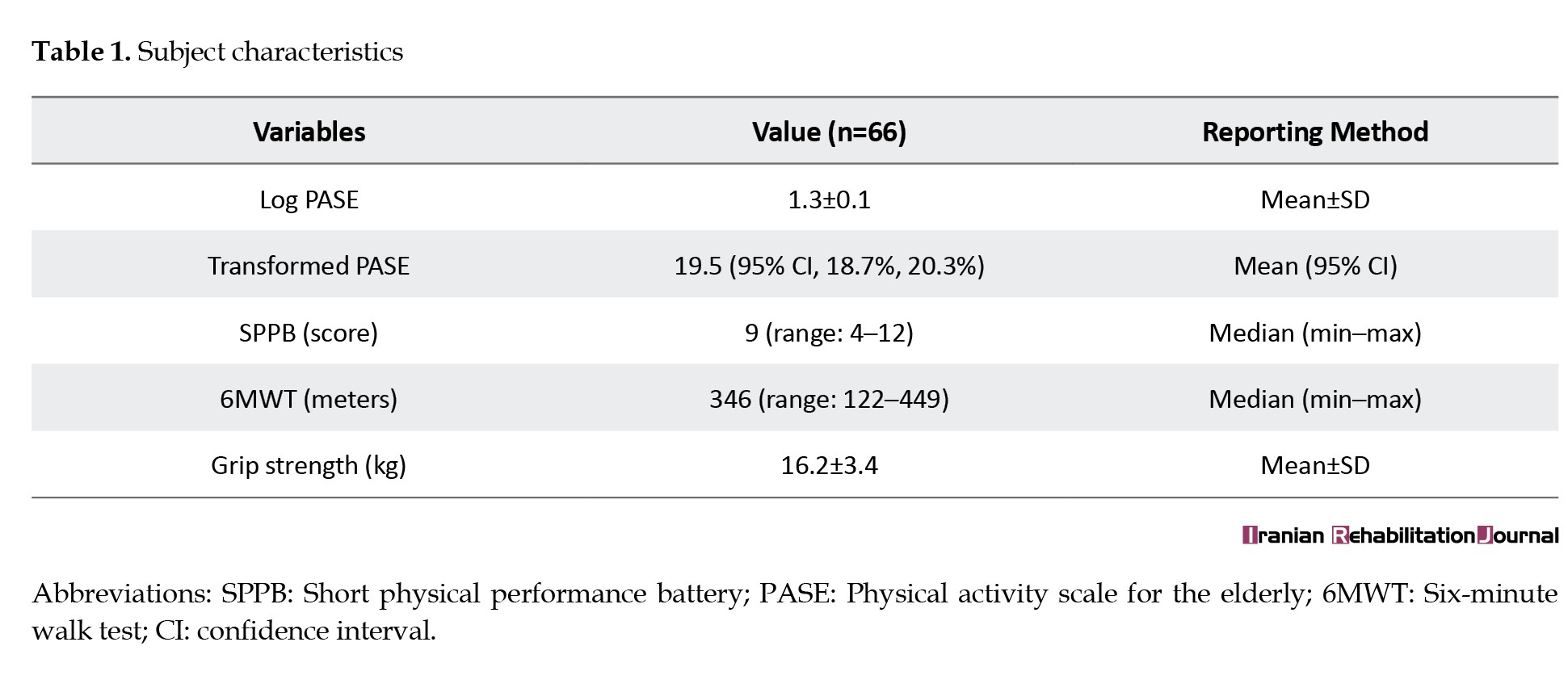
The log-transformed PASE score was normally distributed, with a mean of 1.3±0.1. When back-transformed, the corresponding activity index yielded a mean of 19.5 (95% CI, 18.7%, 20.3%). Functional performance was assessed using the SPPB, the 6MWT, and handgrip strength. SPPB scores had a non-normal distribution, with a median of 9 (range: 4–12). The median 6MWT distance was 346 meters (range: 122–449), and the average grip strength was 16.2±3.4 kg.
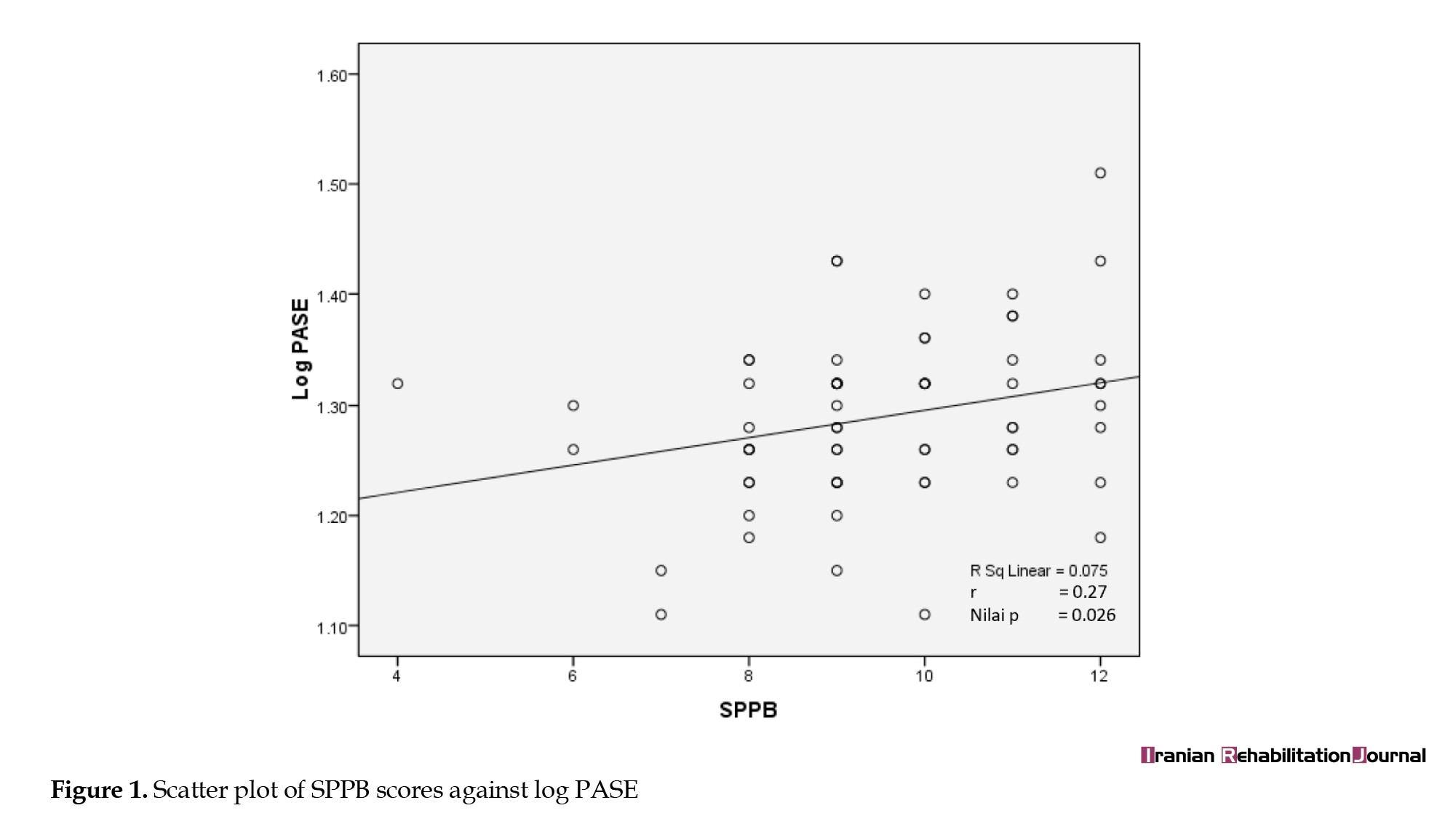
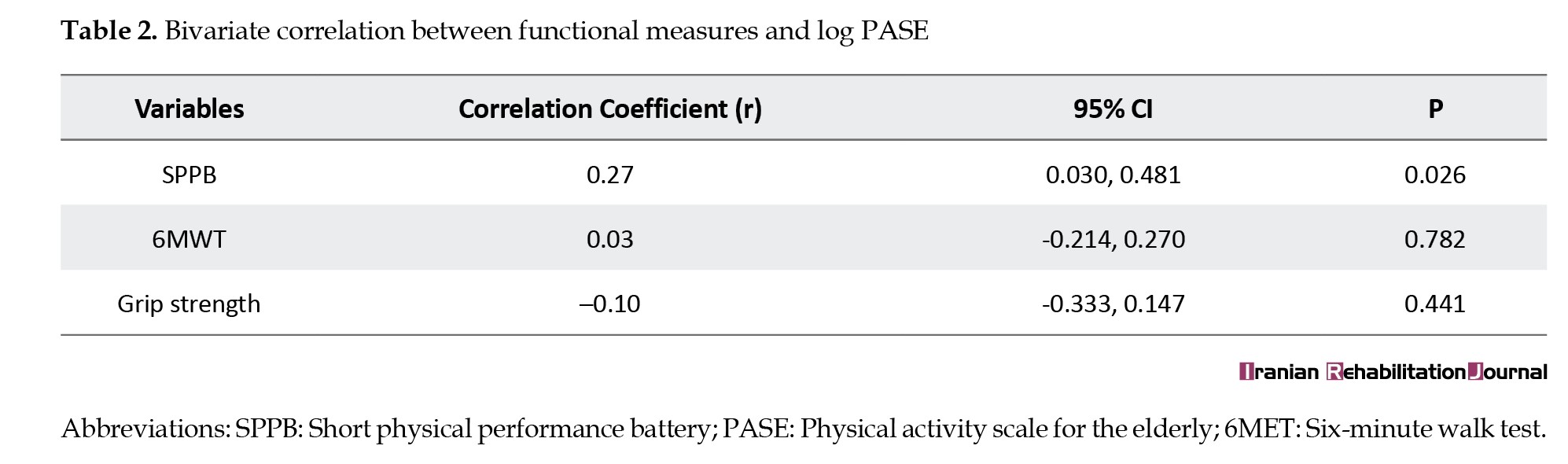
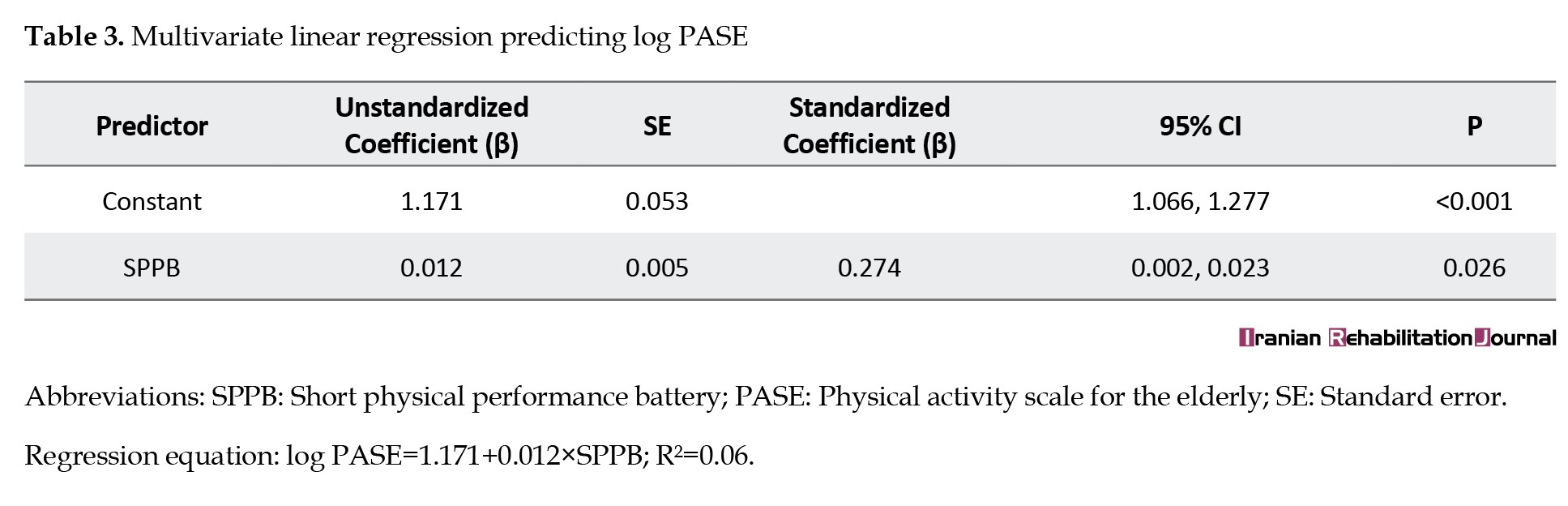
Bivariate Pearson’s correlation analysis was performed between the log PASE score and the three objective physical performance measures. Only the SPPB score demonstrated a statistically significant positive correlation with log PASE (r=0.27, P=0.026). Conversely, neither the 6MWT nor handgrip strength showed any significant associations with self-reported activity. Table 2 shows the results of this initial correlation test, detailing the coefficient (r) and P for each measure and Table 3 outlines the results of the multivariate linear regression predicting log PASE test.
The positive relationship between the SPPB score and the log PASE score is visualized in Figure 1.
The global demographic shift toward an aging population presents a significant challenge to health systems. This demographic trend requires a proactive approach centered on promotive and preventive care. For older adults, maintaining functional independence is a primary objective to support social participation and quality of life [1]. Functionally healthy elderly women, despite being free of major diseases, still face physiological degenerative processes that affect locomotor capacity and daily physical activity, including decreased muscle mass, strength, and aerobic stamina [2].
Regular physical activity is a cornerstone of healthy aging and serves as an effective preventive measure against chronic diseases and disability. Structured and sustained aerobic and resistance training can restore neuromuscular balance and improve functional capacity [3]. While direct physical activity measurement is often impractical due to technical and economic constraints, there is a clear need for objective and valid performance-based tools. These tools should accurately reflect an elderly person’s activity level.
The short physical performance battery (SPPB), the six-minute walk test (6MWT), and handgrip strength are three such widely used and validated measures in geriatric practice. The SPPB assesses balance, gait, and lower limb strength. The 6MWT evaluates submaximal aerobic capacity. Handgrip strength serves as a reliable indicator of overall muscle strength and functional capacity. In parallel, the physical activity scale for the elderly (PASE) provides a self-reported, quantitative assessment of physical activity that has been widely utilized in international studies of aging populations [4, 5].
A research gap exists regarding the association between these specific performance measures and self-reported physical activity, particularly among functionally healthy older women. Understanding this relationship is crucial for informing clinical decisions and designing effective community-based interventions. Therefore, this study aimed to evaluate the association between the 6MWT, handgrip strength, and SPPB with physical activity, as measured by the PASE. Our findings will help identify the most representative functional indicators for this specific population.
Materials and Methods
This was a cross-sectional study specifically designed to examine the magnitude of association between objective physical performance measures and self-reported physical activity in older women. The research was systematically conducted at the Outpatient Rehabilitation Medicine Unit, Islamic Hospital Jakarta Pondok Kopi. Data collection occurred during a fixed period, from July to September 2024.
The study utilized a convenience sampling strategy to recruit participants. The target population was defined as functionally independent, community-dwelling older women seeking assessment at the clinical site. The minimum sample size was determined a priori using a formula to compare two unpaired numerical groups. This calculation required a minimum enrollment of 68 subjects to achieve the desired power of 80%. The final sample size was 66 participants, as two subjects were lost to follow-up due to non-attendance at the final assessment.
Eligible participants were women aged 60-70 years. This boundary aligns with the global definition from the World Health Organization (WHO), which establishes the elderly population at age 60 [6]. The selection of the upper limit of 70 years was based on evidence that the rate of muscle mass decline, which starts at approximately 1% per year in middle age, drastically increases to approximately 3% per year after age 70 [7]. This age restriction was designed to focus the study on a relatively homogenous group before the phase of accelerated functional loss. The final enrolled sample consisted exclusively of women. This was a pre-specified design choice implemented to ensure a homogenous sample and to control for significant biological and hormonal confounding factors that are known to influence physical performance differently between sexes [8].
The primary outcome variable was the physical activity level, quantified using the total score from the PASE. The primary exposure variables were three objective functional measures. Physical activity was assessed using the PASE questionnaire. This tool is globally recognized as valid and reliable for assessing physical activity in older adults [9]. The version utilized has demonstrated acceptable validity and reliability in the Indonesian language (PASE-INA) within community-dwelling elderly populations [10].
Three objective, performance-based measures were administered in a single session. The SPPB assessed lower-extremity function. This tool is highly validated for predicting future disability and mortality in older adults [11]. It consists of balance, gait speed, and sit-to-stand components. The 6MWT was strictly conducted to evaluate submaximal aerobic capacity. The procedure adhered to standardized American Thoracic Society guidelines, confirming its high reliability and clinical relevance [12]. Handgrip strength was measured using a Jamar hydraulic hand dynamometer. This device is the recognized gold standard for assessing peripheral muscle strength, demonstrating excellent test, re-test reliability [13]. The mean value of three maximal contractions from the dominant hand was recorded and expressed in kilograms (kg).
Descriptive statistics were used to characterize the sample. The PASE score was non-normally distributed. It was subsequently log-transformed prior to analysis to meet the assumptions of normality required for linear regression. Bivariate relationships were evaluated using the Pearson correlation coefficient (r) between the log PASE score and the three performance measures. Variables exhibiting a P≤0.25 were included in the subsequent multivariate linear regression model. This final model reported the unstandardized regression coefficient (β) and the 95% confidence interval (CI). A P≤0.05 was designated as the threshold for statistical significance.
Results
A total of 66 older women participated in the study. Table 1 summarizes the descriptive characteristics of the participants and primary outcome measures.
The log-transformed PASE score was normally distributed, with a mean of 1.3±0.1. When back-transformed, the corresponding activity index yielded a mean of 19.5 (95% CI, 18.7%, 20.3%). Functional performance was assessed using the SPPB, the 6MWT, and handgrip strength. SPPB scores had a non-normal distribution, with a median of 9 (range: 4–12). The median 6MWT distance was 346 meters (range: 122–449), and the average grip strength was 16.2±3.4 kg.
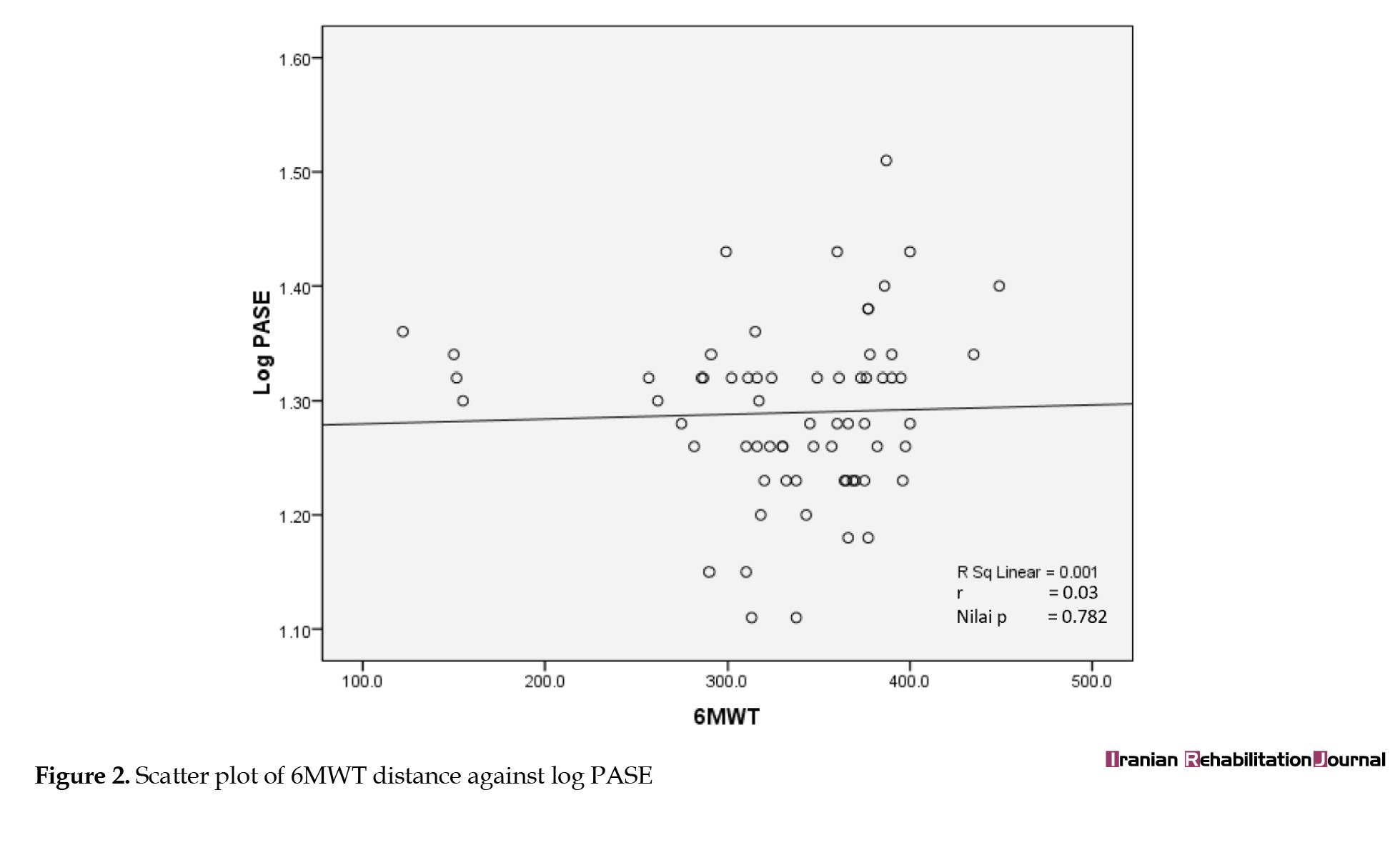
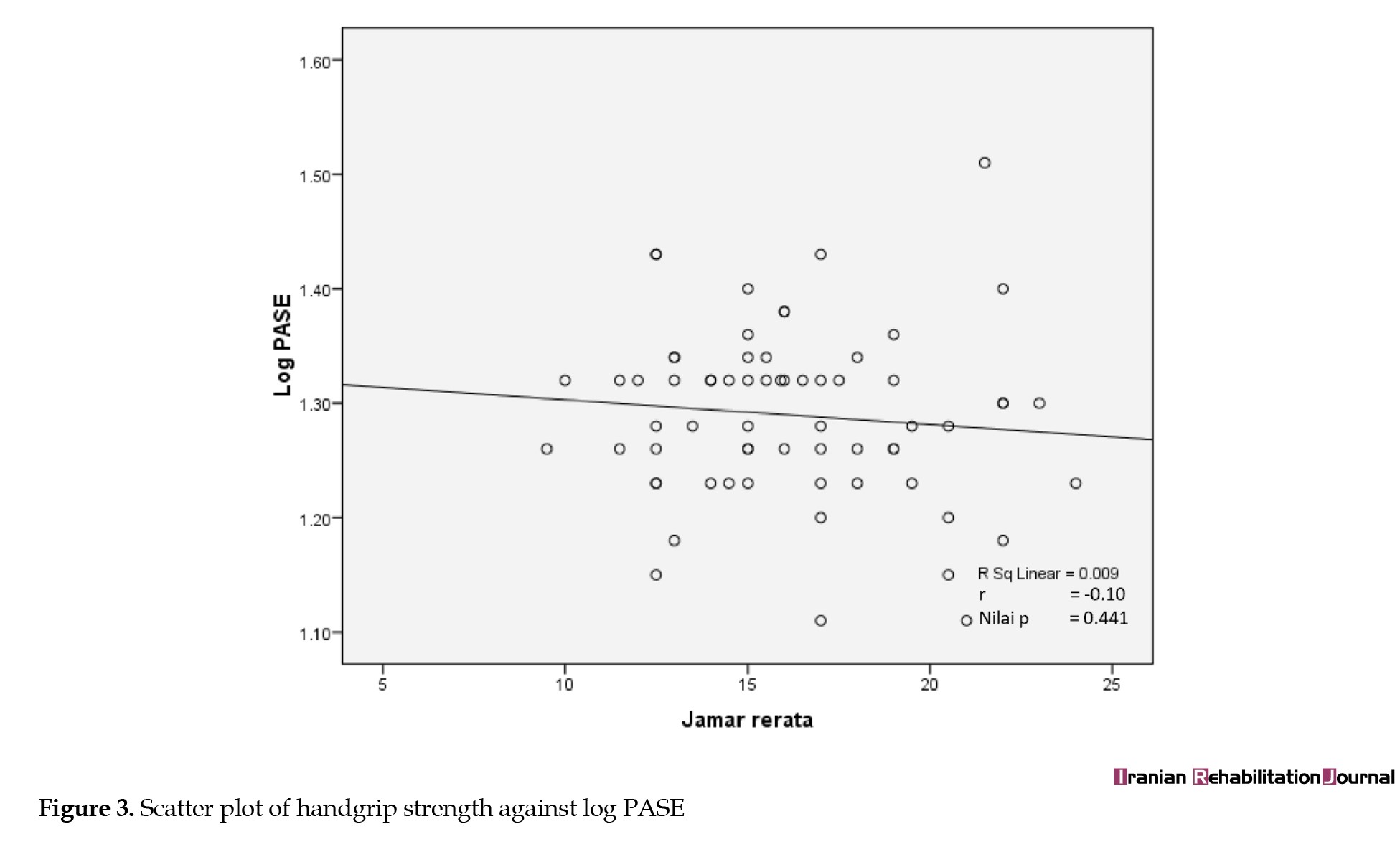
Bivariate Pearson’s correlation analysis was performed between the log PASE score and the three objective physical performance measures. Only the SPPB score demonstrated a statistically significant positive correlation with log PASE (r=0.27, P=0.026). Conversely, neither the 6MWT nor handgrip strength showed any significant associations with self-reported activity. Table 2 shows the results of this initial correlation test, detailing the coefficient (r) and P for each measure and Table 3 outlines the results of the multivariate linear regression predicting log PASE test.
The positive relationship between the SPPB score and the log PASE score is visualized in Figure 1.
The lack of correlation for the 6MWT and Grip Strength are shown in Figure 2 and Figure 3, respectively.
A weak positive linear association was observed between functional performance as measured by SPPB and physical activity (log-transformed PASE scores) in older women (r=0.27; P=0.026), suggesting modest correlation strength.
No significant relationship was found between aerobic capacity (6MWT) and physical activity levels (log PASE) (r=0.03; P=0.782), indicating independence between these variables.
The analysis revealed no correlation between peripheral muscle strength (grip strength) and physical activity scores (r=–0.10; P=0.441), underscoring the functional specificity of PASE.
The multivariate analysis confirmed that the SPPB score was the only significant factor predicting physical activity levels (P=0.026). The results showed a positive relationship: For every one-point increase in a person’s SPPB score, their predicted physical activity (Log PASE) increased by 0.012 units. Although this relationship was statistically reliable (meaning the true effect is likely between 0.002 and 0.023), the model had low explanatory power, accounting for only 6% (R²=0.06) of the differences in activity levels among the women studied (Table 3).
Discussion
This study examined the relationship between objective physical performance measures and self-reported physical activity (PASE) in a healthy cohort of older women. Our most important finding confirms a significant link between the SPPB score and reported activity. This result firmly established the SPPB as the single, crucial independent predictor among the performance measures used (P<0.05).
The SPPB captures a composite function and summarizes three key lower-extremity abilities: Balance, gait speed, and sit-to-stand strength. These specific motor skills are prerequisite movements for the routine daily tasks counted by the PASE, such as household chores and local transport [14]. Thus, the SPPB offers a highly relevant functional proxy for the operational capacity required to sustain an active routine.
Our findings strongly validate the SPPB’s robust position in geriatric science. The test’s utility in predicting important health outcomes, including cardiovascular events and mortality, is well-documented [11]. Furthermore, our results align well with objective activity studies. Research using accelerometry consistently shows that higher SPPB scores translate directly to more time spent in light and moderate-to-vigorous physical activity [15, 16]. This consistent pattern suggests that functional capacity, measured by the SPPB, serves as the primary mechanism driving habitual activity performance in older individuals.
Notably, neither the 6MWT nor handgrip strength demonstrated a significant association with the PASE scores. This divergence highlights a key conceptual difference: these tests assess maximum capacity, but the PASE tracks actual habitual activity levels. The 6MWT measures submaximal aerobic endurance, or the maximum distance a person can walk. Our highly independent cohort likely has endurance that exceeds the minimal fitness level required for the moderate-intensity daily tasks reported in the PASE. This results in a functional ceiling effect, where the 6MWT loses sensitivity for differentiating activity levels within this healthy group. This is often different in clinical settings; the 6MWT primarily serves to predict cardiorespiratory fitness rather than daily steps in healthy populations [17].
Similarly, handgrip strength primarily captures upper-body strength. Though it is a vital indicator for overall frailty, as recognized by the European Working Group on Sarcopenia, the PASE mainly documents activities dependent on lower-body function [18]. Consequently, its failure to serve as an independent predictor in our model is logical. Previous work supports this: Studies focusing on mobility limitation in women often find that while grip strength is relevant, lower-body measures offer a more direct link to walking and mobility [19].
A key strength of this study is its strictly homogeneous cohort of women aged 60-70 years. We intentionally controlled for sex and age range to minimize major biological confounders, such as variability from advanced age or mixed-sex physiology. This controlled environment allowed us to obtain cleaner, more direct evidence supporting the functional link between the SPPB and physical activity. Ultimately, this focused approach helps resolve inconsistencies reported in broader literature. Clinically, our result provides a clear directive: for screening and tracking activity-related functional decline in similar healthy female cohorts, the SPPB should be the prioritized screening tool [20].
We must acknowledge several limitations despite these insights. First, our cross-sectional design only permits confirming an association; we cannot claim that an improved SPPB score causes increased physical activity. Longitudinal studies will be necessary to establish causality. Second, our use of convenience sampling and exclusive focus on a healthy, independent group introduces selection bias. This limits the generalizability of our conclusions to frail or institutionalized populations. Third, the self-reported PASE questionnaire is inherently subject to recall bias, which may slightly inflate reported activity levels. Finally, the regression model yielded a low explanatory power (R2=0.06). This low variance signals that most differences in physical activity are driven by unmeasured factors, such as psychological states or environmental conditions. This supports the need for a broad, multidimensional model of physical activity determinants.
Conclusion
This study successfully evaluated the relationship between three objective physical performance measures and self-reported physical activity in functionally healthy older women aged 60–70 years. The SPPB score exhibited a statistically significant positive correlation with physical activity and emerged as the sole independent predictor in the model. Given the modest variance explained (R2=0.06), this result suggests that the SPPB’s composite assessment of lower-limb function is associated with, and may be useful as part of screening for, habitual physical activity in this specific population. Clinicians and researchers should consider the SPPB as a valuable and efficient tool for initial assessment. Future intervention studies should continue to utilize the SPPB as a functional outcome measure.
Ethical Considerations
Compliance with ethical guidelines
This study was approved by the Ethics Committee of Dr. Cipto Mangunkusomo National Hospital, Faculty of Medicine, University of Indonesia, Jakarta, Indonesia (Code: KET-1750/UN2.F1/ETIK/PPM. 00.02/2024).
Funding
This research did not receive any grant from funding agencies in the public, commercial, or non-profit sectors.
Authors' contributions
Conceptualization: Umi Sjarqiah and Nury Nusdwinuringtyas; Methodology: Evy Yunihastuti and Ikhwan Rinaldi; Investigation: Aulia Rizka and Maria Regina Rachmawati;Supervision: Ruliando Hasea Purba and Siti Chandra Widjanantie; Review and editing: Muhammad Syauqi Ridhallah;Writing the original draft: Muhammad Jalaluddin Rumi.
Conflict of interest
The authors declared no conflicts of interest.
No significant relationship was found between aerobic capacity (6MWT) and physical activity levels (log PASE) (r=0.03; P=0.782), indicating independence between these variables.
The analysis revealed no correlation between peripheral muscle strength (grip strength) and physical activity scores (r=–0.10; P=0.441), underscoring the functional specificity of PASE.
The multivariate analysis confirmed that the SPPB score was the only significant factor predicting physical activity levels (P=0.026). The results showed a positive relationship: For every one-point increase in a person’s SPPB score, their predicted physical activity (Log PASE) increased by 0.012 units. Although this relationship was statistically reliable (meaning the true effect is likely between 0.002 and 0.023), the model had low explanatory power, accounting for only 6% (R²=0.06) of the differences in activity levels among the women studied (Table 3).
Discussion
This study examined the relationship between objective physical performance measures and self-reported physical activity (PASE) in a healthy cohort of older women. Our most important finding confirms a significant link between the SPPB score and reported activity. This result firmly established the SPPB as the single, crucial independent predictor among the performance measures used (P<0.05).
The SPPB captures a composite function and summarizes three key lower-extremity abilities: Balance, gait speed, and sit-to-stand strength. These specific motor skills are prerequisite movements for the routine daily tasks counted by the PASE, such as household chores and local transport [14]. Thus, the SPPB offers a highly relevant functional proxy for the operational capacity required to sustain an active routine.
Our findings strongly validate the SPPB’s robust position in geriatric science. The test’s utility in predicting important health outcomes, including cardiovascular events and mortality, is well-documented [11]. Furthermore, our results align well with objective activity studies. Research using accelerometry consistently shows that higher SPPB scores translate directly to more time spent in light and moderate-to-vigorous physical activity [15, 16]. This consistent pattern suggests that functional capacity, measured by the SPPB, serves as the primary mechanism driving habitual activity performance in older individuals.
Notably, neither the 6MWT nor handgrip strength demonstrated a significant association with the PASE scores. This divergence highlights a key conceptual difference: these tests assess maximum capacity, but the PASE tracks actual habitual activity levels. The 6MWT measures submaximal aerobic endurance, or the maximum distance a person can walk. Our highly independent cohort likely has endurance that exceeds the minimal fitness level required for the moderate-intensity daily tasks reported in the PASE. This results in a functional ceiling effect, where the 6MWT loses sensitivity for differentiating activity levels within this healthy group. This is often different in clinical settings; the 6MWT primarily serves to predict cardiorespiratory fitness rather than daily steps in healthy populations [17].
Similarly, handgrip strength primarily captures upper-body strength. Though it is a vital indicator for overall frailty, as recognized by the European Working Group on Sarcopenia, the PASE mainly documents activities dependent on lower-body function [18]. Consequently, its failure to serve as an independent predictor in our model is logical. Previous work supports this: Studies focusing on mobility limitation in women often find that while grip strength is relevant, lower-body measures offer a more direct link to walking and mobility [19].
A key strength of this study is its strictly homogeneous cohort of women aged 60-70 years. We intentionally controlled for sex and age range to minimize major biological confounders, such as variability from advanced age or mixed-sex physiology. This controlled environment allowed us to obtain cleaner, more direct evidence supporting the functional link between the SPPB and physical activity. Ultimately, this focused approach helps resolve inconsistencies reported in broader literature. Clinically, our result provides a clear directive: for screening and tracking activity-related functional decline in similar healthy female cohorts, the SPPB should be the prioritized screening tool [20].
We must acknowledge several limitations despite these insights. First, our cross-sectional design only permits confirming an association; we cannot claim that an improved SPPB score causes increased physical activity. Longitudinal studies will be necessary to establish causality. Second, our use of convenience sampling and exclusive focus on a healthy, independent group introduces selection bias. This limits the generalizability of our conclusions to frail or institutionalized populations. Third, the self-reported PASE questionnaire is inherently subject to recall bias, which may slightly inflate reported activity levels. Finally, the regression model yielded a low explanatory power (R2=0.06). This low variance signals that most differences in physical activity are driven by unmeasured factors, such as psychological states or environmental conditions. This supports the need for a broad, multidimensional model of physical activity determinants.
Conclusion
This study successfully evaluated the relationship between three objective physical performance measures and self-reported physical activity in functionally healthy older women aged 60–70 years. The SPPB score exhibited a statistically significant positive correlation with physical activity and emerged as the sole independent predictor in the model. Given the modest variance explained (R2=0.06), this result suggests that the SPPB’s composite assessment of lower-limb function is associated with, and may be useful as part of screening for, habitual physical activity in this specific population. Clinicians and researchers should consider the SPPB as a valuable and efficient tool for initial assessment. Future intervention studies should continue to utilize the SPPB as a functional outcome measure.
Ethical Considerations
Compliance with ethical guidelines
This study was approved by the Ethics Committee of Dr. Cipto Mangunkusomo National Hospital, Faculty of Medicine, University of Indonesia, Jakarta, Indonesia (Code: KET-1750/UN2.F1/ETIK/PPM. 00.02/2024).
Funding
This research did not receive any grant from funding agencies in the public, commercial, or non-profit sectors.
Authors' contributions
Conceptualization: Umi Sjarqiah and Nury Nusdwinuringtyas; Methodology: Evy Yunihastuti and Ikhwan Rinaldi; Investigation: Aulia Rizka and Maria Regina Rachmawati;Supervision: Ruliando Hasea Purba and Siti Chandra Widjanantie; Review and editing: Muhammad Syauqi Ridhallah;Writing the original draft: Muhammad Jalaluddin Rumi.
Conflict of interest
The authors declared no conflicts of interest.
References
- Owens DJ, Twist C, Cobley JN, Howatson G, Close GL. Exercise-induced muscle damage : What is it , what causes it and what are the nutritional solutions ? European Journal of Sport Science. 2019; 19(1):71-85. [DOI:10.1080/17461391.2018.1505957] [PMID]
- Zoila F, Filannino FM, Panaro MA, Sannicandro I, Cianciulli A, Porro C. Enhancing active aging through exercise: a comparative study of high-intensity interval training and continuous aerobic training benefits. Frontiers in Aging. 2025; 6:1493827. [DOI:10.3389/fragi.2025.1493827] [PMID]
- Kirk A, Steele J, Fisher JP. Machine-based resistance training improves functional capacity in older adults: A systematic review and meta-analysis. Journal of Functional Morphology and Kinesiology. 2024; 9(4):239. [DOI:10.3390/jfmk9040239] [PMID]
- Eusepi D, Pellicciari L, Ugolini A, Graziani L, Coppari A, Carlizza A, et al. Reliability of the Short Physical Performance Battery (SPPB): A systematic review with meta-analysis. European Geriatric Medicine. 2025; 16(6):1993-2008. [DOI:10.1007/s41999-025-01277-x] [PMID]
- Laghousi D, Aminisani N, Hooshmand E, Asghari-Jafarabadi M, Sarbakhsh P, Shamshirgaran M. Validity of the Physical activity scale for the elderly: Results from the Neyshabur Longitudinal Study on Ageing. Medical Journal of Tabriz University of Medical Sciences. 2024; 46(4):407-18. [DOI:10.34172/mj.2024.043]
- Addae-Dapaah K, Juan QS. Life Satisfaction among Elderly Households in Public Rental Housing in Singapore. Health. 2014; 06(10):1057-76. [DOI:10.4236/health.2014.610132]
- Halma M, Marik P, Varon J, Tuszynski J. Reversing Decline in Aging Muscles: Expected Trends, Impacts and Remedies. Journal of Functional Morphology and Kinesiology. 2025; 10(1):29. [DOI:10.3390/jfmk10010029] [PMID]
- Stalling I, Gruber M, Bammann K. Sex differences in physical functioning among older adults: Cross-sectional results from the OUTDOOR ACTIVE study. BMC Public Health. 2024; 24(1):1766. [DOI:10.1186/s12889-024-19218-x] [PMID]
- D’Amore C, Lajambe L, Bush N, Hiltz S, Laforest J, Viel I, et al. Mapping the extent of the literature and psychometric properties for the Physical Activity Scale for the Elderly (PASE) in community-dwelling older adults: A scoping review. BMC Geriatrics. 2024; 24(1):761. [DOI:10.1186/s12877-024-05332-3] [PMID]
- Tambunan TFU, Ratnawati A, Sudarsono NC, Tulaar ABM. Validity and Reliability of Indonesia version of Physical Activity Scale for The Elderly (PASE-INA) for Evaluating Physical Activity of Elderly Population in Indonesia [Doctoral dissertation]. Kota Depok: Universitas Indonesia. [Link]
- de Fátima Ribeiro Silva C, Ohara DG, Matos AP, Pinto ACPN, Pegorari MS. Short physical performance battery as a measure of physical performance and mortality predictor in older adults: A comprehensive literature review. International Journal of Environmental Research and Public Health. 2021; 18(20):10612. [DOI:10.3390/ijerph182010612] [PMID]
- ATS Committee on Proficiency Standards for Clinical Pulmonary Function Laboratories. ATS Statement : Guidelines for the Six-Minute Walk Test. American Journal of Respiratory and Critical Care Medicine 2002; 166(1):111-7.[DOI:10.1164/ajrccm.166.1.at1102] [PMID]
- Mutalib SA, Mace M, Seager C, Burdet E, Mathiowetz V, Goldsmith N. Modernising grip dynamometry: Inter-instrument reliability between GripAble and Jamar. BMC Musculoskeletal Disorders. 2022; 23(1):80. [DOI:10.1186/s12891-022-05026-0] [PMID]
- Löppönen A, Karavirta L, Portegijs E, Koivunen K, Rantanen T, Finni T, et al. Day‐to‐day variability and year‐to‐year reproducibility of accelerometer‐measured free‐living sit‐to‐stand transitions volume and intensity among community‐dwelling older adults. Sensors. 2021; 21(18):6068. [DOI:10.3390/s21186068] [PMID]
- Zeng Z, Hsu CL, van Schooten KS, Yang Y. Sex differences in the associations of accelerometer-determined physical activity with physical and cognitive function in older adults living in long-term care. Frontiers in Public Health. 2024; 12:1446286. [DOI:10.3389/fpubh.2024.1446286] [PMID]
- Western MJ, Malkowski OS. Associations of the Short Physical Performance Battery (SPPB) with Adverse Health Outcomes in Older Adults: A 14-Year Follow-Up from the English Longitudinal Study of Ageing (ELSA). International Journal of Environmental Research and Public Health. 2022; 19(23):16319. [DOI:10.3390/ijerph192316319] [PMID]
- Sperandio EF, Arantes RL, Matheus AC, Silva RP, Lauria VT, Romiti M, et al. Intensity and physiological responses to the 6-minute walk test in middle-aged and older adults: A comparison with cardiopulmonary exercise testing. Brazilian Journal of Medical and Biological Research. 2015; 48(4):349-53. [DOI:10.1590/1414-431x20144235] [PMID]
- Cruz-Jentoft AJ, Bahat G, Bauer J, Boirie Y, Bruyère O, Cederholm T, et al. Sarcopenia: Revised European consensus on definition and diagnosis. Age and Ageing. 2019; 48(1):16-31. [PMID]
- Sallinen J, Stenholm S, Rantanen T, Heliövaara M, Sainio P, Koskinen S. Hand-grip strength cut points to screen older persons at risk for mobility limitation. Journal of the American Geriatrics Society. 2010; 58(9):1721-6. [DOI:10.1111/j.1532-5415.2010.03035.x] [PMID]
- Bellettiere J, Lamonte MJ, Unkart J, Liles S, Laddu-Patel D, Manson JE, et al. Short physical performance battery and incident cardiovascular events among older women. Journal of the American Heart Association. 2020; 9(14):e016845. [DOI:10.1161/JAHA.120.016845] [PMID]
Article type: Original Research Articles |
Subject:
Physical Medicine and Rehabilitation
Received: 2025/08/16 | Accepted: 2025/12/29 | Published: 2026/04/1
Received: 2025/08/16 | Accepted: 2025/12/29 | Published: 2026/04/1
Send email to the article author

Copyright © The Author(s);
This is an open access article distributed under the terms of the Creative Commons Attribution-NonCommercial 4.0 (CC-By-NC 4.0), which permits use, distribution, and reproduction in any medium, provided the original work is properly cited and is not used for commercial purposes.
Contact Information
