
988368
Mon, Nov 2, 2026

Volume 24, Issue 3 (September 2026)
Iranian Rehabilitation Journal 2026, 24(3): 247-258 |
Back to browse issues page




Download citation:
BibTeX | RIS | EndNote | Medlars | ProCite | Reference Manager | RefWorks
Send citation to:


BibTeX | RIS | EndNote | Medlars | ProCite | Reference Manager | RefWorks
Send citation to:
Ghaffarifard Badkoubeh M, Mirzaie H, Ahmadi Kahjoogh M, Faturechi S. Bilateral Coordination and Academic Performance in Children: A Scoping Review. Iranian Rehabilitation Journal 2026; 24 (3) :247-258
URL: http://irj.uswr.ac.ir/article-1-2624-en.html
URL: http://irj.uswr.ac.ir/article-1-2624-en.html

1- Department of Occupational Therapy, Faculty of Rehabilitation Sciences, University of Social Welfare and Rehabilitation Sciences, Tehran, Iran.
2- Department of Occupational Therapy, Faculty of Rehabilitation Sciences, Tabriz University of Medical Sciences, Tabriz, Iran.
2- Department of Occupational Therapy, Faculty of Rehabilitation Sciences, Tabriz University of Medical Sciences, Tabriz, Iran.
Keywords: Bilateral coordination, Bimanual coordination, Bilateral integration, Academic performance, Mathematics, Reading, Writing, Handwriting, Children
Full-Text [PDF 579 kb]
(185 Downloads)
| Abstract (HTML) (2189 Views)
Full-Text: (63 Views)
Introduction
Education is one of the most important occupations of childhood [1]. Poor academic performance is associated with an increased risk of school dropout and various secondary consequences, such as employment and social adjustment problems in adulthood, as well as psychological issues including depression and low self-esteem [1, 2]. Because socioeconomic, psychosocial, home and school environments, nutrition, and the student’s own engagement influence academic performance, one contributing factor in enhancing academic achievement is improved motor performance [3, 4]. Previous studies have shown that motor interventions can improve both cognitive and academic performance [5]. Among the motor skills related to academic achievement, bilateral coordination plays a significant role [6].
Bilateral coordination, a component of bilateral integration, refers to the ability to coordinate symmetrical and asymmetrical movements of the body either on the same side or across both sides simultaneously [1, 7]. Improved bilateral coordination strengthens interhemispheric communication, thereby facilitating message transfer between the two hemispheres and enhancing learning [8]. This skill influences academic performance, handwriting, play, and daily functioning in children [1, 6]. Consequently, deficits in bilateral coordination can lead to difficulties in these domains.
Evidence suggests that better bilateral coordination is associated with improved academic outcomes [9]. For example, a 2010 study conducted by Bumin et al. on children with cerebral palsy (CP) found a relationship between bilateral coordination and handwriting alignment and letter size [10]. Similarly, Norouzi et al. (2016) demonstrated an association between bilateral coordination and aspects of writing performance such as content, organization, language use, and vocabulary [11]. Beyond writing, other studies have indicated a link between bilateral coordination and additional areas of academic performance, including reading skills, as reported by da Silva Pacheco et al. [6]. Nevertheless, a study by Macdonald et al. in 2020 found no significant association between bilateral coordination and reading or mathematics skills [12].
Despite the acknowledged importance of bilateral coordination for children’s academic performance, and the critical role of academic success for students, no comprehensive study has examined the influence of bilateral coordination across different academic domains in the past 15 years. Contradictory findings regarding its role, the diversity of populations studied, the range of assessment tools employed, and the variety of academic domains investigated highlight the necessity of such an endeavor.
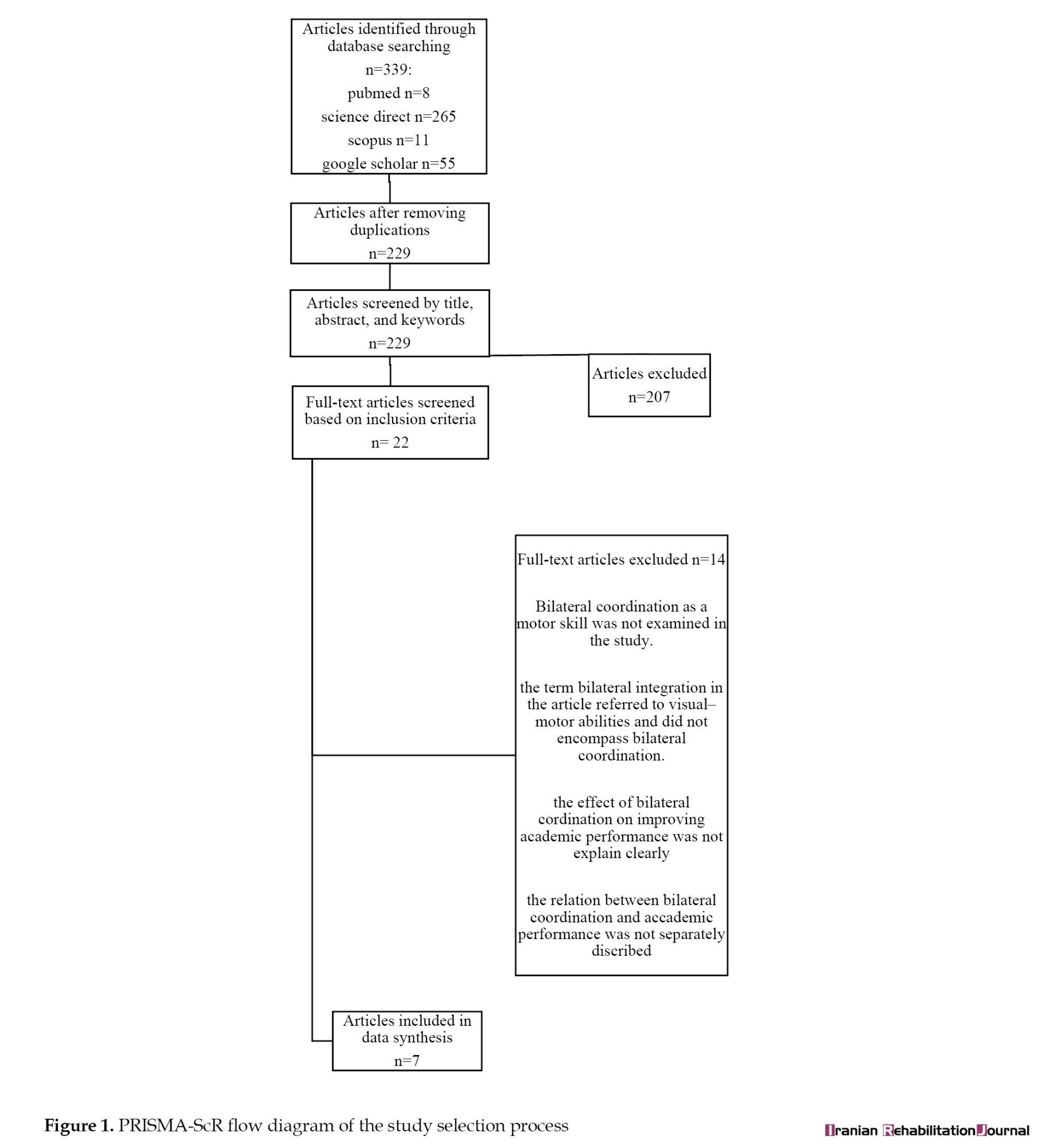
Previous research in this field has largely examined the association between academic performance and broader constructs of motor competence, such as gross motor skills, fine motor skills, or overall motor proficiency. While these studies provide valuable insights, they treat motor skills as a general domain and do not isolate the role of bilateral coordination. To date, no systematic or scoping review has exclusively explored the direct relationship between bilateral coordination and academic achievement. By addressing this gap, the current review contributes a distinct perspective and offers a more nuanced understanding of how bilateral coordination may influence students’ academic outcomes. The variety of tools, study designs, and differences in studied populations will give us better insight. Therefore, this scoping study aimed to explore the relationship between bilateral coordination and children’s academic performance. Figure 1 illustrates the search strategy and the process of retrieving relevant articles on this topic.
By mapping the existing evidence across studied populations, assessment tools, and reported outcomes, this study aims to clarify the importance of bilateral coordination for educators and other stakeholders, while also identifying gaps in the current literature. Across existing studies, academic performance has sometimes been conceptualized as higher-level skills, such as mathematical reasoning, and at other times as lower-level skills, such as number knowledge [12-14]. This heterogeneity in conceptualization has contributed to inconsistencies in the reported findings. In the present study, by clearly defining the specific academic domains under investigation and examining their relationship with bilateral coordination, we aimed to clarify the existing evidence and address these inconsistencies. To our knowledge, no previous scoping or systematic review has specifically mapped the relationship between bilateral coordination and distinct academic domains while accounting for conceptual differences in how academic performance is defined.
The sub-questions of this study are as follows:
Is there a relationship between bilateral coordination skills and writing, mathematics, and reading?
In which populations has the relationship between bilateral coordination and academic skills been investigated?
What tools have been used to assess academic performance and bilateral coordination in these studies?
Materials and Methods
This comprehensive research employed a scoping study design to examine studies conducted over the past 15 years. This scoping review followed the methodological framework proposed by Arksey and O’Malley (2005) and is reported in line with the preferred reporting items for systematic reviews and meta-analyses extension for scoping reviews (PRISMA-ScR) guidelines [13]. The protocol was not registered in any database, as scoping reviews are typically conducted wto map broad and heterogeneous areas of research. In many cases, formal registration is not undertaken. Nevertheless, all five stages of the scoping review process (identifying the research question, identifying relevant studies, study selection, charting the data, and collating, summarizing, and reporting the results) were conducted and transparently reported [13].
Eligible criteria
Initially, all studies conducted from 2010 to 2025 that were written in Persian and English were included; duplicated studies were excluded and two researchers reviewed the studies for eligibility criteria in two steps. Study selection was performed in two phases: initially through title and abstract screening, followed by full-text screening. To ensure comprehensive coverage, both observational and interventional quantitative studies were included.
This scoping review was structured according to the population, concept, context framework recommended by JBI. The population included students from preschool to high school age (≤18 years), as this research aimed to map the available evidence concerning bilateral coordination in school-aged individuals. The concept focused on bilateral coordination, which was the primary construct examined across the included studies. The context was academic performance, as this review explored how bilateral coordination relates to different aspects of academic achievement.
Studies were included if they: Involved students from preschool to high school age; examined the relationship or effect of bilateral coordination on academic performance; used quantitative observational or interventional designs; were published between 2010 and 2025 in peer-reviewed journals. Studies were excluded if they were review articles, conference proceedings, case reports, dissertations, guidelines, books, or doctoral dissertations, involved populations older than 18 years; or did not specifically address academic outcomes.
Eligible studies included interventional designs that assessed the effects of bilateral coordination on academic performance, as well as observational designs examining associations between these two variables; therefore, case reports, cross-sectional studies, randomized controlled trials, and quasi-randomized trials, quasi-experimental articles were included. Given the importance of both academic achievement and motor development during the school years, this review included studies focusing exclusively on students from preschool to high school age.
To ensure higher validity and recency, conference presentations, doctoral dissertations, books, and review articles were excluded. Additionally, studies that did not explicitly investigate the relationship between bilateral coordination and academic performance were removed. The review included studies published in English and Persian.
Search strategy
The electronic databases PubMed, ScienceDirect, and Scopus were searched. Keywords and MeSH terms included “bilateral coordination”, “bimanual coordination”, “bilateral integration”, “mathematics”, “reading”, “handwriting”, “academic performance”, “children”, and “student”. These terms were combined using Boolean search strategies and applied across the selected databases. A publication date filter (2010–2025) was applied. The following search string was applied:
(“bilateral coordination” OR “bimanual coordination” OR “bilateral integration”) AND (“academic performance” OR “mathematics” OR “reading” OR “writing” OR “handwriting”) AND (“children” OR “students”).
This strategy was adapted as appropriate for each database. In addition, the Google Scholar search engine was used to identify further studies; the first 20 pages of Google Scholar search results were screened by title and abstract to identify potentially relevant studies, and relevant articles were selected and included in the review process. Titles and abstracts from Google Scholar were reviewed to identify additional eligible studies. The final search was conducted on 30 September, 2025.
Manual searches of reference lists and gray literature were not performed.
Study selection
Two authors independently screened all titles and abstracts. Full texts of potentially eligible studies were reviewed for inclusion. Articles that met the criteria were selected to be included in the study. Inter-rater disagreements were resolved through consensus discussion, and if disagreement persisted, a third reviewer independently assessed the study to reach a final decision. The study selection process is illustrated in the PRISMA flow diagram.
Data charting
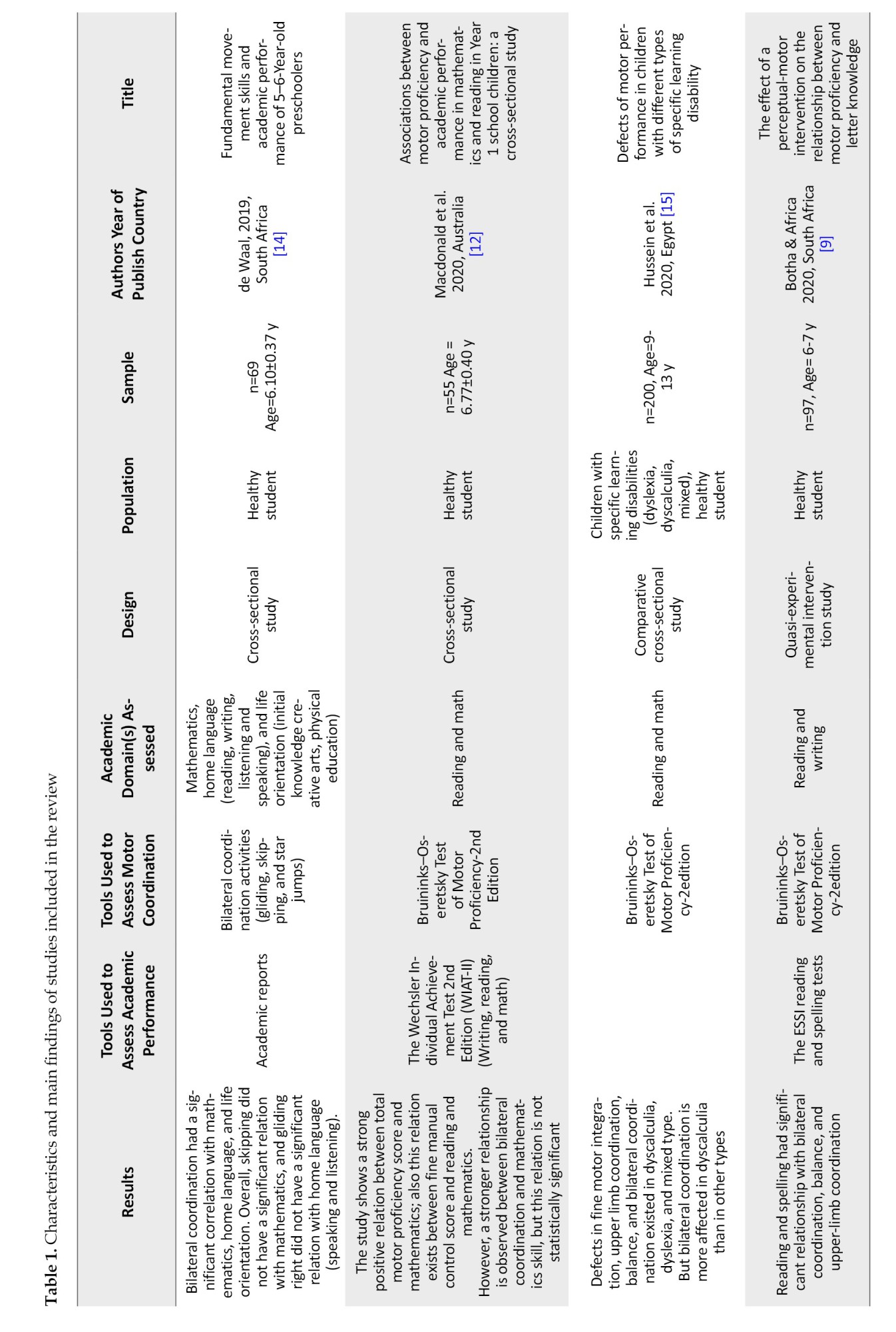
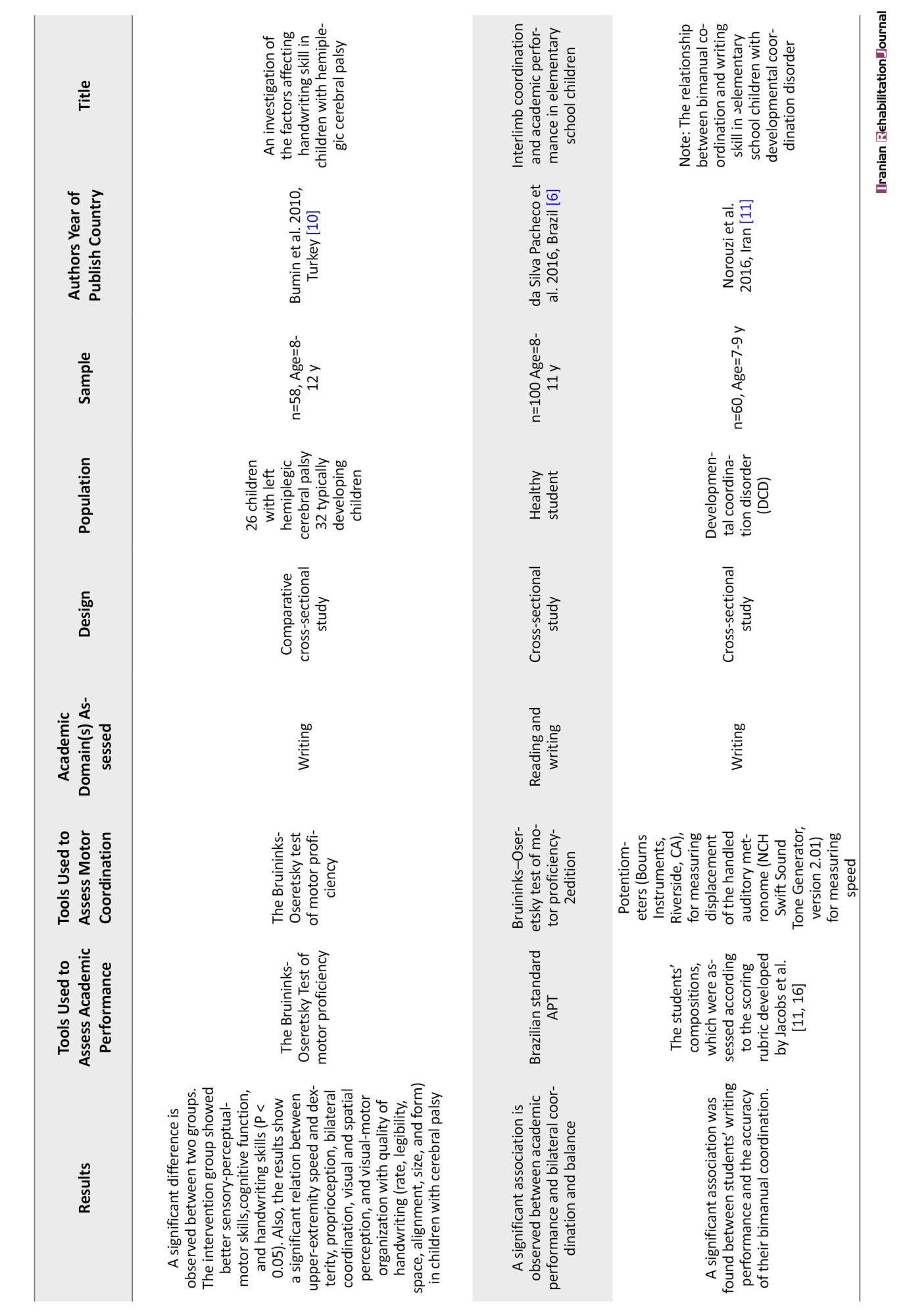
Data items including the title of the article, year, authors, population, bilateral coordination tools, academic performance tools, area of academic performance studied, and main results were entered into an Excel spreadsheet by the first author and reviewed under the supervision of the research team. Table 1 presents the data from the studies.
Data synthesis
Given the nature of scoping review studies and in accordance with PRISMA-ScR guidelines, no critical appraisal of methodological quality was performed, as the primary aim of this scoping review was to map the extent, range, and nature of evidence rather than to assess study quality or risk of bias. Data were summarized in tables, and descriptive analysis was performed. Due to substantial heterogeneity in study designs, populations, assessment tools, and academic outcomes, a meta-analysis was not feasible; therefore, the analyses were performed descriptively.
Results
The search identified 339 records (PubMed=8, Scopus=11, ScienceDirect=265, Google Scholar=55). After removing duplicates (110), 229 studies were screened by title and abstract. Following full-text review, 7 studies met the inclusion criteria. The study selection process is presented in the PRISMA-ScR flow diagram.
Between 2010 and 2025, several studies examined the relationship between bilateral coordination and academic performance. Among them, four studies reported associations between bilateral coordination and reading ability [6, 9, 14, 15], five studies found links between bilateral coordination and writing skills [6, 9-11, 14], and two studies demonstrated associations with mathematical performance [14, 15]. Specifically, bilateral coordination was found to be related to mathematical skills such as data handling, numbers, patterns, and spatial/figural reasoning (P≤0.05) [14]; writing skills, such as legibility, alignment, size of handwriting (P<0.05) [10], and writing content, writing organization, vocabulary, writing mechanics, and language use (P=0.001) [11], and spelling (P<0.01) [9]; and overall reading performance (P<0.01) [9].
However, some studies reported no statistically significant association between bilateral coordination and academic subdomains, including mathematics composite scores, math reasoning, and numerical operations [12], as well as measurement [14] in mathematics; and word reading, reading comprehension, and pseudoword decoding in reading [12].
Four studies examined bilateral coordination in relation to a broader range of academic skills, including reading, writing, mathematics, initial knowledge, creative arts, and physical education, among typically developing students aged 5–11 years [6, 9, 12, 14]. One study focused on the relationship between bilateral coordination and handwriting performance in children with CP aged 8–12 years, while another study investigated differences in bilateral coordination among children with specific learning disorders aged 9–13 years, comparing groups with dyscalculia, dyslexia, and mixed-type learning disorders [15], Another study explored the relation between bilateral coordination and writing composition in children with developmental coordination disorder (DCD) aged 7_9 years [11].
Regarding measurement tools, the most frequently used instrument for assessing bilateral coordination was the Bruininks–Oseretsky test of motor proficiency, second edition (BOT-2) [6, 9, 12, 15], with one study using the first edition of this test [10]. Another study employed bilateral coordination activities such as gliding, skipping, and star jumps [14]. One study used technological assessment tools to evaluate bilateral coordination, including potentiometers (Bourns Instruments, Riverside, CA), and an auditory metronome (NCH Swift Sound Tone Generator, version 2.01), which were used to assess the speed of bimanual tasks [11]. To evaluate academic performance, a variety of tools were applied depending on the domain of interest, including: The ESSI reading and spelling tests [9], the Wechsler individual achievement test, second edition (WIAT-II) for writing, reading, and mathematics [12], academic reports [14], the academic performance test (APT) [6], and the Minnesota handwriting assessment [10], a composition task evaluated based on Jacobs et al.’s criteria [11, 16].
Discussion
This review aimed to examine existing studies on the relationship between bilateral coordination and academic performance in children. This section maps the breadth, characteristics, and distribution of the available evidence, including populations studied, assessment tools applied, and academic domains evaluated. We identified seven studies published between 2010 and 2025, five of which employed cross-sectional designs, with only two interventional studies conducted in this field. Across these studies, we examined the study designs, sample characteristics, assessment tools, and key findings. The mapping process revealed that the majority of the evidence was derived from typically developing children, although additional studies included children with cerebral palsy, DCD, and specific learning disorders. The BOT-2 was the primary instrument used to assess bilateral coordination; some studies also used physical activities or technological assessment tools for this aim. A variety of tools and procedures were applied to evaluate academic performance (ENRICHD social support instrument [ESSI], WIAT-II, APT, Mental Health America, academic reports), highlighting substantial heterogeneity across studies. The findings indicate that bilateral coordination is associated with essential academic skills, including reading, writing, and mathematics [6, 9, 11, 12, 14]. These results are consistent with Ayres’ theoretical work, which emphasized the importance of bilateral coordination in children’s learning [17], while providing a more detailed perspective of its relevance to academic outcomes. Despite these limitations, mapping the seven included studies allows identification of key trends and gaps in the literature, guiding both interpretation of current evidence and priorities for future research on bilateral coordination and academic performance in children. we interpret the mapped evidence across three key domains:
Mapping of findings by academic domain
A deeper analysis of the evidence highlights associations between bilateral coordination and both higher-order academic skills, such as data handling and writing composition, as well as fundamental skills, including spatial and figural reasoning [11, 12, 14]. This underscores the role of bilateral coordination in supporting both basic and advanced cognitive functions necessary for academic success. Bilateral integration may be associated with interhemispheric communication [5], which in turn strengthens working memory [18]. Improved working memory facilitates higher-level cognitive processes, such as planning, comprehension, reasoning, and problem solving [19]—skills that are crucial for mathematics, reading, and writing.
Although several studies in children with normal development demonstrated significant associations between bilateral coordination and domains such as numbers, patterns, spaces and figures [14], spelling [9], other research reported no significant associations with mathematics subdomains (measurements, composite mathematics scores, math reasoning, and numerical operations) [12, 14], or with reading subdomains (word reading, reading comprehension, and pseudoword decoding) [12]. Findings on handwriting were also inconsistent: in typically developing children, no significant associations were reported between bilateral coordination and parameters such as rate, legibility, form, alignment, size, and spacing [10].
In children with cerebral palsy, bilateral coordination was significantly associated with legibility, alignment, and size, but not with form, space, or rate [10]. Furthermore, bilateral coordination difficulties were observed across children with learning disorders, with greater impairments in children with dyscalculia compared to those with dyslexia or mixed-type learning disorders [15]. Bilateral coordination abilities were also significantly related to writing content, writing organization, vocabulary, writing mechanics, and language use in children with DCD [11].
Taken together, the evidence suggests that in typically developing children, bilateral coordination may be more closely related to basic mathematics skills (numbers, patterns, spatial reasoning) and spelling, but less strongly associated with reading and handwriting [9, 10, 12, 14]. For higher-order mathematics skills (data handling, measurements, reasoning, and numerical operations), the contradictory findings [12, 14] highlight the need for further rigorous investigation. In typically developing children, although no significant association has been found between bilateral coordination and handwriting skills [10], a clear relationship has been reported with spelling abilities [9]. In children with CP, bilateral coordination has shown significant associations with specific handwriting components such as legibility, alignment, and size [10]. Similarly, in children with DCD, bilateral coordination has been linked to multiple aspects of writing performance, including writing content, organization, vocabulary, mechanics, and language use [11]. With respect to reading skills, the evidence remains inconsistent. While several studies have confirmed a relationship between bilateral coordination and overall reading performance [6, 9, 14], another study found no significant associations across specific reading subdomains, including word reading, reading comprehension, and pseudoword decoding [12].
Mapping by population
Most studies were conducted in typically developing children aged 5–11 years, likely due to the educational and developmental importance of this age range and the relative ease of sampling. The consistency of findings across studies with large, diverse samples of typically developing children strengthens the generalizability of the results, although the study by Macdonald et al. (2020), which reported no significant associations with reading and mathematics [12], raises important questions. Given its relatively small sample size, but the use of a more precise academic assessment tool, replicating this study with larger cohorts could clarify the generalizability of its findings.
Research on populations with neurodevelopmental disorders, such as children with CP, DCD, or learning disabilities, has provided further insights. Evidence suggests a relationship between bilateral coordination and writing performance in children with CP or DCD [10, 11]. Greater bilateral coordination deficits were observed in children with dyscalculia compared to those with dyslexia [15].
Mapping by assessment tools
Another issue addressed in this review is the assessment tools used to measure bilateral coordination and academic performance. The most widely used and validated tool for bilateral coordination was the BOT-2, which provides detailed evaluation through subtests of symmetrical and asymmetrical upper limb coordination [6, 9, 12, 15]. Some studies, however, relied on bilateral coordination activities such as gliding, skipping, and star jumps [14]. In one study, bimanual coordination was evaluated using technological instruments, including potentiometers to measure hand displacement and an auditory metronome to control the speed and rhythm of the bimanual task [11].
For academic performance, the WIAT-II was the most comprehensive tool, assessing writing, reading, and mathematics [12]. Despite its strengths, its administration time (approximately 90 minutes) limits its clinical applicability, indicating a need for shorter yet equally comprehensive assessment tools. Other tools included the ESSI reading and spelling tests, the Brazilian APT [6, 12], and the Minnesota Handwriting Assessment, which evaluates handwriting across multiple dimensions (rate, legibility, form, alignment, size, and spacing) [10]. In some cases, teacher-reported academic performance was used, such as in the study by de Waal, which employed reports based on the Foundations for Learning: Assessment Framework Grade R issued by the Ministry of Basic Education [14]. Also, children’s academic performance in writing was evaluated using a composition task assessed according to criteria developed by Jacobs et al. including five aspects: content, organization, vocabulary, language use, and mechanics [11, 16].
Research gaps and implications for future research
Although the relationship observed between bilateral coordination and academic performance may be explained by improved interhemispheric communication and related cognitive processing, the variability in the assessment tools used to measure academic skills, along with the time-related limitations of cross-sectional studies, heterogeneity in study designs, as well as the predominance of cross-sectional studies, prevents drawing any causal conclusions. Future research should use longitudinal designs to examine the causal relationship between bilateral coordination and academic performance. Conducting intervention studies, preferably randomized controlled trials, to determine the effectiveness of bilateral coordination–based therapeutic programs on academic outcomes would further clarify the importance and necessity of this skill.
Additional studies are required to systematically explore the relationship between bilateral coordination and academic performance, as findings have been contradictory. Identifying these relationships could help inform more targeted assessments and interventions aimed at improving academic outcomes for children with neurodevelopmental conditions. Replicating such studies in larger samples and in populations in which bilateral coordination difficulties are prevalent—particularly where academic performance represents a central life occupation—would provide more robust evidence.
Overall, the diversity of assessment tools used across studies underscores the urgent need for standardized and validated protocols to examine motor–academic relationships. Future studies are encouraged to compare the BOT-2 with digital or technology-based assessment methods in order to evaluate and contrast their diagnostic capabilities and sensitivity. Furthermore, developing a time-efficient, comprehensive tool for academic performance assessment would greatly enhance both research and clinical practice in this field.
Limitations
This scoping review has several methodological limitations. First, language restrictions (English and Persian only) and the exclusion of dissertations and conference abstracts may have led to missing relevant evidence. Second, the included studies used a variety of assessment tools for both bilateral coordination and academic performance, contributing to heterogeneity and limiting comparability. Third, most studies used cross-sectional designs, preventing causal inferences. Finally, in accordance with PRISMA-ScR recommendations, this scoping review did not undertake a methodological quality assessment (critical appraisal), as its primary aim was to map the breadth and nature of the existing evidence rather than evaluate the risk of bias of individual studies. Nevertheless, the absence of a quality appraisal indicates that the findings should be interpreted with caution. These limitations should be considered when interpreting the results and planning future research.
Conclusion
This scoping review identified bilateral coordination as an important factor related to children’s academic performance across domains, including reading, writing, and mathematics. Among typically developing children, bilateral coordination was most consistently linked to basic mathematics skills (numbers, patterns, and spatial/figural reasoning) and spelling. In contrast, no clear associations were found with reading skills (word reading, reading comprehension, pseudoword decoding) or handwriting parameters (rate, legibility, form, alignment, size, and spacing). For higher-order mathematics skills (data handling, measurements, composite mathematics, reasoning, and numerical operations), findings were inconsistent, underscoring the need for further research with larger sample sizes and more comprehensive assessment tools. The findings also highlight the potential relevance of motor-based interventions within both educational and clinical contexts. Enhancing bilateral coordination skills may be a promising strategy for optimizing academic achievement alongside other contributing factors, while also supporting broader aspects of child development. Strengthening bilateral coordination may be considered for incorporation into school-based and rehabilitation interventions aimed at enhancing academic performance. However, because a comprehensive, standardized assessment tool for evaluating academic outcomes is lacking, as noted earlier, such interventions must be accompanied by a multidimensional evaluation approach.
The main strength of this review is its comprehensive search across multiple databases and its inclusion of full-text analyses of recent studies.
While this scoping review provides an overview of the relationship between bilateral coordination and academic performance, several limitations should be noted. The variability in study designs, populations, and assessment tools, as well as the predominance of cross-sectional studies, limits the ability to draw causal conclusions. These limitations should be considered when interpreting the findings and their implications for practice and future research.
Future research is recommended to examine the role of bilateral coordination in higher-order academic skills such as problem solving and critical thinking, to explore its relationship with academic performance in diverse populations (including children with neurodevelopmental disorders, autism spectrum disorder, and attention-deficit/hyperactivity disorder), and to employ standardized, validated tools to improve cross-study comparability. To our knowledge, this is the first scoping review to specifically synthesize evidence on the relationship between bilateral coordination and academic performance in children since 2010.
Ethical Considerations
Compliance with ethical guidelines
This study was approved by the Research Ethics Committee of the University of Social Welfare and Rehabilitation Sciences, Tehran, Iran (Code: IR.USWR.REC.1403.253).
Funding
This research did not receive any grant from funding agencies in the public, commercial, or non-profit sectors.
Authors' contributions
Conceptualization and methodology: Mona Ghaffarifard Badkoubeh and Hooshang Mirzaie; Investigation: Mona Ghaffarifard Badkoubeh and Mina Ahmadi Kahjugh; Writing the original draft: Mona Ghaffarifard Badkoubeh; Supervision: Hooshang Mirzaie; Resources, review and editing: All authors.
Conflict of interest
The authors declared no conflict of interest.
Acknowledgments
The authors would like to sincerely thank all the authors of the studies included in this review for their valuable contributions to the body of evidence underpinning this study.
The sub-questions of this study are as follows:
Is there a relationship between bilateral coordination skills and writing, mathematics, and reading?
In which populations has the relationship between bilateral coordination and academic skills been investigated?
What tools have been used to assess academic performance and bilateral coordination in these studies?
Materials and Methods
This comprehensive research employed a scoping study design to examine studies conducted over the past 15 years. This scoping review followed the methodological framework proposed by Arksey and O’Malley (2005) and is reported in line with the preferred reporting items for systematic reviews and meta-analyses extension for scoping reviews (PRISMA-ScR) guidelines [13]. The protocol was not registered in any database, as scoping reviews are typically conducted wto map broad and heterogeneous areas of research. In many cases, formal registration is not undertaken. Nevertheless, all five stages of the scoping review process (identifying the research question, identifying relevant studies, study selection, charting the data, and collating, summarizing, and reporting the results) were conducted and transparently reported [13].
Eligible criteria
Initially, all studies conducted from 2010 to 2025 that were written in Persian and English were included; duplicated studies were excluded and two researchers reviewed the studies for eligibility criteria in two steps. Study selection was performed in two phases: initially through title and abstract screening, followed by full-text screening. To ensure comprehensive coverage, both observational and interventional quantitative studies were included.
This scoping review was structured according to the population, concept, context framework recommended by JBI. The population included students from preschool to high school age (≤18 years), as this research aimed to map the available evidence concerning bilateral coordination in school-aged individuals. The concept focused on bilateral coordination, which was the primary construct examined across the included studies. The context was academic performance, as this review explored how bilateral coordination relates to different aspects of academic achievement.
Studies were included if they: Involved students from preschool to high school age; examined the relationship or effect of bilateral coordination on academic performance; used quantitative observational or interventional designs; were published between 2010 and 2025 in peer-reviewed journals. Studies were excluded if they were review articles, conference proceedings, case reports, dissertations, guidelines, books, or doctoral dissertations, involved populations older than 18 years; or did not specifically address academic outcomes.
Eligible studies included interventional designs that assessed the effects of bilateral coordination on academic performance, as well as observational designs examining associations between these two variables; therefore, case reports, cross-sectional studies, randomized controlled trials, and quasi-randomized trials, quasi-experimental articles were included. Given the importance of both academic achievement and motor development during the school years, this review included studies focusing exclusively on students from preschool to high school age.
To ensure higher validity and recency, conference presentations, doctoral dissertations, books, and review articles were excluded. Additionally, studies that did not explicitly investigate the relationship between bilateral coordination and academic performance were removed. The review included studies published in English and Persian.
Search strategy
The electronic databases PubMed, ScienceDirect, and Scopus were searched. Keywords and MeSH terms included “bilateral coordination”, “bimanual coordination”, “bilateral integration”, “mathematics”, “reading”, “handwriting”, “academic performance”, “children”, and “student”. These terms were combined using Boolean search strategies and applied across the selected databases. A publication date filter (2010–2025) was applied. The following search string was applied:
(“bilateral coordination” OR “bimanual coordination” OR “bilateral integration”) AND (“academic performance” OR “mathematics” OR “reading” OR “writing” OR “handwriting”) AND (“children” OR “students”).
This strategy was adapted as appropriate for each database. In addition, the Google Scholar search engine was used to identify further studies; the first 20 pages of Google Scholar search results were screened by title and abstract to identify potentially relevant studies, and relevant articles were selected and included in the review process. Titles and abstracts from Google Scholar were reviewed to identify additional eligible studies. The final search was conducted on 30 September, 2025.
Manual searches of reference lists and gray literature were not performed.
Study selection
Two authors independently screened all titles and abstracts. Full texts of potentially eligible studies were reviewed for inclusion. Articles that met the criteria were selected to be included in the study. Inter-rater disagreements were resolved through consensus discussion, and if disagreement persisted, a third reviewer independently assessed the study to reach a final decision. The study selection process is illustrated in the PRISMA flow diagram.
Data charting
Data items including the title of the article, year, authors, population, bilateral coordination tools, academic performance tools, area of academic performance studied, and main results were entered into an Excel spreadsheet by the first author and reviewed under the supervision of the research team. Table 1 presents the data from the studies.
Data synthesis
Given the nature of scoping review studies and in accordance with PRISMA-ScR guidelines, no critical appraisal of methodological quality was performed, as the primary aim of this scoping review was to map the extent, range, and nature of evidence rather than to assess study quality or risk of bias. Data were summarized in tables, and descriptive analysis was performed. Due to substantial heterogeneity in study designs, populations, assessment tools, and academic outcomes, a meta-analysis was not feasible; therefore, the analyses were performed descriptively.
Results
The search identified 339 records (PubMed=8, Scopus=11, ScienceDirect=265, Google Scholar=55). After removing duplicates (110), 229 studies were screened by title and abstract. Following full-text review, 7 studies met the inclusion criteria. The study selection process is presented in the PRISMA-ScR flow diagram.
Between 2010 and 2025, several studies examined the relationship between bilateral coordination and academic performance. Among them, four studies reported associations between bilateral coordination and reading ability [6, 9, 14, 15], five studies found links between bilateral coordination and writing skills [6, 9-11, 14], and two studies demonstrated associations with mathematical performance [14, 15]. Specifically, bilateral coordination was found to be related to mathematical skills such as data handling, numbers, patterns, and spatial/figural reasoning (P≤0.05) [14]; writing skills, such as legibility, alignment, size of handwriting (P<0.05) [10], and writing content, writing organization, vocabulary, writing mechanics, and language use (P=0.001) [11], and spelling (P<0.01) [9]; and overall reading performance (P<0.01) [9].
However, some studies reported no statistically significant association between bilateral coordination and academic subdomains, including mathematics composite scores, math reasoning, and numerical operations [12], as well as measurement [14] in mathematics; and word reading, reading comprehension, and pseudoword decoding in reading [12].
Four studies examined bilateral coordination in relation to a broader range of academic skills, including reading, writing, mathematics, initial knowledge, creative arts, and physical education, among typically developing students aged 5–11 years [6, 9, 12, 14]. One study focused on the relationship between bilateral coordination and handwriting performance in children with CP aged 8–12 years, while another study investigated differences in bilateral coordination among children with specific learning disorders aged 9–13 years, comparing groups with dyscalculia, dyslexia, and mixed-type learning disorders [15], Another study explored the relation between bilateral coordination and writing composition in children with developmental coordination disorder (DCD) aged 7_9 years [11].
Regarding measurement tools, the most frequently used instrument for assessing bilateral coordination was the Bruininks–Oseretsky test of motor proficiency, second edition (BOT-2) [6, 9, 12, 15], with one study using the first edition of this test [10]. Another study employed bilateral coordination activities such as gliding, skipping, and star jumps [14]. One study used technological assessment tools to evaluate bilateral coordination, including potentiometers (Bourns Instruments, Riverside, CA), and an auditory metronome (NCH Swift Sound Tone Generator, version 2.01), which were used to assess the speed of bimanual tasks [11]. To evaluate academic performance, a variety of tools were applied depending on the domain of interest, including: The ESSI reading and spelling tests [9], the Wechsler individual achievement test, second edition (WIAT-II) for writing, reading, and mathematics [12], academic reports [14], the academic performance test (APT) [6], and the Minnesota handwriting assessment [10], a composition task evaluated based on Jacobs et al.’s criteria [11, 16].
Discussion
This review aimed to examine existing studies on the relationship between bilateral coordination and academic performance in children. This section maps the breadth, characteristics, and distribution of the available evidence, including populations studied, assessment tools applied, and academic domains evaluated. We identified seven studies published between 2010 and 2025, five of which employed cross-sectional designs, with only two interventional studies conducted in this field. Across these studies, we examined the study designs, sample characteristics, assessment tools, and key findings. The mapping process revealed that the majority of the evidence was derived from typically developing children, although additional studies included children with cerebral palsy, DCD, and specific learning disorders. The BOT-2 was the primary instrument used to assess bilateral coordination; some studies also used physical activities or technological assessment tools for this aim. A variety of tools and procedures were applied to evaluate academic performance (ENRICHD social support instrument [ESSI], WIAT-II, APT, Mental Health America, academic reports), highlighting substantial heterogeneity across studies. The findings indicate that bilateral coordination is associated with essential academic skills, including reading, writing, and mathematics [6, 9, 11, 12, 14]. These results are consistent with Ayres’ theoretical work, which emphasized the importance of bilateral coordination in children’s learning [17], while providing a more detailed perspective of its relevance to academic outcomes. Despite these limitations, mapping the seven included studies allows identification of key trends and gaps in the literature, guiding both interpretation of current evidence and priorities for future research on bilateral coordination and academic performance in children. we interpret the mapped evidence across three key domains:
Mapping of findings by academic domain
A deeper analysis of the evidence highlights associations between bilateral coordination and both higher-order academic skills, such as data handling and writing composition, as well as fundamental skills, including spatial and figural reasoning [11, 12, 14]. This underscores the role of bilateral coordination in supporting both basic and advanced cognitive functions necessary for academic success. Bilateral integration may be associated with interhemispheric communication [5], which in turn strengthens working memory [18]. Improved working memory facilitates higher-level cognitive processes, such as planning, comprehension, reasoning, and problem solving [19]—skills that are crucial for mathematics, reading, and writing.
Although several studies in children with normal development demonstrated significant associations between bilateral coordination and domains such as numbers, patterns, spaces and figures [14], spelling [9], other research reported no significant associations with mathematics subdomains (measurements, composite mathematics scores, math reasoning, and numerical operations) [12, 14], or with reading subdomains (word reading, reading comprehension, and pseudoword decoding) [12]. Findings on handwriting were also inconsistent: in typically developing children, no significant associations were reported between bilateral coordination and parameters such as rate, legibility, form, alignment, size, and spacing [10].
In children with cerebral palsy, bilateral coordination was significantly associated with legibility, alignment, and size, but not with form, space, or rate [10]. Furthermore, bilateral coordination difficulties were observed across children with learning disorders, with greater impairments in children with dyscalculia compared to those with dyslexia or mixed-type learning disorders [15]. Bilateral coordination abilities were also significantly related to writing content, writing organization, vocabulary, writing mechanics, and language use in children with DCD [11].
Taken together, the evidence suggests that in typically developing children, bilateral coordination may be more closely related to basic mathematics skills (numbers, patterns, spatial reasoning) and spelling, but less strongly associated with reading and handwriting [9, 10, 12, 14]. For higher-order mathematics skills (data handling, measurements, reasoning, and numerical operations), the contradictory findings [12, 14] highlight the need for further rigorous investigation. In typically developing children, although no significant association has been found between bilateral coordination and handwriting skills [10], a clear relationship has been reported with spelling abilities [9]. In children with CP, bilateral coordination has shown significant associations with specific handwriting components such as legibility, alignment, and size [10]. Similarly, in children with DCD, bilateral coordination has been linked to multiple aspects of writing performance, including writing content, organization, vocabulary, mechanics, and language use [11]. With respect to reading skills, the evidence remains inconsistent. While several studies have confirmed a relationship between bilateral coordination and overall reading performance [6, 9, 14], another study found no significant associations across specific reading subdomains, including word reading, reading comprehension, and pseudoword decoding [12].
Mapping by population
Most studies were conducted in typically developing children aged 5–11 years, likely due to the educational and developmental importance of this age range and the relative ease of sampling. The consistency of findings across studies with large, diverse samples of typically developing children strengthens the generalizability of the results, although the study by Macdonald et al. (2020), which reported no significant associations with reading and mathematics [12], raises important questions. Given its relatively small sample size, but the use of a more precise academic assessment tool, replicating this study with larger cohorts could clarify the generalizability of its findings.
Research on populations with neurodevelopmental disorders, such as children with CP, DCD, or learning disabilities, has provided further insights. Evidence suggests a relationship between bilateral coordination and writing performance in children with CP or DCD [10, 11]. Greater bilateral coordination deficits were observed in children with dyscalculia compared to those with dyslexia [15].
Mapping by assessment tools
Another issue addressed in this review is the assessment tools used to measure bilateral coordination and academic performance. The most widely used and validated tool for bilateral coordination was the BOT-2, which provides detailed evaluation through subtests of symmetrical and asymmetrical upper limb coordination [6, 9, 12, 15]. Some studies, however, relied on bilateral coordination activities such as gliding, skipping, and star jumps [14]. In one study, bimanual coordination was evaluated using technological instruments, including potentiometers to measure hand displacement and an auditory metronome to control the speed and rhythm of the bimanual task [11].
For academic performance, the WIAT-II was the most comprehensive tool, assessing writing, reading, and mathematics [12]. Despite its strengths, its administration time (approximately 90 minutes) limits its clinical applicability, indicating a need for shorter yet equally comprehensive assessment tools. Other tools included the ESSI reading and spelling tests, the Brazilian APT [6, 12], and the Minnesota Handwriting Assessment, which evaluates handwriting across multiple dimensions (rate, legibility, form, alignment, size, and spacing) [10]. In some cases, teacher-reported academic performance was used, such as in the study by de Waal, which employed reports based on the Foundations for Learning: Assessment Framework Grade R issued by the Ministry of Basic Education [14]. Also, children’s academic performance in writing was evaluated using a composition task assessed according to criteria developed by Jacobs et al. including five aspects: content, organization, vocabulary, language use, and mechanics [11, 16].
Research gaps and implications for future research
Although the relationship observed between bilateral coordination and academic performance may be explained by improved interhemispheric communication and related cognitive processing, the variability in the assessment tools used to measure academic skills, along with the time-related limitations of cross-sectional studies, heterogeneity in study designs, as well as the predominance of cross-sectional studies, prevents drawing any causal conclusions. Future research should use longitudinal designs to examine the causal relationship between bilateral coordination and academic performance. Conducting intervention studies, preferably randomized controlled trials, to determine the effectiveness of bilateral coordination–based therapeutic programs on academic outcomes would further clarify the importance and necessity of this skill.
Additional studies are required to systematically explore the relationship between bilateral coordination and academic performance, as findings have been contradictory. Identifying these relationships could help inform more targeted assessments and interventions aimed at improving academic outcomes for children with neurodevelopmental conditions. Replicating such studies in larger samples and in populations in which bilateral coordination difficulties are prevalent—particularly where academic performance represents a central life occupation—would provide more robust evidence.
Overall, the diversity of assessment tools used across studies underscores the urgent need for standardized and validated protocols to examine motor–academic relationships. Future studies are encouraged to compare the BOT-2 with digital or technology-based assessment methods in order to evaluate and contrast their diagnostic capabilities and sensitivity. Furthermore, developing a time-efficient, comprehensive tool for academic performance assessment would greatly enhance both research and clinical practice in this field.
Limitations
This scoping review has several methodological limitations. First, language restrictions (English and Persian only) and the exclusion of dissertations and conference abstracts may have led to missing relevant evidence. Second, the included studies used a variety of assessment tools for both bilateral coordination and academic performance, contributing to heterogeneity and limiting comparability. Third, most studies used cross-sectional designs, preventing causal inferences. Finally, in accordance with PRISMA-ScR recommendations, this scoping review did not undertake a methodological quality assessment (critical appraisal), as its primary aim was to map the breadth and nature of the existing evidence rather than evaluate the risk of bias of individual studies. Nevertheless, the absence of a quality appraisal indicates that the findings should be interpreted with caution. These limitations should be considered when interpreting the results and planning future research.
Conclusion
This scoping review identified bilateral coordination as an important factor related to children’s academic performance across domains, including reading, writing, and mathematics. Among typically developing children, bilateral coordination was most consistently linked to basic mathematics skills (numbers, patterns, and spatial/figural reasoning) and spelling. In contrast, no clear associations were found with reading skills (word reading, reading comprehension, pseudoword decoding) or handwriting parameters (rate, legibility, form, alignment, size, and spacing). For higher-order mathematics skills (data handling, measurements, composite mathematics, reasoning, and numerical operations), findings were inconsistent, underscoring the need for further research with larger sample sizes and more comprehensive assessment tools. The findings also highlight the potential relevance of motor-based interventions within both educational and clinical contexts. Enhancing bilateral coordination skills may be a promising strategy for optimizing academic achievement alongside other contributing factors, while also supporting broader aspects of child development. Strengthening bilateral coordination may be considered for incorporation into school-based and rehabilitation interventions aimed at enhancing academic performance. However, because a comprehensive, standardized assessment tool for evaluating academic outcomes is lacking, as noted earlier, such interventions must be accompanied by a multidimensional evaluation approach.
The main strength of this review is its comprehensive search across multiple databases and its inclusion of full-text analyses of recent studies.
While this scoping review provides an overview of the relationship between bilateral coordination and academic performance, several limitations should be noted. The variability in study designs, populations, and assessment tools, as well as the predominance of cross-sectional studies, limits the ability to draw causal conclusions. These limitations should be considered when interpreting the findings and their implications for practice and future research.
Future research is recommended to examine the role of bilateral coordination in higher-order academic skills such as problem solving and critical thinking, to explore its relationship with academic performance in diverse populations (including children with neurodevelopmental disorders, autism spectrum disorder, and attention-deficit/hyperactivity disorder), and to employ standardized, validated tools to improve cross-study comparability. To our knowledge, this is the first scoping review to specifically synthesize evidence on the relationship between bilateral coordination and academic performance in children since 2010.
Ethical Considerations
Compliance with ethical guidelines
This study was approved by the Research Ethics Committee of the University of Social Welfare and Rehabilitation Sciences, Tehran, Iran (Code: IR.USWR.REC.1403.253).
Funding
This research did not receive any grant from funding agencies in the public, commercial, or non-profit sectors.
Authors' contributions
Conceptualization and methodology: Mona Ghaffarifard Badkoubeh and Hooshang Mirzaie; Investigation: Mona Ghaffarifard Badkoubeh and Mina Ahmadi Kahjugh; Writing the original draft: Mona Ghaffarifard Badkoubeh; Supervision: Hooshang Mirzaie; Resources, review and editing: All authors.
Conflict of interest
The authors declared no conflict of interest.
Acknowledgments
The authors would like to sincerely thank all the authors of the studies included in this review for their valuable contributions to the body of evidence underpinning this study.
References
- O’Brien JC, Kuhaneck H. Case-Smith’s occupational therapy for children and adolescents. New York: Elsevier; 2019. [Link]
- Sadock BJ. Kaplan & Sadock’s synopsis of psychiatry: Behavioral sciences/clinical psychiatry. Philadelphia: Lippincott Williams & Wilkins; 2007. [Link]
- Shephard RJ. Curricular physical activity and academic performance. Pediatric Exercise Science. 1997; 9(2):113-26. [DOI:10.1123/pes.9.2.113]
- Sultana H, Junaid A. Factors affecting academic performance of primary school children. Pakistan Journal of Medical Research. 2013; 52(2):47. [Link]
- Singh AS, Saliasi E, Van Den Berg V, Uijtdewilligen L, De Groot RH, Jolles J, et al. Effects of physical activity interventions on cognitive and academic performance in children and adolescents: a novel combination of a systematic review and recommendations from an expert panel. British Journal of Sports Medicine. 2019; 53(10):640-7. [DOI:10.1136/bjsports-2017-098136] [PMID]
- da Silva Pacheco SC, Gabbard C, Ries LG, Bobbio TG. Interlimb coordination and academic performance in elementary school children. Pediatrics International. 2016; 58(10):967-73. [DOI:10.1111/ped.12972] [PMID]
- Davids K, Button C, Bennett S. Dynamics of skill acquisition: A constraints-led approach. Champaign: Human Kinetics; 2008. [Link]
- Johnstone JA, Ramon M. Perceptual-motor activities for children: An evidence-based guide to building physical and cognitive skills. Champaign: Human Kinetics; 2011. [DOI:10.5040/9781718209268]
- Botha S, Africa EK. The effect of a perceptual-motor intervention on the relationship between motor proficiency and letter knowledge. Early Childhood Education Journal. 2020; 48(6):727-37. [DOI:10.1007/s10643-020-01034-8]
- Bumin G, Kavak ST. An investigation of the factors affecting handwriting skill in children with hemiplegic cerebral palsy.Disability and Rehabilitation. 2010; 32(8):692-703. [DOI:10.3109/09638281003654789] [PMID]
- Norouzi E, Alizade L, Mohammadzadeh H. The relationship between bimanual coordination and writing skill in elementary school children with developmental coordination disorder. Journal of Modern Rehabilitation. 2016; 10(4):185-92. [DOI:10.18869/nirp.jmr.10.4.185]
- Macdonald K, Milne N, Orr R, Pope R. Associations between motor proficiency and academic performance in mathematics and reading in year 1 school children: A cross-sectional study. BMC Pediatrics. 2020; 20(1):69. [DOI:10.1186/s12887-020-1967-8] [PMID] [PMCID]
- Arksey H, O'malley L. Scoping studies: Towards a methodological framework. International Journal of Social Research Methodology. 2005; 8(1):19-32. [DOI:10.1080/1364557032000119616]
- de Waal E. Fundamental movement skills and academic performance of 5-to 6-year-old preschoolers. Early Childhood Education Journal. 2019; 47(4):455-64. [DOI:10.1007/s10643-019-00936-6]
- Hussein ZA, Abdel-Aty SA, Elmeniawy GH, Mahgoub EA. Defects of motor performance in children with different types of specific learning disability. Drug Invention Today. 2020; 14(2):302. [Link]
- Jacobs HL, Zinkgraf SA, Wormuth DR, Hartfiel VF, Hughey JB. Testing ESL composition: A practical approach. London : Newbury House Publishers; 1981. [Link]
- Ayres AJ. Types of sensory integrative dysfunction among disabled learners. Am J Occup Ther. 1972; 26(1):13–18. [DOI:] [PMID]
- Koper M, Lewandowska M, Rękosiewicz M. The effect of the bilateral integration exercise program on the cognitive functioning of pupils with moderate intellectual disabilities. Front in Psychiatry. 2024; 15:1409061. [DOI:10.3389/fpsyt.2024.1409061] [PMID] [PMCID]
- Cowan N. Working memory underpins cognitive development, learning, and education. Educational psychology review. 2014; 26(2):197-223.[DOI:10.1007/s10648-013-9246-y] [PMID] [PMCID]
Article type: Reviews |
Subject:
Occupational therapy
Received: 2025/09/22 | Accepted: 2026/06/6 | Published: 2026/09/26
Received: 2025/09/22 | Accepted: 2026/06/6 | Published: 2026/09/26
Send email to the article author

Copyright © The Author(s);
This is an open access article distributed under the terms of the Creative Commons Attribution-NonCommercial 4.0 (CC-By-NC 4.0), which permits use, distribution, and reproduction in any medium, provided the original work is properly cited and is not used for commercial purposes.
Contact Information
