
988368
Sun, Oct 18, 2026

Volume 24, Issue 3 (September 2026)
Iranian Rehabilitation Journal 2026, 24(3): 297-310 |
Back to browse issues page




Download citation:
BibTeX | RIS | EndNote | Medlars | ProCite | Reference Manager | RefWorks
Send citation to:


BibTeX | RIS | EndNote | Medlars | ProCite | Reference Manager | RefWorks
Send citation to:
Kazempour-Mofrad R, Rezasoltani Z, Azizi S, Bagherzadeh-Cham M, Dadarkhah A. Tele-rehabilitation Versus In-clinic Exercise Therapy for Shoulder Tendinopathy: A Randomized Clinical Trial. Iranian Rehabilitation Journal 2026; 24 (3) :297-310
URL: http://irj.uswr.ac.ir/article-1-2654-en.html
URL: http://irj.uswr.ac.ir/article-1-2654-en.html
Reza Kazempour-Mofrad1, Zahra Rezasoltani2, Sirous Azizi2, Masumeh Bagherzadeh-Cham2, Afsaneh Dadarkhah *2
1- Clinical Biomechanics and Ergonomics Research Center, AJA University of Medical Sciences, Tehran, Iran.
2- Department of Physical Medicine and Rehabilitation, Clinical Biomechanics and Ergonomics Research Center, Faculty of Medicine, Imam Reza Hospital, AJA University of Medical Sciences, Tehran, Iran.
2- Department of Physical Medicine and Rehabilitation, Clinical Biomechanics and Ergonomics Research Center, Faculty of Medicine, Imam Reza Hospital, AJA University of Medical Sciences, Tehran, Iran.
Full-Text [PDF 1558 kb]
(73 Downloads)
| Abstract (HTML) (1747 Views)
Full-Text: (3 Views)
Introduction
Musculoskeletal disorders are a leading cause of years lived with disability worldwide [1]. Shoulder pain ranks as the third most common musculoskeletal complaint, affecting 15–27% of adults, and rotator cuff tendinopathy (RCT) accounts for approximately 70% of these cases [2]. RCT is defined as a clinical condition characterized by pain, tenderness, and often functional impairment arising from degenerative or inflammatory changes in the rotator cuff tendons (supraspinatus, infraspinatus, teres minor, subscapularis) without a complete tear [3, 4]. The pathomechanics of RCT involve a combination of intrinsic factors (tendon vascularity, collagen disorganization, tenocyte apoptosis) and extrinsic factors (subacromial impingement, scapular dyskinesis), leading to altered force transmission and proprioceptive deficits [5]. Consequently, RCT negatively affects motor control of the shoulder complex by disrupting the feedforward activation of rotator cuff muscles and altering scapulohumeral rhythm [6].
Beyond pain, RCT limits activities of daily living and work capacity and can adversely affect mental health and quality of life (QoL) [7]. The economic burden is substantial; average annual costs per patient have been estimated at €4,139 in Sweden [8] and approximately £8,500 in the United States [9]. Up to 40% of patients continue to experience pain and disability one year after diagnosis, emphasizing the need for early, effective intervention [10, 11].
Current clinical guidelines recommend conservative management as first-line treatment, including activity modification, analgesic medication, and a 12-week structured exercise program [12]. Exercise-based therapies in RCT focus on strengthening the rotator cuff and scapular stabilizers, as well as incorporating neuromuscular training (e.g. motor control retraining, proprioception, and functional upper extremity exercises) [12, 13]. Several randomized trials have confirmed that supervised exercise reduces pain and improves function in RCT [11, 14-16].
In parallel, digital health solutions have expanded access to care. Tele-rehabilitation—the delivery of rehabilitation services via online platforms—can improve treatment accessibility, reduce costs, and enhance patient convenience, especially for those in remote areas [17, 18]. Tele-rehabilitation has shown effectiveness comparable to in-clinic physiotherapy for various musculoskeletal conditions [11, 19, 20].
In a systematic review by Gava et al. (2022) [14], the effects of tele-rehabilitation on pain and disability in individuals with shoulder pain were examined. The review included six randomized controlled trials involving 368 patients. The findings indicated minimal differences in the effectiveness of tele-rehabilitation programs compared to clinic-based physiotherapy or home exercise in improving pain and disability. However, among these six studies, three focused on post-surgical shoulder pain, one on frozen shoulder, and two on chronic shoulder pain; none specifically addressed RCT. Furthermore, the included studies were low quality, and the overall certainty of evidence was very low. Consequently, because high-quality evidence specifically in the RCT population is lacking, tele-rehabilitation cannot be definitively recommended for these patients. Given this gap in the literature, this study aimed to compare the effects of tele-rehabilitation versus in-clinic exercise therapy on pain, disability, Disabilities of the arm, shoulder, and hand (DASH) scores, and QoL in participants with RCT. This study hypothesizes that tele-rehabilitation is as effective as in-clinic exercise therapy in improving pain, disability, and QoL in individuals with RCT.
Materials and Methods
This prospective, randomized, single-center clinical trial was conducted at the Department of Physical Medicine and Rehabilitation. Individuals referred to the Department of Physical Medicine and Rehabilitation with a diagnosis of shoulder tendinopathy and meeting the inclusion criteria were referred to the Physiotherapy Department, where, upon providing consent to participate in the study, they underwent assessment and received the intervention.
Randomization and blinding
Participants were randomly assigned to two groups: one receiving in-clinic exercise therapy (in-clinic) and the other group receiving tele-rehabilitation exercise therapy (tele-rehab). For the random sequences, block randomization was implemented with block sizes randomly set to two, four, or six. Initially, block sizes were chosen at random. For each block, various permutations were created to ensure equal group sizes, and then one of these permutations was randomly selected. The random numbers were generated using a computer in an independent statistical unit. For concealed allocation, the results of the randomization were sealed in opaque envelopes [21]. Due to the study design, blinding of physicians and participants was not possible; therefore, only assessor blinding was utilized in this study.
Sample size
The sampling method was convenience sampling. Sample size was calculated a priori using G*Power software, version 3.1.9.2 using a two‑sided independent t-test for the difference between two independent means. Based on the study by Malliaras et al. [11], the mean and standard deviation values for pain and shoulder disability were 15±9.5 in the tele‑rehabilitation group and 32.9±19.9 in the exercise education group. The pooled standard deviation was 15.59, giving a Cohen’s d effect size of 1.15. With a type I error (α) of 0.05 and a statistical power of 80%, the required sample size was calculated as 18 participants per group. To account for an anticipated 10% dropout rate, the final sample size was set at 20 participants per group, for a total of 40 participants.
Inclusion and exclusion criteria
The inclusion criteria included adults aged between 18 and 50 years [16, 22, 23]; MRI-confirmed diagnosis of RCT; shoulder pain duration greater than 6 weeks; worst shoulder pain over the past week greater than 3/10 on a numerical rating scale documented by a retrospective pain diary and confirmed by the evaluating physician [16, 23]; and ownership of a smartphone with the ability to use it.
Individuals who had undergone any treatments or surgeries within the past three months [23], exhibited symptoms of cervical radiculopathy, experienced paresthesia, had a complete rotator cuff tear, or had a history of tumors or malignancies in the affected area were excluded from the study [16]. Additionally, participants with active infections in the shoulder joint or surrounding tissues, coagulation disorders, or anticoagulant use were also ineligible. Furthermore, individuals with systemic rheumatological disorders, a history of upper limb fractures, or those who had taken systemic corticosteroids in the past month were excluded from the study [16].
Interventions
Both groups received 10 sessions of exercise therapy (45 minutes each) over 4 weeks (2–3 sessions per week) [24]. The initial session for both groups was held in the clinic under the supervision of a specialist physiotherapist, who provided standardized instruction. All exercises followed a published protocol for rotator cuff and scapular stabilizer strengthening [25].
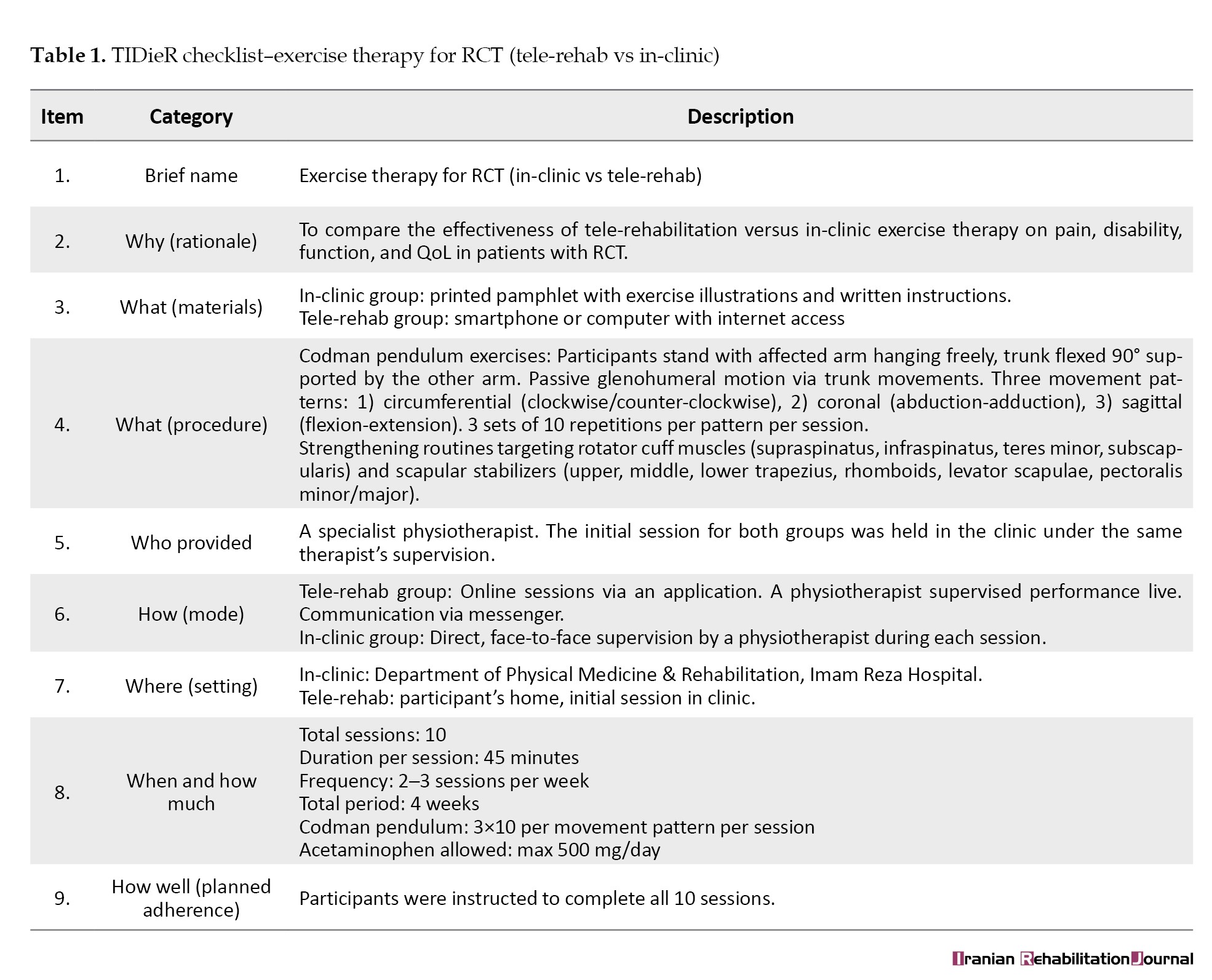
The exercises included Codman pendulum exercises and strengthening routines targeting the rotator cuff muscles, including the supraspinatus, infraspinatus, teres minor, and subscapularis. Additionally, the program focused on strengthening the scapular stabilizers, which involved the upper, middle, and lower trapezius, rhomboid muscles, levator scapulae, as well as the pectoralis minor and major [13, 25, 26] (A detailed description of each exercise is provided in Table 1 based on the Template for Intervention Description and Replication checklist).
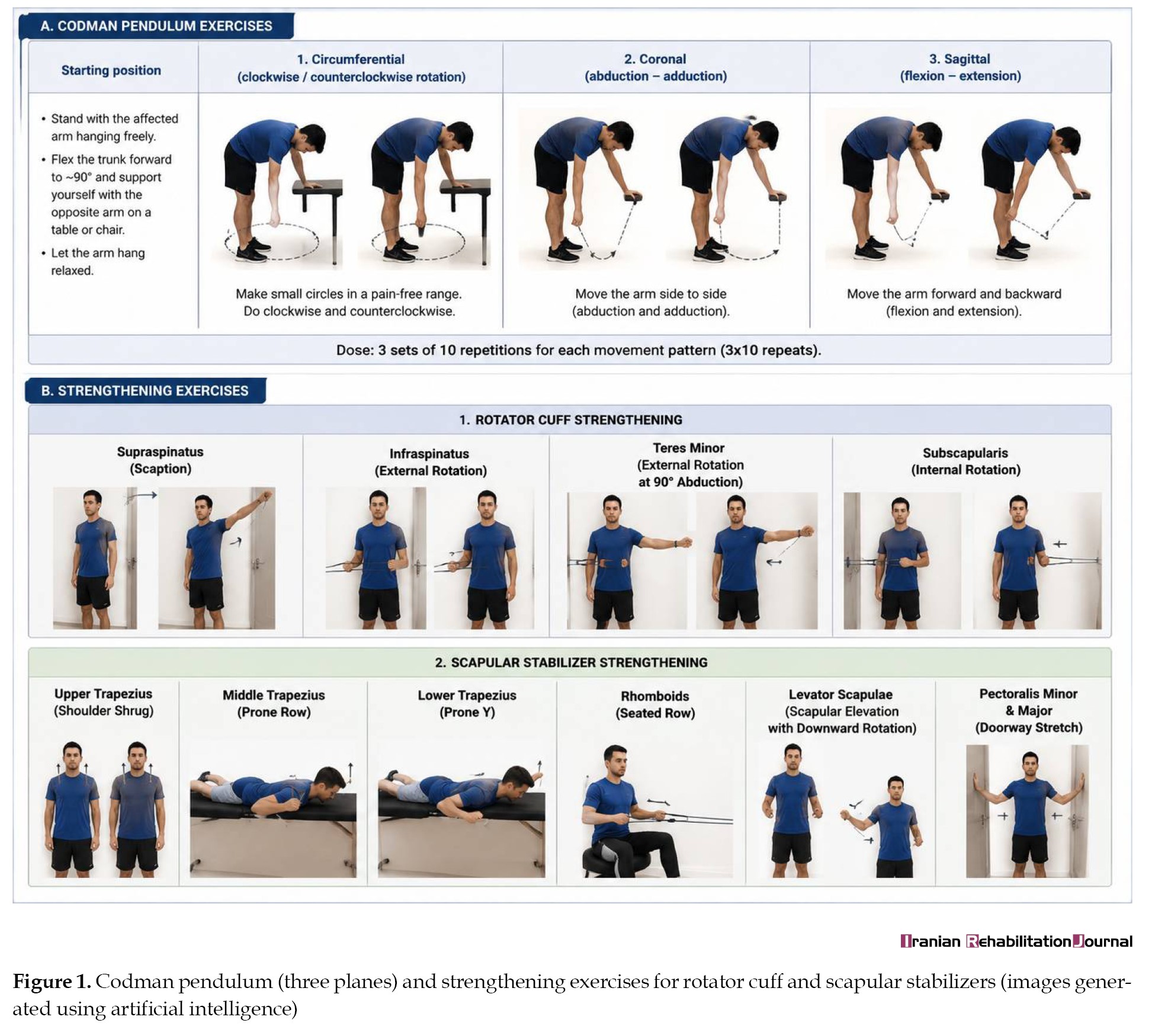
The Codman pendulum exercise protocol required participants to stand with the affected arm hanging freely while maintaining 90° trunk flexion supported by the contralateral arm. Participants generated passive glenohumeral motion through controlled trunk movements while maintaining complete relaxation of shoulder musculature. The protocol included oscillatory movements in three planes: Circumferential (clockwise/counterclockwise rotation), coronal (abduction-adduction), and sagittal (flexion-extension) (Figure 1) [27].
Musculoskeletal disorders are a leading cause of years lived with disability worldwide [1]. Shoulder pain ranks as the third most common musculoskeletal complaint, affecting 15–27% of adults, and rotator cuff tendinopathy (RCT) accounts for approximately 70% of these cases [2]. RCT is defined as a clinical condition characterized by pain, tenderness, and often functional impairment arising from degenerative or inflammatory changes in the rotator cuff tendons (supraspinatus, infraspinatus, teres minor, subscapularis) without a complete tear [3, 4]. The pathomechanics of RCT involve a combination of intrinsic factors (tendon vascularity, collagen disorganization, tenocyte apoptosis) and extrinsic factors (subacromial impingement, scapular dyskinesis), leading to altered force transmission and proprioceptive deficits [5]. Consequently, RCT negatively affects motor control of the shoulder complex by disrupting the feedforward activation of rotator cuff muscles and altering scapulohumeral rhythm [6].
Beyond pain, RCT limits activities of daily living and work capacity and can adversely affect mental health and quality of life (QoL) [7]. The economic burden is substantial; average annual costs per patient have been estimated at €4,139 in Sweden [8] and approximately £8,500 in the United States [9]. Up to 40% of patients continue to experience pain and disability one year after diagnosis, emphasizing the need for early, effective intervention [10, 11].
Current clinical guidelines recommend conservative management as first-line treatment, including activity modification, analgesic medication, and a 12-week structured exercise program [12]. Exercise-based therapies in RCT focus on strengthening the rotator cuff and scapular stabilizers, as well as incorporating neuromuscular training (e.g. motor control retraining, proprioception, and functional upper extremity exercises) [12, 13]. Several randomized trials have confirmed that supervised exercise reduces pain and improves function in RCT [11, 14-16].
In parallel, digital health solutions have expanded access to care. Tele-rehabilitation—the delivery of rehabilitation services via online platforms—can improve treatment accessibility, reduce costs, and enhance patient convenience, especially for those in remote areas [17, 18]. Tele-rehabilitation has shown effectiveness comparable to in-clinic physiotherapy for various musculoskeletal conditions [11, 19, 20].
In a systematic review by Gava et al. (2022) [14], the effects of tele-rehabilitation on pain and disability in individuals with shoulder pain were examined. The review included six randomized controlled trials involving 368 patients. The findings indicated minimal differences in the effectiveness of tele-rehabilitation programs compared to clinic-based physiotherapy or home exercise in improving pain and disability. However, among these six studies, three focused on post-surgical shoulder pain, one on frozen shoulder, and two on chronic shoulder pain; none specifically addressed RCT. Furthermore, the included studies were low quality, and the overall certainty of evidence was very low. Consequently, because high-quality evidence specifically in the RCT population is lacking, tele-rehabilitation cannot be definitively recommended for these patients. Given this gap in the literature, this study aimed to compare the effects of tele-rehabilitation versus in-clinic exercise therapy on pain, disability, Disabilities of the arm, shoulder, and hand (DASH) scores, and QoL in participants with RCT. This study hypothesizes that tele-rehabilitation is as effective as in-clinic exercise therapy in improving pain, disability, and QoL in individuals with RCT.
Materials and Methods
This prospective, randomized, single-center clinical trial was conducted at the Department of Physical Medicine and Rehabilitation. Individuals referred to the Department of Physical Medicine and Rehabilitation with a diagnosis of shoulder tendinopathy and meeting the inclusion criteria were referred to the Physiotherapy Department, where, upon providing consent to participate in the study, they underwent assessment and received the intervention.
Randomization and blinding
Participants were randomly assigned to two groups: one receiving in-clinic exercise therapy (in-clinic) and the other group receiving tele-rehabilitation exercise therapy (tele-rehab). For the random sequences, block randomization was implemented with block sizes randomly set to two, four, or six. Initially, block sizes were chosen at random. For each block, various permutations were created to ensure equal group sizes, and then one of these permutations was randomly selected. The random numbers were generated using a computer in an independent statistical unit. For concealed allocation, the results of the randomization were sealed in opaque envelopes [21]. Due to the study design, blinding of physicians and participants was not possible; therefore, only assessor blinding was utilized in this study.
Sample size
The sampling method was convenience sampling. Sample size was calculated a priori using G*Power software, version 3.1.9.2 using a two‑sided independent t-test for the difference between two independent means. Based on the study by Malliaras et al. [11], the mean and standard deviation values for pain and shoulder disability were 15±9.5 in the tele‑rehabilitation group and 32.9±19.9 in the exercise education group. The pooled standard deviation was 15.59, giving a Cohen’s d effect size of 1.15. With a type I error (α) of 0.05 and a statistical power of 80%, the required sample size was calculated as 18 participants per group. To account for an anticipated 10% dropout rate, the final sample size was set at 20 participants per group, for a total of 40 participants.
Inclusion and exclusion criteria
The inclusion criteria included adults aged between 18 and 50 years [16, 22, 23]; MRI-confirmed diagnosis of RCT; shoulder pain duration greater than 6 weeks; worst shoulder pain over the past week greater than 3/10 on a numerical rating scale documented by a retrospective pain diary and confirmed by the evaluating physician [16, 23]; and ownership of a smartphone with the ability to use it.
Individuals who had undergone any treatments or surgeries within the past three months [23], exhibited symptoms of cervical radiculopathy, experienced paresthesia, had a complete rotator cuff tear, or had a history of tumors or malignancies in the affected area were excluded from the study [16]. Additionally, participants with active infections in the shoulder joint or surrounding tissues, coagulation disorders, or anticoagulant use were also ineligible. Furthermore, individuals with systemic rheumatological disorders, a history of upper limb fractures, or those who had taken systemic corticosteroids in the past month were excluded from the study [16].
Interventions
Both groups received 10 sessions of exercise therapy (45 minutes each) over 4 weeks (2–3 sessions per week) [24]. The initial session for both groups was held in the clinic under the supervision of a specialist physiotherapist, who provided standardized instruction. All exercises followed a published protocol for rotator cuff and scapular stabilizer strengthening [25].
The exercises included Codman pendulum exercises and strengthening routines targeting the rotator cuff muscles, including the supraspinatus, infraspinatus, teres minor, and subscapularis. Additionally, the program focused on strengthening the scapular stabilizers, which involved the upper, middle, and lower trapezius, rhomboid muscles, levator scapulae, as well as the pectoralis minor and major [13, 25, 26] (A detailed description of each exercise is provided in Table 1 based on the Template for Intervention Description and Replication checklist).
The Codman pendulum exercise protocol required participants to stand with the affected arm hanging freely while maintaining 90° trunk flexion supported by the contralateral arm. Participants generated passive glenohumeral motion through controlled trunk movements while maintaining complete relaxation of shoulder musculature. The protocol included oscillatory movements in three planes: Circumferential (clockwise/counterclockwise rotation), coronal (abduction-adduction), and sagittal (flexion-extension) (Figure 1) [27].
Each treatment session comprised 3 sets of 10 repetitions per movement pattern (3×10 repeats) [23, 28].
The 10-session duration was selected because most studies in relevant systematic reviews used 8-12 sessions of therapeutic exercise, which resulted in significant pain reduction and functional improvement in patients with shoulder tendinopathy [29].
The tele-rehab group accessed exercise videos through an available application. During each online session, a physiotherapist supervised the exercise. If participants encountered any issues or had questions, they communicated their concerns to the therapist via messenger. Both the participants and the therapist recorded the methods and duration of the exercises.
In-clinic group participants received the same exercises from the clinic pamphlet and performed them under the direct supervision of a physiotherapist during each session. Participants in both groups were permitted to use acetaminophen at a maximum dose of 500 mg per day.
Process
Participants who met the inclusion criteria were evaluated by a specialist in physical medicine and rehabilitation. Demographic information, including age, gender, height, weight, affected side, limited shoulder range of motion (ROM) (with/without), and duration of pain (more/less than one month), was recorded. Assessments were performed at three time points: Baseline (T0), one month after the final exercise session (T1), and two months after the final session (T2). A blinded assessor conduced all assessments in the same controlled environment.
Participants’ pain and disability were measured using the visual analog scale (VAS), The VAS is a 10‑cm horizontal line anchored by “no pain/disability” (0) and “worst imaginable pain/disability” [23, 24, 30]. Participants marked their average pain or disability over the past week [25].
Health-related symptoms were assessed with the DASH questionnaire. The DASH questionnaire is a 30-item tool designed to assess disability and symptoms related to the patient’s health status over the past week. It includes questions about the level of difficulty experienced while performing various physical activities due to issues with the arm, shoulder, or hand. Additionally, it evaluates the severity of symptoms such as pain, pain during activities, tingling, weakness, and stiffness. The questionnaire also examines the impact of these problems on social activities, work, sleep, and self-image. Respondents answer each item using a five-point Likert scale. The final score ranged from 0, indicating no disability, to 100, representing the most severe disability [23-25]. In this study, the total DASH questionnaire score was calculated. The DASH questionnaire has been translated into several languages. It demonstrates high validity and reliability (Cronbach’s α=0.96, test re-test intraclass correlation coefficient [ICC]=0.92, minimal detectable change=8.7 points, minimal clinically important difference=10.5 points) [31, 32].
Additionally, health-related QoL was evaluated using the brief World Health Organization QoL scale (WHOQOL-BREF) [23]. The WHOQOL-BREF scale is a condensed version of the WHOQOL-100 questionnaire. It consists of 24 items that assess QoL across four dimensions: physical health, mental health, social relationships, and environment. Each item is rated on a five-point Likert scale, where higher scores reflect a better QoL. After calculating the scores, they were linearly transformed to a scale of 0 to 100. WHOQOL-BREF scale has been translated into several languages and demonstrates high validity and reliability (Cronbach’s α=0.84–0.89, test re-test ICC=0.86) [33, 34].
Statistical analysis
All analyses were performed using SPSS software, version 26.0. The significance level was set at α=0.05 (two-tailed). Data normality was assessed using the Shapiro-Wilk test and visual inspection of Q-Q plots. Continuous variables are presented as Mean±SD; categorical as frequency (%).
Demographic and clinical characteristics (age, sex, body mass index, affected side, pain duration, baseline VAS, baseline DASH) were compared between groups using independent t-tests for continuous variables and chi-square or Fisher’s exact test for categorical variables. No significant differences were found (Table 1), confirming baseline equivalence.
A linear mixed-effects model (LMM) was used. The model included fixed effects of time (T0, T1, T2), group (in‑clinic, tele‑rehab), and the time×group interaction. Participants were treated as random effects. For the interaction effects involving additional factors (gender, side, pain duration, ROM limitation), a separate LMM was constructed with group×factor interaction terms.
Partial eta squared (η²p) was calculated for all fixed effects, with interpretation: small ≥0.01, medium ≥0.06, and large ≥0.14.
For any significant main effect of time or time × group interaction, pairwise comparisons were performed using Bonferroni-corrected t-tests. Specifically, within each group, comparisons were made between T0 vs T1, T0 vs T2, and T1 vs T2. Between‑group comparisons were performed at each time point.
Results
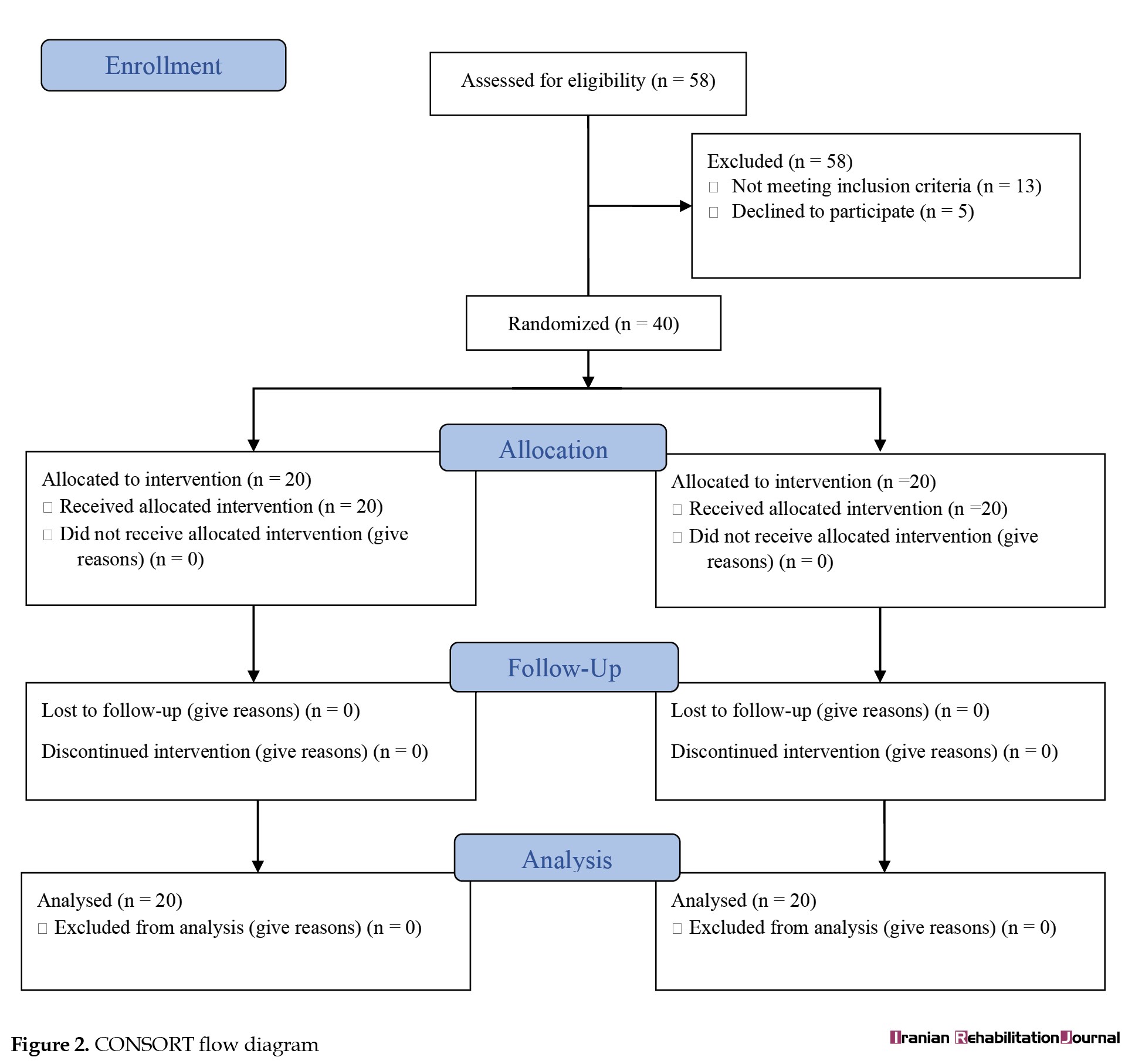
Of the 58 patients evaluated, 40 met the inclusion criteria and were randomly divided into two groups, with no participants dropping out of the study over the three months (Figure 2).
The 10-session duration was selected because most studies in relevant systematic reviews used 8-12 sessions of therapeutic exercise, which resulted in significant pain reduction and functional improvement in patients with shoulder tendinopathy [29].
The tele-rehab group accessed exercise videos through an available application. During each online session, a physiotherapist supervised the exercise. If participants encountered any issues or had questions, they communicated their concerns to the therapist via messenger. Both the participants and the therapist recorded the methods and duration of the exercises.
In-clinic group participants received the same exercises from the clinic pamphlet and performed them under the direct supervision of a physiotherapist during each session. Participants in both groups were permitted to use acetaminophen at a maximum dose of 500 mg per day.
Process
Participants who met the inclusion criteria were evaluated by a specialist in physical medicine and rehabilitation. Demographic information, including age, gender, height, weight, affected side, limited shoulder range of motion (ROM) (with/without), and duration of pain (more/less than one month), was recorded. Assessments were performed at three time points: Baseline (T0), one month after the final exercise session (T1), and two months after the final session (T2). A blinded assessor conduced all assessments in the same controlled environment.
Participants’ pain and disability were measured using the visual analog scale (VAS), The VAS is a 10‑cm horizontal line anchored by “no pain/disability” (0) and “worst imaginable pain/disability” [23, 24, 30]. Participants marked their average pain or disability over the past week [25].
Health-related symptoms were assessed with the DASH questionnaire. The DASH questionnaire is a 30-item tool designed to assess disability and symptoms related to the patient’s health status over the past week. It includes questions about the level of difficulty experienced while performing various physical activities due to issues with the arm, shoulder, or hand. Additionally, it evaluates the severity of symptoms such as pain, pain during activities, tingling, weakness, and stiffness. The questionnaire also examines the impact of these problems on social activities, work, sleep, and self-image. Respondents answer each item using a five-point Likert scale. The final score ranged from 0, indicating no disability, to 100, representing the most severe disability [23-25]. In this study, the total DASH questionnaire score was calculated. The DASH questionnaire has been translated into several languages. It demonstrates high validity and reliability (Cronbach’s α=0.96, test re-test intraclass correlation coefficient [ICC]=0.92, minimal detectable change=8.7 points, minimal clinically important difference=10.5 points) [31, 32].
Additionally, health-related QoL was evaluated using the brief World Health Organization QoL scale (WHOQOL-BREF) [23]. The WHOQOL-BREF scale is a condensed version of the WHOQOL-100 questionnaire. It consists of 24 items that assess QoL across four dimensions: physical health, mental health, social relationships, and environment. Each item is rated on a five-point Likert scale, where higher scores reflect a better QoL. After calculating the scores, they were linearly transformed to a scale of 0 to 100. WHOQOL-BREF scale has been translated into several languages and demonstrates high validity and reliability (Cronbach’s α=0.84–0.89, test re-test ICC=0.86) [33, 34].
Statistical analysis
All analyses were performed using SPSS software, version 26.0. The significance level was set at α=0.05 (two-tailed). Data normality was assessed using the Shapiro-Wilk test and visual inspection of Q-Q plots. Continuous variables are presented as Mean±SD; categorical as frequency (%).
Demographic and clinical characteristics (age, sex, body mass index, affected side, pain duration, baseline VAS, baseline DASH) were compared between groups using independent t-tests for continuous variables and chi-square or Fisher’s exact test for categorical variables. No significant differences were found (Table 1), confirming baseline equivalence.
A linear mixed-effects model (LMM) was used. The model included fixed effects of time (T0, T1, T2), group (in‑clinic, tele‑rehab), and the time×group interaction. Participants were treated as random effects. For the interaction effects involving additional factors (gender, side, pain duration, ROM limitation), a separate LMM was constructed with group×factor interaction terms.
Partial eta squared (η²p) was calculated for all fixed effects, with interpretation: small ≥0.01, medium ≥0.06, and large ≥0.14.
For any significant main effect of time or time × group interaction, pairwise comparisons were performed using Bonferroni-corrected t-tests. Specifically, within each group, comparisons were made between T0 vs T1, T0 vs T2, and T1 vs T2. Between‑group comparisons were performed at each time point.
Results
Of the 58 patients evaluated, 40 met the inclusion criteria and were randomly divided into two groups, with no participants dropping out of the study over the three months (Figure 2).
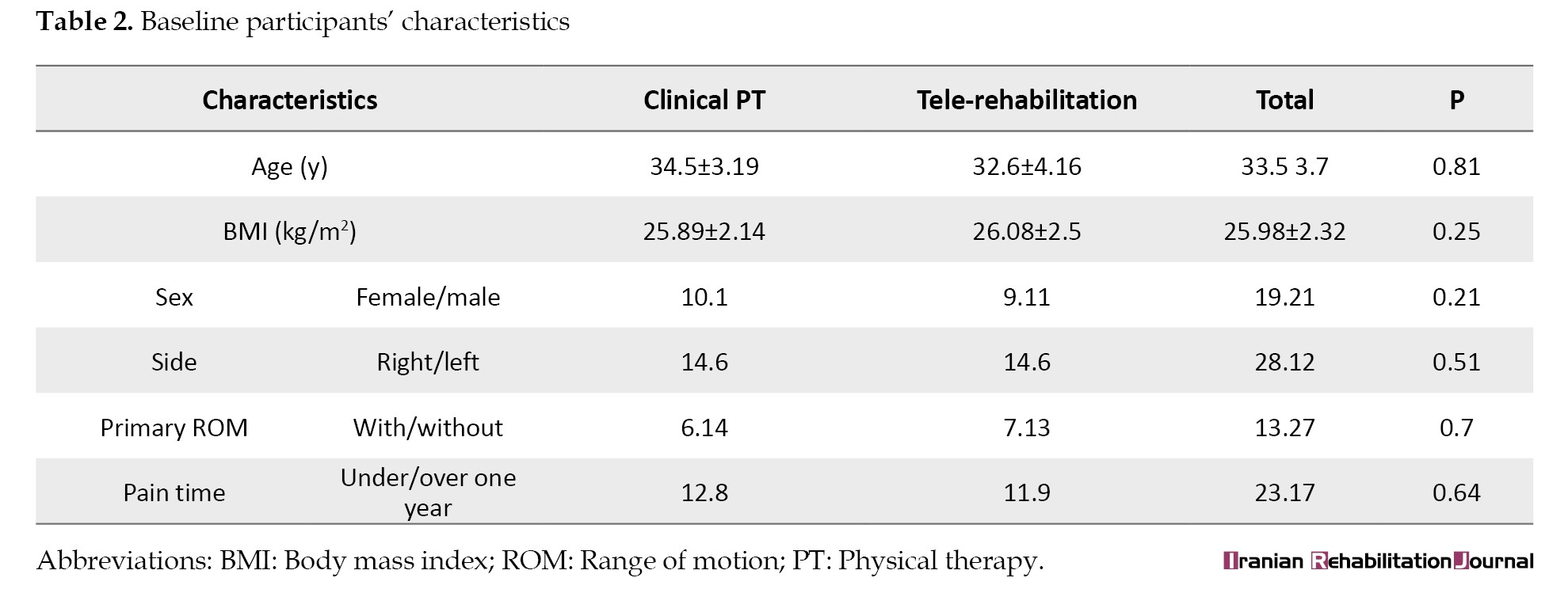
Among these patients, 52.5% (21 patients) were male, and their ages ranged from 20 to 42 years, with a mean age of 33.5±3.7 years. Demographic data did not differ significantly between the two groups (Table 2).
Pain (VAS)
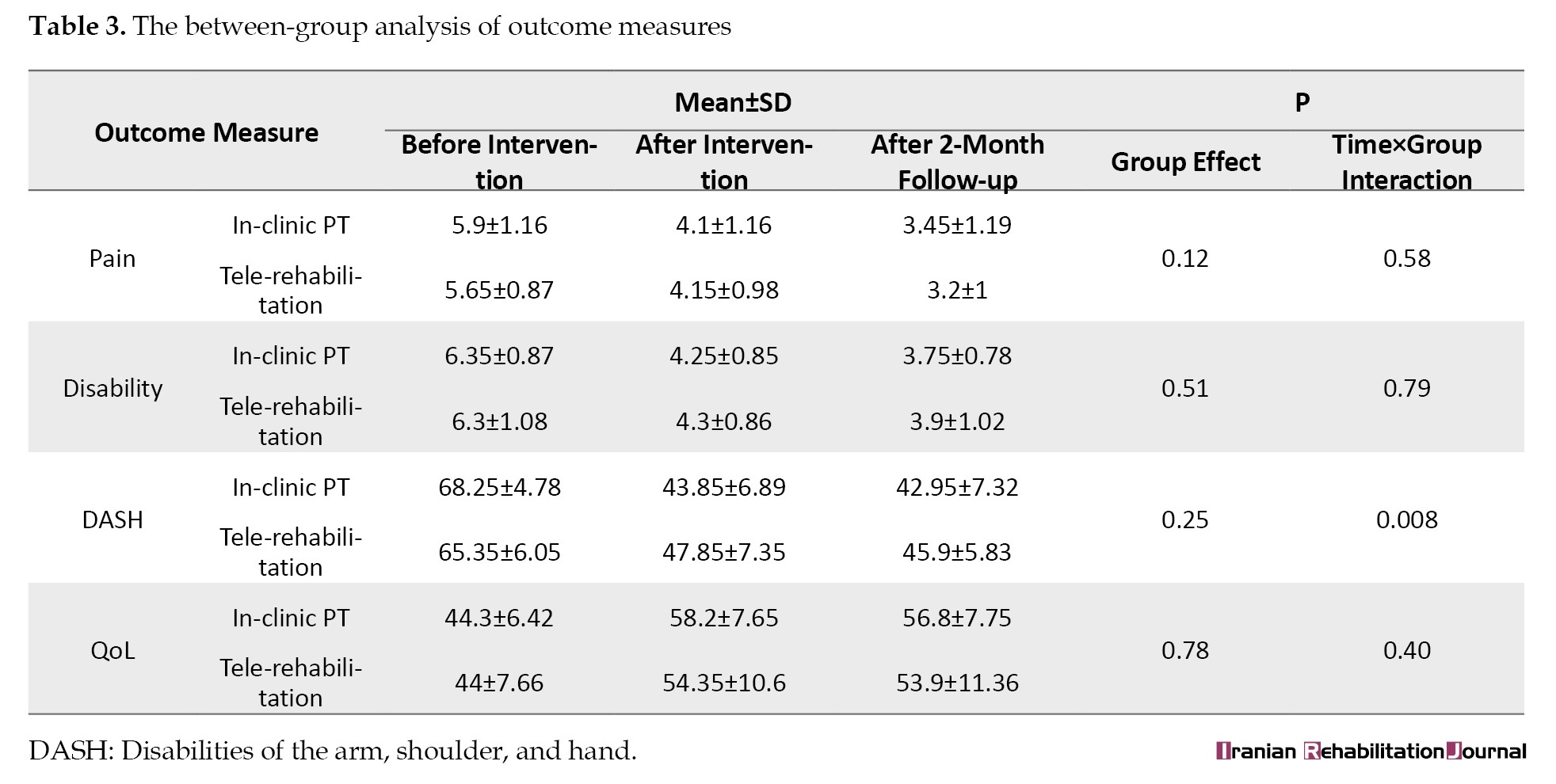
Time had a significant main effect on pain scores (F(2, 76)=45.3, P<0.001, η²p=0.54). The main effect of group was not significant (F(1, 38)=2.4, P=0.128, η²p=0.06), and the time×group interaction was also not significant (F(2, 76)=0.54, P=0.587, η²p=0.01).
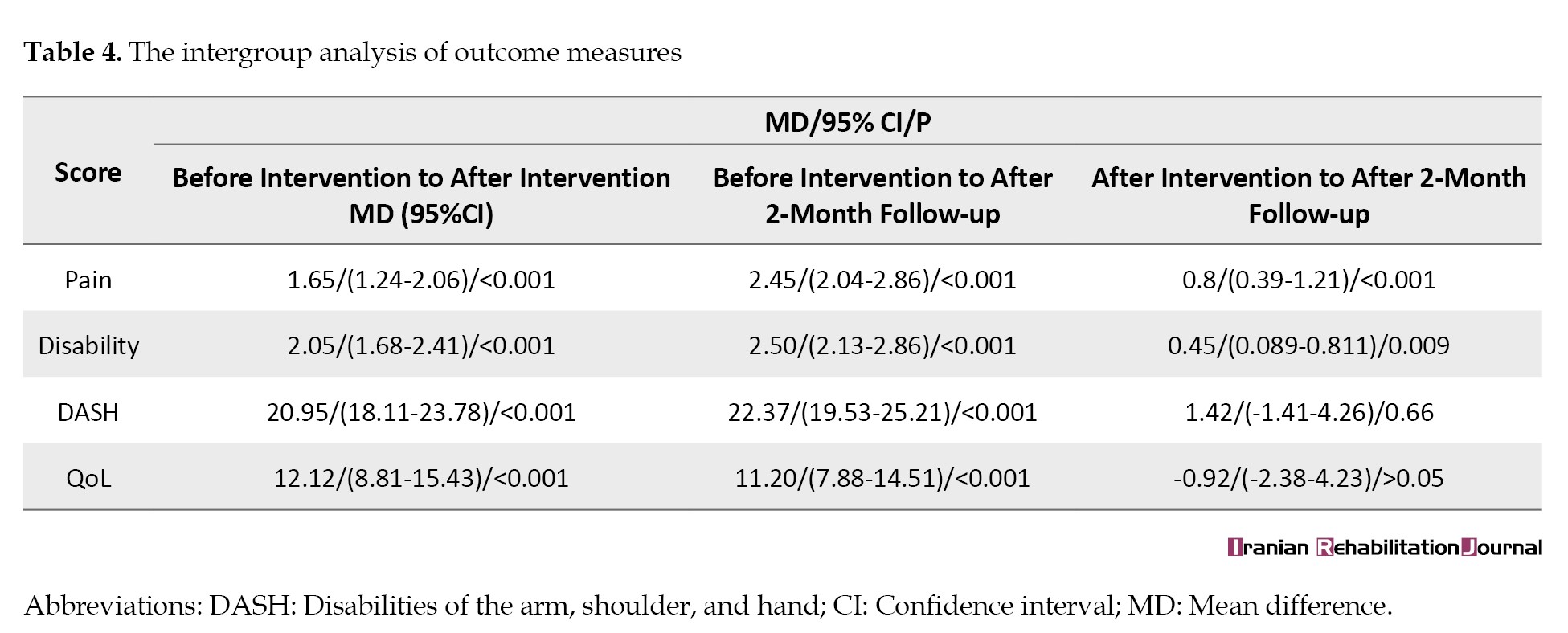
Pain decreased significantly from T0 (5.77±1.02) to T1 (4.12±1.06; mean difference [MD]=1.65, 95% confidence interval [CI], 1.24%, 2.06%, P<0.001) and from T0 to T2 (3.32±1.09; MD=2.45, 95% CI, 2.04%, 2.86%, P<0.001). A significant reduction was also observed from T1 to T2 (MD=0.80, 95% CI, 0.39%, 1.21%, P<0.001).
Between-group comparisons at each time point revealed no significant differences (T0: P=0.75; T1: P=0.34; T2: P=0.29) (Tables 3 and 4).
Disability (VAS)
Time had a significant effect on disability scores (F(2, 76)=38.7, P<0.001, η²p=0.50). No significant group effect (F(1, 38)=0.44, P=0.51, η²p=0.01) or time×group interaction (F(2, 76)=0.24, P=0.79, η²p=0.01) was found.
Disability improved from T0 (6.32±0.97) to T1 (4.27±0.84; MD=2.05, 95% CI, 1.68%, 2.41%, P<0.001) and from T0 to T2 (3.82±0.09; MD=2.50, 95% CI, 2.13%, 2.86%, P<0.001). A smaller but significant improvement was also seen from T1 to T2 (MD=0.45, 95% CI, 0.09%, 0.81%, P=0.009). No significant between group differences were observed at any time point (all P>0.05) (Tables 3 and 4).
Disabilities of the arm, shoulder, and hand
The analysis showed a significant main effect of time (F(2, 76)=52.1, P<0.001, η²p=0.58) and a nonsignificant group effect (F(1, 38)=1.35, P=0.25, η²p=0.03). Importantly, the time×group interaction was significant (F(2, 76)=5.28, P=0.008, η²p=0.12), indicating that the change in DASH scores over time differed between the two groups.
In the in-clinic group, DASH scores decreased from T0 (68.25±4.78) to T1 (43.85±6.89; MD=22.9, P<0.001) and remained stable at T2 (42.95±7.32; MD from T0=24.3, P<0.001), with no significant change between T1 and T2 (MD=1.4, P=0.66).
In the tele-rehab group, DASH scores decreased from T0 (65.35±6.05) to T1 (47.85±7.35; MD=19.0, P<0.001) and to T2 (45.9±5.83; MD=20.9, P<0.001), with no difference between T1 and T2 (MD=1.9, P=0.54).
Between-group comparisons: At T1, the in-clinic group had lower DASH scores than the tele-rehab group (MD=–3.3, uncorrected P=0.048), but after Bonferroni correction for three comparisons, the difference was not significant (P=0.144). At T2, no significant between-group difference was observed (P=0.23) (Tables 3 and 4).
Brief World Health Organization quality of life
Time had a significant effect on QoL scores (F(2, 76)=29.4, P<0.001, η²p=0.44). The group effect was not significant (F(1, 38)=0.08, P=0.78, η²p=0.002), and the time×group interaction was also not significant (F(2, 76)=0.93, P=0.40, η²p=0.02).
QoL improved from T0 (44.15±6.98) to T1 (56.27±9.33; MD=12.12, 95% CI, 8.81%, 15.43%, P<0.001) and from T0 to T2 (55.35±9.71; MD=11.2, 95% CI, 7.88%, 14.51%, P<0.001). The change from T1 to T2 was not significant (MD=–0.92, 95% CI, –2.38%, 4.23%, P=1.00). No significant between group differences were found at any time point (all P>0.05) (Tables 3 and 4).
Interaction effects with other baseline factors
The interaction between group and gender, side of involvement, presence of limited shoulder ROM, and duration of pain (under or over one year) was examined for each outcome. As presented in Table 5, no significant interaction effects were observed for pain, disability, or QoL (all P>0.10).
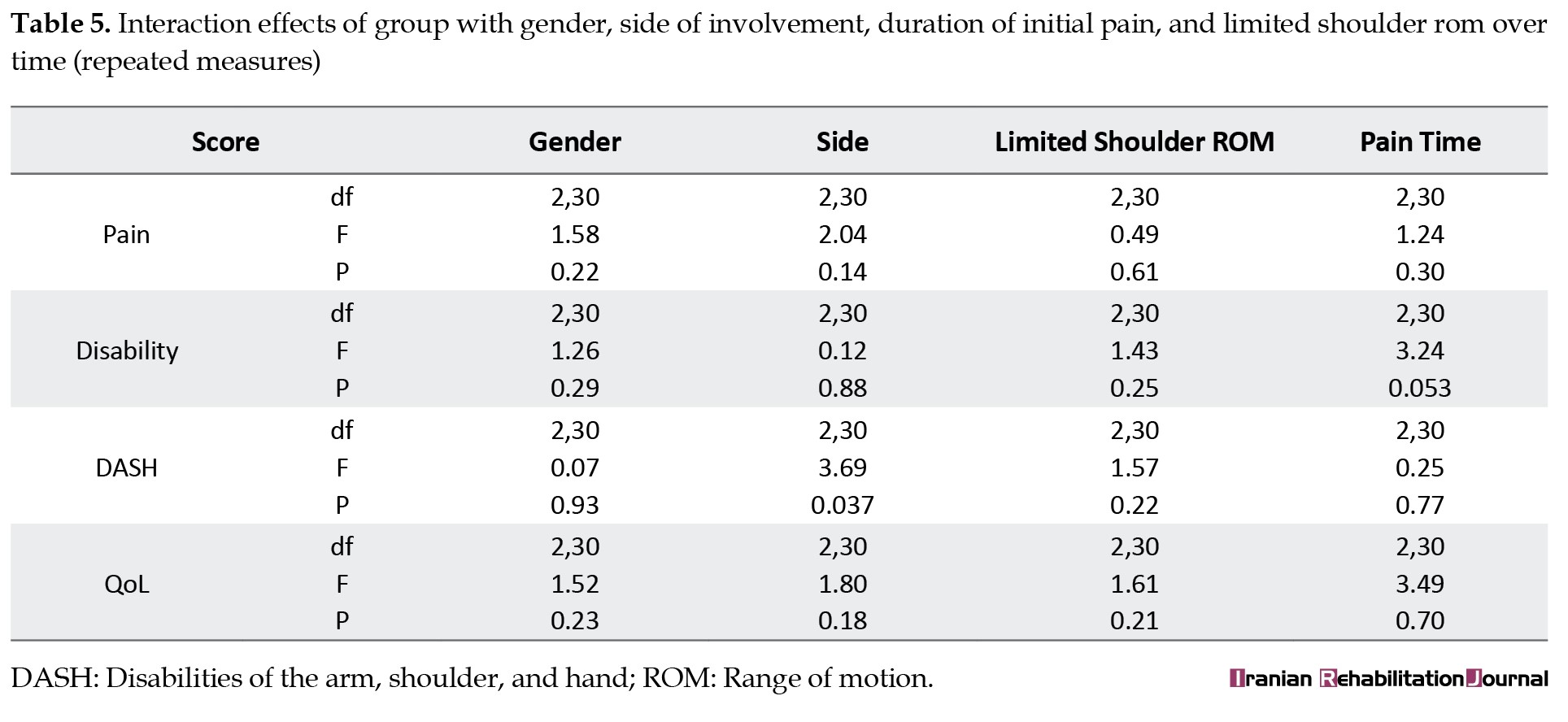
For the DASH score, a significant interaction was found with side of involvement (F(2, 30)=3.69, P=0.037); however, this single significant finding among multiple tests should be interpreted with caution.
Discussion
This study assessed the effectiveness of a tele-rehab exercise therapy compared to in-clinic exercise therapy for individuals with RCT. Forty participants with this condition took part in the study. The results indicated that both the in-clinic and the tele-rehab groups experienced reductions in pain and disability over three months, along with improvements in symptoms and QoL. No significant differences emerged between the two groups at any time point before the intervention, after the one-month intervention, or at the two-month follow-up. Additionally, the interaction effect of time and group was insignificant, except for disability severity, suggesting that the improvement process over time was similar for both treatment groups.
Several established biomechanical and neuromuscular mechanisms may explain the improvement observed in both groups. Therapeutic exercise has been shown to promote tendon remodeling by stimulating collagen synthesis and improving tendon function [35, 36]. In addition, RCT is associated with altered motor control, including delayed activation of the rotator cuff muscles and compensatory overactivity of the deltoid muscle. The prescribed exercises, including rotator cuff strengthening and scapular stabilization, may help restore coordinated scapulothoracic and glenohumeral motion, improve muscle recruitment patterns, and reduce subacromial mechanical stress [37, 38]. Furthermore, pendulum exercises may reduce pain through gentle passive mobilization and minimal rotator cuff muscle activation, thereby facilitating subsequent pain-free shoulder movement and exercise performance [39].
These findings align with previous studies that have confirmed physiotherapy exercises as an independent and effective treatment option for shoulder tendinopathies [33, 34, 40]. In comparing physiotherapy interventions with other treatment modalities, a review by Lazzarini et al. (2025) [40] indicated that corticosteroid injections were not significantly more effective than physiotherapy unless combined with other physiotherapy interventions. Additionally, a study by Magalhães et al. (2024) [34] found that intrathecal microelectrolysis associated with exercises did not have a greater impact on pain intensity and disability in individuals with RCT than therapeutic exercises alone. These results highlight that physiotherapy can serve as a safe and independent treatment option for managing RCT.
The results of Villa Muñoz et al. [33] showed that both therapeutic exercise and myofascial trigger point therapy effectively improve pain and ROM in individuals with shoulder tendinopathy. Additionally, therapeutic exercise can serve as a viable alternative to manual therapy, offering cost-effective benefits, particularly in remote care and group sessions. This highlights the broader application of therapeutic exercise in physiotherapy. In this study, a combination of Codman and rotator cuff muscle-strengthening exercises was implemented, enabling tele-rehabilitation.
Tele-rehabilitation is an innovative approach with significant potential to enhance accessibility, convenience, and flexibility for patients [41]. It fosters greater patient engagement by incorporating tools, such as continuous monitoring, exercise biofeedback, gamification, and communication via video or telephone [22, 42]. Review studies indicated that tele-rehabilitation is more effective than traditional home exercise in improving ROM, functional outcomes, and QoL for patients with shoulder disorders [14, 18]. The results of this study indicate that tele-rehabilitation can be as effective as in-clinic exercise, particularly in improving patients’ pain, function, symptoms, and overall QoL. These findings align with those of Türkmen et al. (2020) [43], who compared video-based rehabilitation programs with traditional physiotherapy. They also concluded that tele-rehabilitation can serve as an effective and cost-efficient option for the conservative treatment of minor rotator cuff tears.
Evidence on the effectiveness of tele-rehabilitation is still developing. Some studies, including a systematic review by Gava et al. (2022) [14], have indicated no significant difference between tele-rehabilitation and in-clinic physiotherapy or home exercise programs in improving pain and disability. These findings suggest that while tele-rehabilitation may be a promising option, there is not yet sufficient high-quality evidence to fully endorse it as a standalone treatment.
Adhering to physical therapy is crucial for improving outcomes and preventing exacerbations. Tele-rehabilitation may enhance adherence. A study by Malliaras et al. (2020) [11] demonstrated that adherence to tele-rehabilitation programs can be higher than with traditional methods, which may lead to improved treatment outcomes. In our study, treatment adherence was similar in both the tele-rehabilitation and in-clinic physiotherapy groups, with all participants completing their treatment sessions.
Several similar studies have noted gender imbalances in the sample, which may impact the generalizability of the results [11]. In contrast, this study achieved approximately equal representation of both sexes among participants, enhancing the generalizability of its findings. Although the study design did not allow participant blinding, the assessor was not aware of which group participants belonged to.
Limitations and future research recommendations
Several limitations should be acknowledged. First, the follow-up period was only two months after intervention; longer‑term outcomes (e.g. 6 or 12 months) are needed to evaluate symptom recurrence and the need for additional interventions. Second, we did not assess neuromuscular outcomes directly (e.g. surface EMG of rotator cuff muscles, corticospinal excitability), which would have provided insights into the biological mechanisms underlying the clinical improvements. Future studies should incorporate EMG and strength measurements (e.g. isokinetic dynamometry of shoulder rotators) to determine whether tele‑rehabilitation and in‑clinic therapy produce similar neuromuscular adaptations. Third, we did not measure shoulder ROM or muscle strength; future trials should include these variables to obtain a more comprehensive functional profile. Fourth, participants were relatively young (mean 33.5 years) and all owned smartphones, limiting generalizability to older adults or those with low digital literacy. Fifth, while assessor‑blinding was maintained, participants could not be blinded, which may introduce performance bias.
Clinicians can confidently prescribe tele-rehabilitation for motivated patients with RCT, especially when access to a clinic is limited. Future research should focus on (a) identifying predictors of response to tele-rehabilitation, (b) comparing different tele-rehabilitation formats (synchronous vs. asynchronous), and (c) evaluating cost-effectiveness from a societal perspective.
Conclusion
This study, in conjunction with existing evidence, confirms that both in-clinic physiotherapy and tele-rehabilitation effectively reduce pain, decrease disability, and improve functional outcomes and QoL in patients with RCT. Tele-rehabilitation, in particular, offers distinct advantages including broader accessibility, scheduling flexibility, and potentially improved patient adherence, positioning it as a viable complementary or alternative treatment pathway.
Ethical Considerations
Compliance with ethical guidelines
This study was approved by the Research Ethics Committee of Aja University of Medical Sciences, Tehran, Iran (Code: IR.AJAUMS.REC.1403.073), and was registered by the Iranian Registry of Clinical Trials (IRCT), Tehran, Iran (Code: IRCT20180416039323N5). This study was conducted in accordance with the guidelines of the Declaration of Helsinki. Informed consent was obtained from all participants after they received a thorough explanation of the study’s objectives. Informed consent was obtained from all participants.
Funding
The authors received no financial support for the research, authorship and/or publication of this article.
Authors' contributions
Data collection, and data analysis: Reza Kazempour-Mofrad; Investigation: Sirous Azizi; Intervention: Afsaneh Dadarkhah; Patient referral: Zahra Rezasoltani, Sirous Azizi, and Reza Kazempour-Mofrad; Methodology: Masumeh Bagherzadeh Cham; Writing: All authors; Supervision: Reza Kazempour-Mofrad;
Conflict of interest
The authors declared no conflict of interest.
Acknowledgments
The authors thank the Central Research Laboratory, Aja University of Medical Sciences, for providing the necessary resources and support for this research.
Pain (VAS)
Time had a significant main effect on pain scores (F(2, 76)=45.3, P<0.001, η²p=0.54). The main effect of group was not significant (F(1, 38)=2.4, P=0.128, η²p=0.06), and the time×group interaction was also not significant (F(2, 76)=0.54, P=0.587, η²p=0.01).
Pain decreased significantly from T0 (5.77±1.02) to T1 (4.12±1.06; mean difference [MD]=1.65, 95% confidence interval [CI], 1.24%, 2.06%, P<0.001) and from T0 to T2 (3.32±1.09; MD=2.45, 95% CI, 2.04%, 2.86%, P<0.001). A significant reduction was also observed from T1 to T2 (MD=0.80, 95% CI, 0.39%, 1.21%, P<0.001).
Between-group comparisons at each time point revealed no significant differences (T0: P=0.75; T1: P=0.34; T2: P=0.29) (Tables 3 and 4).
Disability (VAS)
Time had a significant effect on disability scores (F(2, 76)=38.7, P<0.001, η²p=0.50). No significant group effect (F(1, 38)=0.44, P=0.51, η²p=0.01) or time×group interaction (F(2, 76)=0.24, P=0.79, η²p=0.01) was found.
Disability improved from T0 (6.32±0.97) to T1 (4.27±0.84; MD=2.05, 95% CI, 1.68%, 2.41%, P<0.001) and from T0 to T2 (3.82±0.09; MD=2.50, 95% CI, 2.13%, 2.86%, P<0.001). A smaller but significant improvement was also seen from T1 to T2 (MD=0.45, 95% CI, 0.09%, 0.81%, P=0.009). No significant between group differences were observed at any time point (all P>0.05) (Tables 3 and 4).
Disabilities of the arm, shoulder, and hand
The analysis showed a significant main effect of time (F(2, 76)=52.1, P<0.001, η²p=0.58) and a nonsignificant group effect (F(1, 38)=1.35, P=0.25, η²p=0.03). Importantly, the time×group interaction was significant (F(2, 76)=5.28, P=0.008, η²p=0.12), indicating that the change in DASH scores over time differed between the two groups.
In the in-clinic group, DASH scores decreased from T0 (68.25±4.78) to T1 (43.85±6.89; MD=22.9, P<0.001) and remained stable at T2 (42.95±7.32; MD from T0=24.3, P<0.001), with no significant change between T1 and T2 (MD=1.4, P=0.66).
In the tele-rehab group, DASH scores decreased from T0 (65.35±6.05) to T1 (47.85±7.35; MD=19.0, P<0.001) and to T2 (45.9±5.83; MD=20.9, P<0.001), with no difference between T1 and T2 (MD=1.9, P=0.54).
Between-group comparisons: At T1, the in-clinic group had lower DASH scores than the tele-rehab group (MD=–3.3, uncorrected P=0.048), but after Bonferroni correction for three comparisons, the difference was not significant (P=0.144). At T2, no significant between-group difference was observed (P=0.23) (Tables 3 and 4).
Brief World Health Organization quality of life
Time had a significant effect on QoL scores (F(2, 76)=29.4, P<0.001, η²p=0.44). The group effect was not significant (F(1, 38)=0.08, P=0.78, η²p=0.002), and the time×group interaction was also not significant (F(2, 76)=0.93, P=0.40, η²p=0.02).
QoL improved from T0 (44.15±6.98) to T1 (56.27±9.33; MD=12.12, 95% CI, 8.81%, 15.43%, P<0.001) and from T0 to T2 (55.35±9.71; MD=11.2, 95% CI, 7.88%, 14.51%, P<0.001). The change from T1 to T2 was not significant (MD=–0.92, 95% CI, –2.38%, 4.23%, P=1.00). No significant between group differences were found at any time point (all P>0.05) (Tables 3 and 4).
Interaction effects with other baseline factors
The interaction between group and gender, side of involvement, presence of limited shoulder ROM, and duration of pain (under or over one year) was examined for each outcome. As presented in Table 5, no significant interaction effects were observed for pain, disability, or QoL (all P>0.10).
For the DASH score, a significant interaction was found with side of involvement (F(2, 30)=3.69, P=0.037); however, this single significant finding among multiple tests should be interpreted with caution.
Discussion
This study assessed the effectiveness of a tele-rehab exercise therapy compared to in-clinic exercise therapy for individuals with RCT. Forty participants with this condition took part in the study. The results indicated that both the in-clinic and the tele-rehab groups experienced reductions in pain and disability over three months, along with improvements in symptoms and QoL. No significant differences emerged between the two groups at any time point before the intervention, after the one-month intervention, or at the two-month follow-up. Additionally, the interaction effect of time and group was insignificant, except for disability severity, suggesting that the improvement process over time was similar for both treatment groups.
Several established biomechanical and neuromuscular mechanisms may explain the improvement observed in both groups. Therapeutic exercise has been shown to promote tendon remodeling by stimulating collagen synthesis and improving tendon function [35, 36]. In addition, RCT is associated with altered motor control, including delayed activation of the rotator cuff muscles and compensatory overactivity of the deltoid muscle. The prescribed exercises, including rotator cuff strengthening and scapular stabilization, may help restore coordinated scapulothoracic and glenohumeral motion, improve muscle recruitment patterns, and reduce subacromial mechanical stress [37, 38]. Furthermore, pendulum exercises may reduce pain through gentle passive mobilization and minimal rotator cuff muscle activation, thereby facilitating subsequent pain-free shoulder movement and exercise performance [39].
These findings align with previous studies that have confirmed physiotherapy exercises as an independent and effective treatment option for shoulder tendinopathies [33, 34, 40]. In comparing physiotherapy interventions with other treatment modalities, a review by Lazzarini et al. (2025) [40] indicated that corticosteroid injections were not significantly more effective than physiotherapy unless combined with other physiotherapy interventions. Additionally, a study by Magalhães et al. (2024) [34] found that intrathecal microelectrolysis associated with exercises did not have a greater impact on pain intensity and disability in individuals with RCT than therapeutic exercises alone. These results highlight that physiotherapy can serve as a safe and independent treatment option for managing RCT.
The results of Villa Muñoz et al. [33] showed that both therapeutic exercise and myofascial trigger point therapy effectively improve pain and ROM in individuals with shoulder tendinopathy. Additionally, therapeutic exercise can serve as a viable alternative to manual therapy, offering cost-effective benefits, particularly in remote care and group sessions. This highlights the broader application of therapeutic exercise in physiotherapy. In this study, a combination of Codman and rotator cuff muscle-strengthening exercises was implemented, enabling tele-rehabilitation.
Tele-rehabilitation is an innovative approach with significant potential to enhance accessibility, convenience, and flexibility for patients [41]. It fosters greater patient engagement by incorporating tools, such as continuous monitoring, exercise biofeedback, gamification, and communication via video or telephone [22, 42]. Review studies indicated that tele-rehabilitation is more effective than traditional home exercise in improving ROM, functional outcomes, and QoL for patients with shoulder disorders [14, 18]. The results of this study indicate that tele-rehabilitation can be as effective as in-clinic exercise, particularly in improving patients’ pain, function, symptoms, and overall QoL. These findings align with those of Türkmen et al. (2020) [43], who compared video-based rehabilitation programs with traditional physiotherapy. They also concluded that tele-rehabilitation can serve as an effective and cost-efficient option for the conservative treatment of minor rotator cuff tears.
Evidence on the effectiveness of tele-rehabilitation is still developing. Some studies, including a systematic review by Gava et al. (2022) [14], have indicated no significant difference between tele-rehabilitation and in-clinic physiotherapy or home exercise programs in improving pain and disability. These findings suggest that while tele-rehabilitation may be a promising option, there is not yet sufficient high-quality evidence to fully endorse it as a standalone treatment.
Adhering to physical therapy is crucial for improving outcomes and preventing exacerbations. Tele-rehabilitation may enhance adherence. A study by Malliaras et al. (2020) [11] demonstrated that adherence to tele-rehabilitation programs can be higher than with traditional methods, which may lead to improved treatment outcomes. In our study, treatment adherence was similar in both the tele-rehabilitation and in-clinic physiotherapy groups, with all participants completing their treatment sessions.
Several similar studies have noted gender imbalances in the sample, which may impact the generalizability of the results [11]. In contrast, this study achieved approximately equal representation of both sexes among participants, enhancing the generalizability of its findings. Although the study design did not allow participant blinding, the assessor was not aware of which group participants belonged to.
Limitations and future research recommendations
Several limitations should be acknowledged. First, the follow-up period was only two months after intervention; longer‑term outcomes (e.g. 6 or 12 months) are needed to evaluate symptom recurrence and the need for additional interventions. Second, we did not assess neuromuscular outcomes directly (e.g. surface EMG of rotator cuff muscles, corticospinal excitability), which would have provided insights into the biological mechanisms underlying the clinical improvements. Future studies should incorporate EMG and strength measurements (e.g. isokinetic dynamometry of shoulder rotators) to determine whether tele‑rehabilitation and in‑clinic therapy produce similar neuromuscular adaptations. Third, we did not measure shoulder ROM or muscle strength; future trials should include these variables to obtain a more comprehensive functional profile. Fourth, participants were relatively young (mean 33.5 years) and all owned smartphones, limiting generalizability to older adults or those with low digital literacy. Fifth, while assessor‑blinding was maintained, participants could not be blinded, which may introduce performance bias.
Clinicians can confidently prescribe tele-rehabilitation for motivated patients with RCT, especially when access to a clinic is limited. Future research should focus on (a) identifying predictors of response to tele-rehabilitation, (b) comparing different tele-rehabilitation formats (synchronous vs. asynchronous), and (c) evaluating cost-effectiveness from a societal perspective.
Conclusion
This study, in conjunction with existing evidence, confirms that both in-clinic physiotherapy and tele-rehabilitation effectively reduce pain, decrease disability, and improve functional outcomes and QoL in patients with RCT. Tele-rehabilitation, in particular, offers distinct advantages including broader accessibility, scheduling flexibility, and potentially improved patient adherence, positioning it as a viable complementary or alternative treatment pathway.
Ethical Considerations
Compliance with ethical guidelines
This study was approved by the Research Ethics Committee of Aja University of Medical Sciences, Tehran, Iran (Code: IR.AJAUMS.REC.1403.073), and was registered by the Iranian Registry of Clinical Trials (IRCT), Tehran, Iran (Code: IRCT20180416039323N5). This study was conducted in accordance with the guidelines of the Declaration of Helsinki. Informed consent was obtained from all participants after they received a thorough explanation of the study’s objectives. Informed consent was obtained from all participants.
Funding
The authors received no financial support for the research, authorship and/or publication of this article.
Authors' contributions
Data collection, and data analysis: Reza Kazempour-Mofrad; Investigation: Sirous Azizi; Intervention: Afsaneh Dadarkhah; Patient referral: Zahra Rezasoltani, Sirous Azizi, and Reza Kazempour-Mofrad; Methodology: Masumeh Bagherzadeh Cham; Writing: All authors; Supervision: Reza Kazempour-Mofrad;
Conflict of interest
The authors declared no conflict of interest.
Acknowledgments
The authors thank the Central Research Laboratory, Aja University of Medical Sciences, for providing the necessary resources and support for this research.
References
- GBD 2016 Disease and Injury Incidence and Prevalence Collaborators. Global, regional, and national incidence, prevalence, and years lived with disability for 328 diseases and injuries for 195 countries, 1990-2016: A systematic analysis for the global burden of disease study 2016. Lancet. 2017; 390(10100):1211-59. [DOI:10.1016/S0140-6736(17)32154-2] [PMID]
- Chen C, Du Y, Cao K, You Y, Pi L, Jiang D, et al. Global years lived with disability for musculoskeletal disorders in adults 70 Years and older from 1990 to 2019, and projections to 2040. Heliyon. 2024; 10(15):e35026. [DOI:10.1016/j.heliyon.2024.e35026] [PMID] [PMCID]
- Desmeules F, Lewis J, Littlewood C, McCreesh K, Roy J-S, Dubois B, et al. Rotator cuff tendinopathy diagnosis, nonsurgical medical care, and rehabilitation: A clinical practice guideline. Journal of Orthopaedic & Sports Physical Therapy. 2025; 55(4):23574. [DOI:10.2519/jospt.2025.13182] [PMID]
- Lewis J, McCreesh K, Roy JS, Ginn K. Rotator cuff tendinopathy: Navigating the diagnosis-management conundrum. Journal of Orthopaedic & Sports Physical Therapy. 2015; 45(11):923-37. [DOI:10.2519/jospt.2015.5941] [PMID]
- Seitz AL, McClure PW, Finucane S, Boardman III ND, Michener LA. Mechanisms of rotator cuff tendinopathy: Intrinsic, extrinsic, or both? Clinical Biomechanics. 2011; 26(1):1-2. [DOI:10.1016/j.clinbiomech.2010.08.001] [PMID]
- Baek S, Ki SY, Chung SW, Lee SJ, Cho YC, Oh KS. Delayed anticipatory muscle activation in rotator cuff tendinopathy. Orthopaedic Journal of Sports Medicine. 2021; 9(7):23259671211019360. [DOI:10.1177/23259671211019360] [PMID] [PMCID]
- Lucas J, Van Doorn P, Hegedus E, Lewis J, Van Der Windt D. A systematic review of the global prevalence and incidence of shoulder pain. BMC Musculoskeletal Disorders. 2022; 23(1):1073. [DOI:10.1186/s12891-022-05973-8] [PMID] [PMCID]
- Virta L, Joranger P, Brox JI, Eriksson R. Costs of shoulder pain and resource use in primary health care: A cost-of-illness study in Sweden. BMC Musculoskeletal Disorders. 2012; 13(1):17. [DOI:10.1186/1471-2474-13-17] [PMID] [PMCID]
- Oh LS, Wolf BR, Hall MP, Levy BA, Marx RG. Indications for rotator cuff repair: A systematic review. Clinical Orthopaedics and Related Research. 2007; 455:52-63. [DOI:10.1097/BLO.0b013e31802fc175] [PMID]
- van der Windt DA, Burke DL, Babatunde O, Hattle M, McRobert C, Littlewood C, et al. Predictors of the effects of treatment for shoulder pain: Protocol of an individual participant data meta-analysis. Diagnostic and Prognostic Research. 2019; 3(1):15. [DOI:10.1186/s41512-019-0061-x] [PMID] [PMCID]
- Malliaras P, Cridland K, Hopmans R, Ashton S, Littlewood C, Page R, et al. Internet and telerehabilitation-delivered management of rotator cuff–related shoulder pain (INTEL trial): Randomized controlled pilot and feasibility trial. JMIR mHealth and uHealth. 2020; 8(11):e24311. [DOI:10.2196/24311] [PMID] [PMCID]
- Cooper K, Alexander L, Brandie D, Brown VT, Greig L, Harrison I, et al. Exercise therapy for tendinopathy: A mixed-methods evidence synthesis exploring feasibility, acceptability and effectiveness. Health Technology Assessment. 2023; 27(24):1. [DOI:10.3310/TFWS2748]
- Canosa-Carro L, Bravo-Aguilar M, Abuín-Porras V, Almazan-Polo J, García-Pérez-de-Sevilla G, Rodriguez-Costa I, et al. Current understanding of the diagnosis and management of the tendinopathy: An update from the lab to the clinical practice. Disease-a-Month. 2022; 68(10):101314. [DOI:10.1016/j.disamonth.2021.101314] [PMID]
- Gava V, Pechincha Ribeiro L, Py R, Camargo P. Effectiveness of physical therapy given by telerehabilitation on pain and disability of individuals with shoulder pain: A systematic review. Clinical Rehabilitation. 2022; 36:715-25. [DOI:10.1177/02692155221083496] [PMID]
- Asensio-García M, Bernabeú-Casas R, Palazón-Bru A, M. Isabel T, Nouni R. Effectiveness of a group physiotherapy intervention in nontraumatic, inoperable painful shoulder: A randomized clinical trial. American Journal of Physical Medicine & Rehabilitation. 2017; 97:1. [DOI:10.1097/PHM.0000000000000817] [PMID]
- Naunton J, Kidgell D, Bennell K, Haines T, Malliaras P. The efficacy of high load-volume exercise versus low load-volume exercise for rotator cuff tendinopathy: A pilot and feasibility trial. Musculoskeletal Science and Practice. 2025; 75:103218. [DOI:10.1016/j.msksp.2024.103218] [PMID]
- Nicolas B, Leblong E, Fraudet B, Gallien P, Piette P. Telerehabilitation solutions in patient pathways: An overview of systematic reviews. Digital Health. 2024; 10:20552076241294110. [DOI:10.1177/20552076241294110] [PMID] [PMCID]
- Huang T, Zhang W, Yan B, Liu H, Girard O. Comparing telerehabilitation and home-based exercise for shoulder disorders: A systematic review and meta-analysis. Archives of Physical Medicine and Rehabilitation. 2024; 105(11):2214-23. [DOI:10.1016/j.apmr.2024.02.723] [PMID]
- Azma K, RezaSoltani Z, Rezaeimoghaddam F, Dadarkhah A, Mohsenolhosseini S. Efficacy of tele-rehabilitation compared with office-based physical therapy in patients with knee osteoarthritis: A randomized clinical trial. Journal of Telemedicine and Telecare. 2018; 24(8):560-5. [DOI:10.1177/1357633X17723368] [PMID]
- Dadarkhah A, Rezaimoghadam F, Najafi S, Mohebi B, Azarakhsh A, Rezasoltani Z. Remote versus in-person exercise instruction for chronic nonspecific low back pain lasting 12 weeks or longer: A randomized clinical trial. Journal of the National Medical Association. 2021; 113(3):278-84. [DOI:10.1016/j.jnma.2020.11.016] [PMID]
- Schulz KF, Altman DG, Moher D; CONSORT Group. CONSORT 2010 statement: Updated guidelines for reporting parallel group randomised trials. BMJ. 2010; 340:c332. [DOI:10.1136/bmj.c332] [PMID]
- Pak SS, Janela D, Freitas N, Costa F, Moulder R, Molinos M, et al. Comparing digital to conventional physical therapy for chronic shoulder pain: Randomized controlled trial. Journal of Medical Internet Research. 2023; 25:e49236. [DOI:10.2196/49236] [PMID] [PMCID]
- Esmaily H, Mohebbi R, Rezasoltani Z, Kasaiyan S, Dadarkhah A, Mir M. Subacromial injections of low-or high-molecular-weight hyaluronate versus physical therapy for shoulder tendinopathy: A randomized triple-blind controlled trial. Clinical Journal of Sport Medicine. 2022; 32(5):441-50. [DOI:10.1097/JSM.0000000000000988] [PMID]
- Mofrad MK, Rezasoltani Z, Dadarkhah A, Mofrad RK, Abdorrazaghi F, Azizi S. Periarticular neurofascial dextrose prolotherapy versus physiotherapy for the treatment of chronic rotator cuff tendinopathy: Randomized clinical trial. JCR: Journal of Clinical Rheumatology. 2021; 27(4):136-42. [DOI:10.1097/RHU.0000000000001218]
- de-Queiroz JHM, de-Medeiros MB, de-Lima RN, Cerdeira DQ. Exercise for rotator cuff tendinopathy. Revista Brasileira de Medicina do Trabalho. 2023; 20(3):498-504. [DOI:10.47626/1679-4435-2022-698] [PMID] [PMCID]
- Schydlowsky P, Szkudlarek M, Madsen OR. Comprehensive supervised heavy training program versus home training regimen in patients with subacromial impingement syndrome: A randomized trial. BMC Musculoskeletal Disorders. 2022; 23(1):52. [DOI:10.1186/s12891-021-04969-0] [PMID] [PMCID]
- Codman E. The shoulder: Rupture of the supraspinatus tendon and other lesions in or about the subacromial bursa. Malabar: R.E. Kreiger; 1984. [Link]
- Karabaş Ç, Çalış HT, Topaloğlu US, Karakükçü Ç. Effects of platelet-rich plasma injection on pain, range of motion, and disability in adhesive capsulitis: A prospective, randomized-controlled study. Turkish Journal of Physical Medicine and Rehabilitation. 2021; 67(4):462. [DOI:10.5606/tftrd.2021.6690] [PMID] [PMCID]
- Dominguez-Romero JG, Jiménez-Rejano JJ, Ridao-Fernández C, Chamorro-Moriana G. Exercise-based muscle development programmes and their effectiveness in the functional recovery of rotator cuff tendinopathy: A systematic review. Diagnostics. 2021; 11(3):529. [DOI:10.3390/diagnostics11030529] [PMID] [PMCID]
- Rezasoltani Z, Esmaily H, Dadarkhah A, Rousta M, Mohebbi R, Vashaei F. Low molecular-weight hyaluronic acid versus physiotherapy for the treatment of supraspinatus tendinopathy: A randomized comparative clinical trial. Journal of the American Academy of Orthopaedic Surgeons. 2021; 29(19):e979-92. [DOI:10.5435/JAAOS-D-20-01014] [PMID]
- Hudak PL, Amadio PC, Bombardier C, Beaton D, Cole D, Davis A, et al. Development of an upper extremity outcome measure: the DASH (disabilities of the arm, shoulder, and head). American Journal of Industrial Medicine. 1996; 29(6):602-8. [DOI:10.1002/(SICI)1097-0274(199606)29:63.0.CO;2-L]
- Mousavi SJ, Parnianpour M, Abedi M, Askary-Ashtiani A, Karimi A, Khorsandi A, et al. Cultural adaptation and validation of the persian version of the disabilities of the arm, shoulder and hand (DASH) outcome measure. Clinical Rehabilitation. 2008; 22(8):749-57. [DOI:10.1177/0269215508085821] [PMID]
- Villa Muñoz T, Velázquez Saornil J, Sánchez Milá Z, Romero-Morales C, Almazán Polo J, Baraja Vegas L, et al. Comparative evaluation of the efficacy of therapeutic exercise versus myofascial trigger point therapy in the treatment of shoulder tendinopathies: A randomised controlled trial. BMJ Open Sport & Exercise Medicine. 2024; 10(4):e002043. [DOI:10.1136/bmjsem-2024-002043] [PMID] [PMCID]
- Magalhães GC, Kamonseki DH, da Silva AC, Nunes JA, de Sousa AI, Ribeiro DC, et al. Effectiveness of microelectrolysis associated with exercises versus exercises alone on pain intensity and disability in individuals with chronic rotator cuff tendinopathy: A randomized controlled trial. Archives of Physical Medicine and Rehabilitation. 2025; 106(6):837-44. [DOI:10.1016/j.apmr.2024.10.016] [PMID]
- Kim D, Moon HY, Lee M. Mechanotransduction as a therapeutic target in tendinopathy: Molecular pathways and exercise implications. Research in Sports Medicine. 2026; 34(3):322-37. [DOI:10.1080/15438627.2025.2568936] [PMID]
- Guzzoni V, Selistre-de-Araújo HS, RC M. Tendon remodeling in response to resistance training, anabolic androgenic steroids and aging. Cells. 2018; 7(12):251. [DOI:10.3390/cells7120251] [PMID] [PMCID]
- de Oliveira FC, Bouyer LJ, Ager AL, Roy JS. Electromyographic analysis of rotator cuff muscles in patients with rotator cuff tendinopathy: A systematic review. Journal of Electromyography and Kinesiology. 2017; 35:100-14. [DOI:10.1016/j.jelekin.2017.06.002] [PMID]
- Ludewig PM, Reynolds JF. The association of scapular kinematics and glenohumeral joint pathologies. Journal of Orthopaedic & Sports Physical Therapy. 2009; 39(2):90-104. [DOI:10.2519/jospt.2009.2808] [PMID]
- Long JL, Ruberte Thiele RA, Skendzel JG, Jeon J, Hughes RE, Miller BS, et al. Activation of the shoulder musculature during pendulum exercises and light activities. Journal of Orthopaedic & Sports Physical Therapy. 2010; 40(4):230-7. [DOI:10.2519/jospt.2010.3095] [PMID]
- Lazzarini SG, Buraschi R, Pollet J, Bettariga F, Pancera S, Pedersini P. Effectiveness of additional or standalone corticosteroid injections compared to physical therapist interventions in rotator cuff tendinopathy: A systematic review and meta-analysis of randomized controlled trials. Physical Therapy. 2025; 105(3):pzaf006. [DOI:10.1093/ptj/pzaf006] [PMID]
- Janela D, Costa F, Molinos M, Moulder RG, Lains J, Francisco GE, et al. Asynchronous and tailored digital rehabilitation of chronic shoulder pain: A prospective longitudinal cohort study. Journal of Pain Research. 2022; 53-66. [DOI:10.2147/JPR.S343308] [PMID] [PMCID]
- Argent R, Daly A, Caulfield B. Patient involvement with home-based exercise programs: Can connected health interventions influence adherence?. JMIR mHealth and uHealth. 2018; 6(3):e8518. [DOI:10.2196/mhealth.8518] [PMID] [PMCID]
- Türkmen E, Akbaba YA, Altun S. Effectiveness of video-based rehabilitation program on pain, functionality, and quality of life in the treatment of rotator cuff tears: A randomized controlled trial. Journal of Hand Therapy. 2020; 33(3):288-95. [DOI:10.1016/j.jht.2019.08.004] [PMID]
Article type: Original Research Articles |
Subject:
Physical Medicine and Rehabilitation
Received: 2025/11/2 | Accepted: 2026/05/19 | Published: 2026/09/26
Received: 2025/11/2 | Accepted: 2026/05/19 | Published: 2026/09/26
Send email to the article author

Copyright © The Author(s);
This is an open access article distributed under the terms of the Creative Commons Attribution-NonCommercial 4.0 (CC-By-NC 4.0), which permits use, distribution, and reproduction in any medium, provided the original work is properly cited and is not used for commercial purposes.
Contact Information
