988368
Sun, Oct 25, 2026

Volume 24, Issue 2 (June 2026)
Iranian Rehabilitation Journal 2026, 24(2): 231-242 |
Back to browse issues page



Download citation:
BibTeX | RIS | EndNote | Medlars | ProCite | Reference Manager | RefWorks
Send citation to:


BibTeX | RIS | EndNote | Medlars | ProCite | Reference Manager | RefWorks
Send citation to:
Mohsin T S, Fadhil Lateef H. Neuromuscular Balance Training Enhances Motor Coordination and Postural Control in Post-stroke Patients: A Randomized Controlled Trial. Iranian Rehabilitation Journal 2026; 24 (2) :231-242
URL: http://irj.uswr.ac.ir/article-1-2663-en.html
URL: http://irj.uswr.ac.ir/article-1-2663-en.html

1- Department of Anesthesia Techniques, College of Health and Medical Techniques, University of Kut, Wasit, Iraq.
2- Al.Zahraa Teaching Hospital, Iraq, Iraq.
2- Al.Zahraa Teaching Hospital, Iraq, Iraq.
Keywords: Neuromuscular training, Balance, Post-stroke rehabilitation, Motor coordination, Proprioception, Sensorimotor integration, Randomized controlled trial
Full-Text [PDF 1098 kb]
(463 Downloads)
| Abstract (HTML) (2846 Views)
Control group: Conventional physiotherapy
The people in the control group received regular physiotherapy that was time-matched and busy, as recommended by published rules [18-21]. This procedure was made to show the best ways to provide normal care. It was based on control treatments used in similar high-quality studies. Therapy was conducted one-on-one and was designed to help the person with their specific problems. The main goal was to get stronger, increase the range of motion, and do useful things. Lower body strengthening exercises (such as using resistance bands for hip abduction, knee extension, and ankle dorsiflexion), stretching of spastic or tight muscle groups, and over-ground gait training on stable, predictable surfaces were all part of a typical session. The goal was to improve endurance and gait pattern. There were balance exercises, but most of them were standing or moving jobs that had to be done on hard surfaces.
Outcome measures
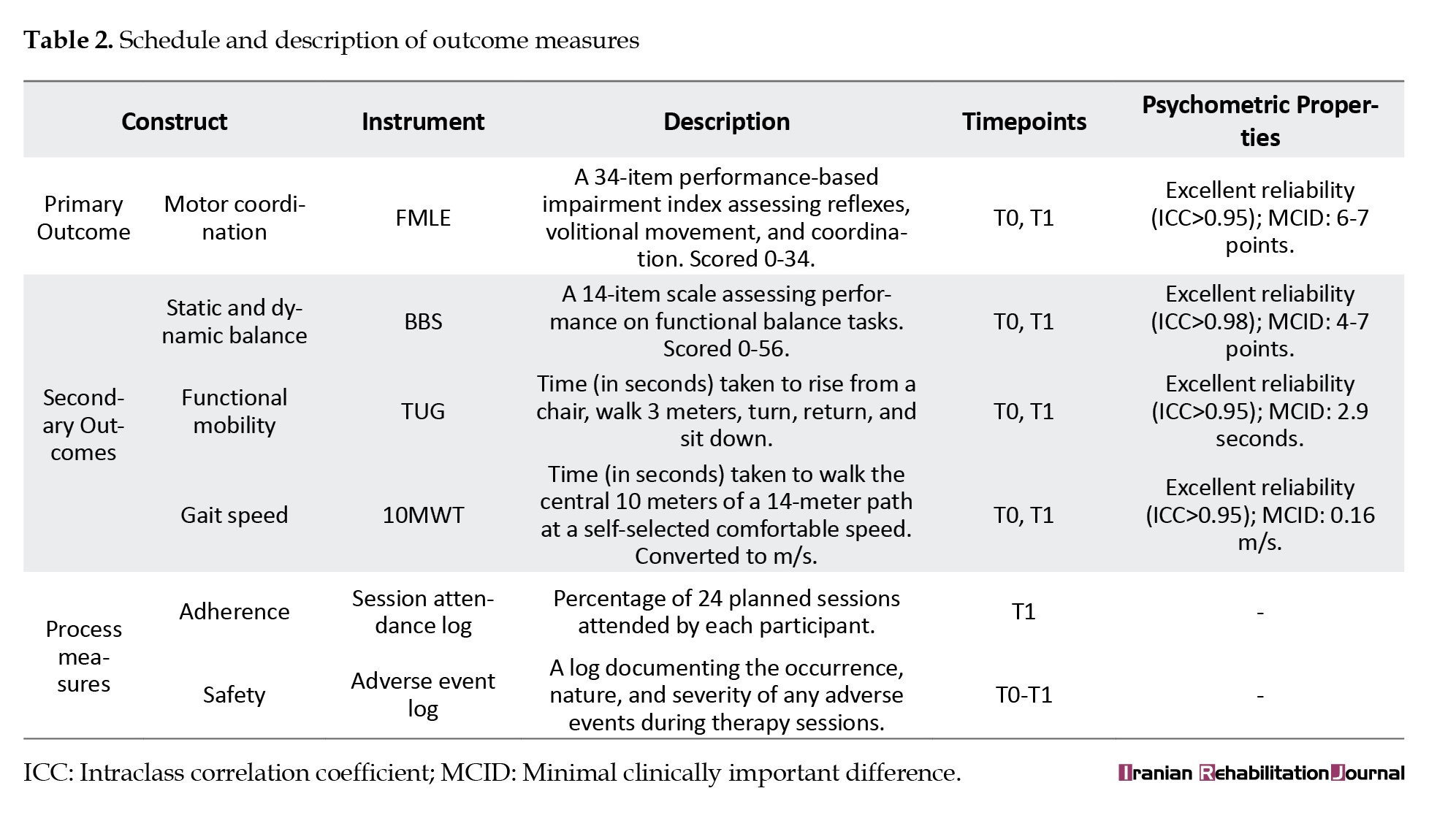
All outcome measures were administered at baseline (T0) and post-intervention (T1) by blinded assessors. Table 2 presents the schedule and description of these measures.
Data collection procedures
The tests were done in a study center that was just for that purpose. The testing methods were uniform, and the same tools were used for all tests at both time points to minimize differences. The order in which the tests were given to each individual remained the same. During tasks that could be difficult for balance, such as timed up and go (TUG) and BBS items, the participant wore a safety belt, and a helper stood nearby to ensure that they did not fall. All the information was written down on standard case report forms and then typed twice into a safe computer database to ensure that it was correct.
Statistical analysis
IBM SPSS software, version 28.0 was used for all statistical analyses. It was decided ahead of time that P<0.05 would be the alpha number for statistical significance. A method called intention-to-treat (ITT) was used in the major study. To fill in the blanks, a multiple estimation method was used.
Checking the data to make sure they were correct and met the assumptions of statistical tests came before inferential testing. When we wanted to see how initial demographic and clinical data from different groups compared, we used independent samples t tests for continuous variables and Pearson’s chi-square tests for categorical variables.
We used a 2 (group: Intervention, control)×2 (time: T0, T1) mixed-model analysis of variance (ANOVA) for each continuous outcome measure to test the main and secondary hypotheses. The group time relationship was the most important factor to consider. Cohen’s d and partial eta-squared were used to show the sizes of the effects.
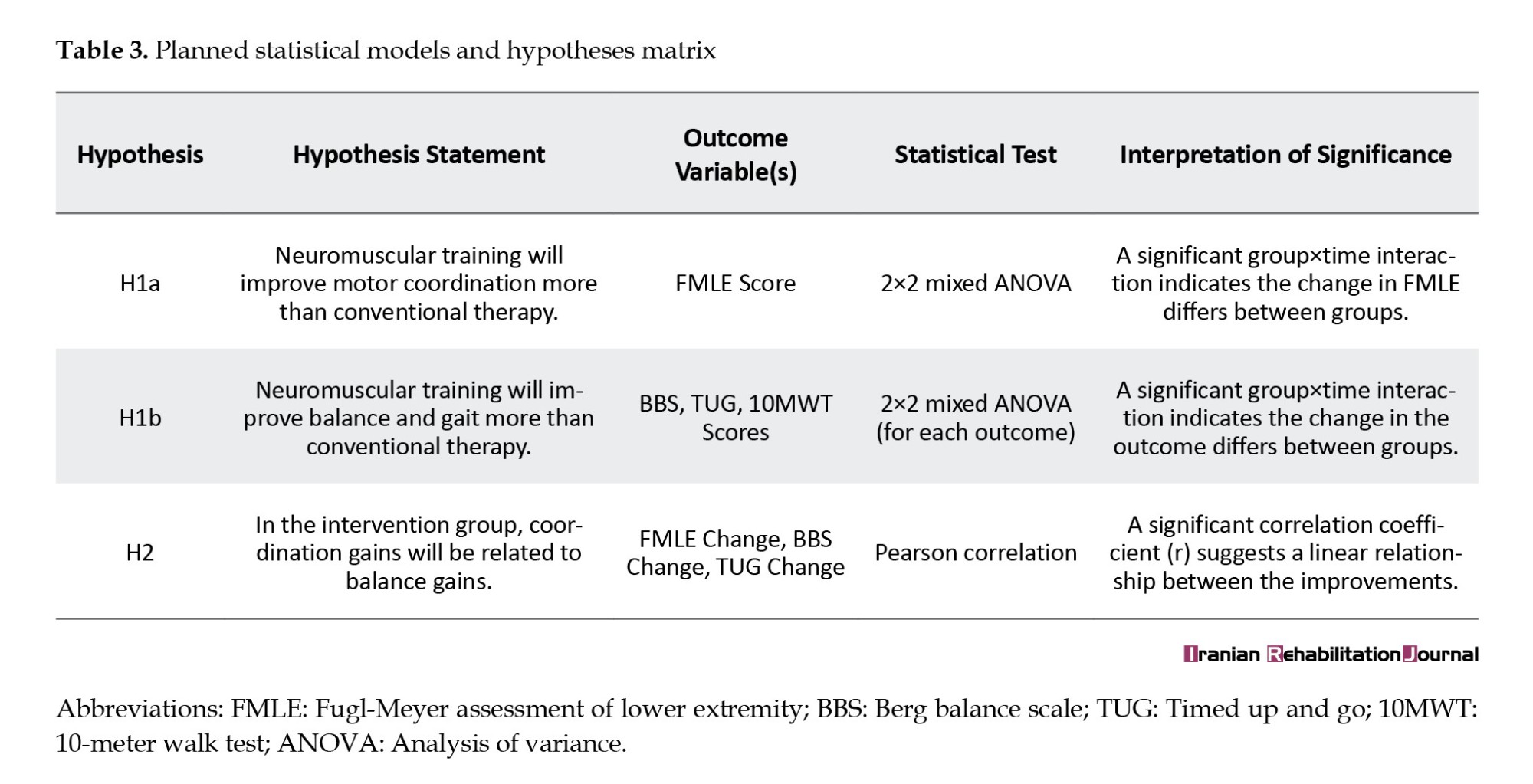
The possible link between better muscle coordination and better balance was tested only in the training group. We found the link between the change score on the fugl-meyer assessment-lower extremity (FMLE) and the change scores on the BBS and TUG by using Pearson product-moment correlation coefficients (r) (Table 3).
Results
Participant flow
A total of 85 people were checked to see if they were eligible. Of these, 33 were excluded because they did not meet the standards (n=21) or because they refused to join (n=12). Randomly, the other 52 people were divided into two groups: The intervention group received muscle balance training, and the control group received regular physiotherapy. During the 8-week intervention period, two people from the intervention group and three people from the control group dropped out of the study for personal reasons unrelated to the intervention. The final ITI study included all 52 randomly selected participants.
Baseline characteristics
Table 4 presents the demographic and clinical details of the participants at the start of the study.
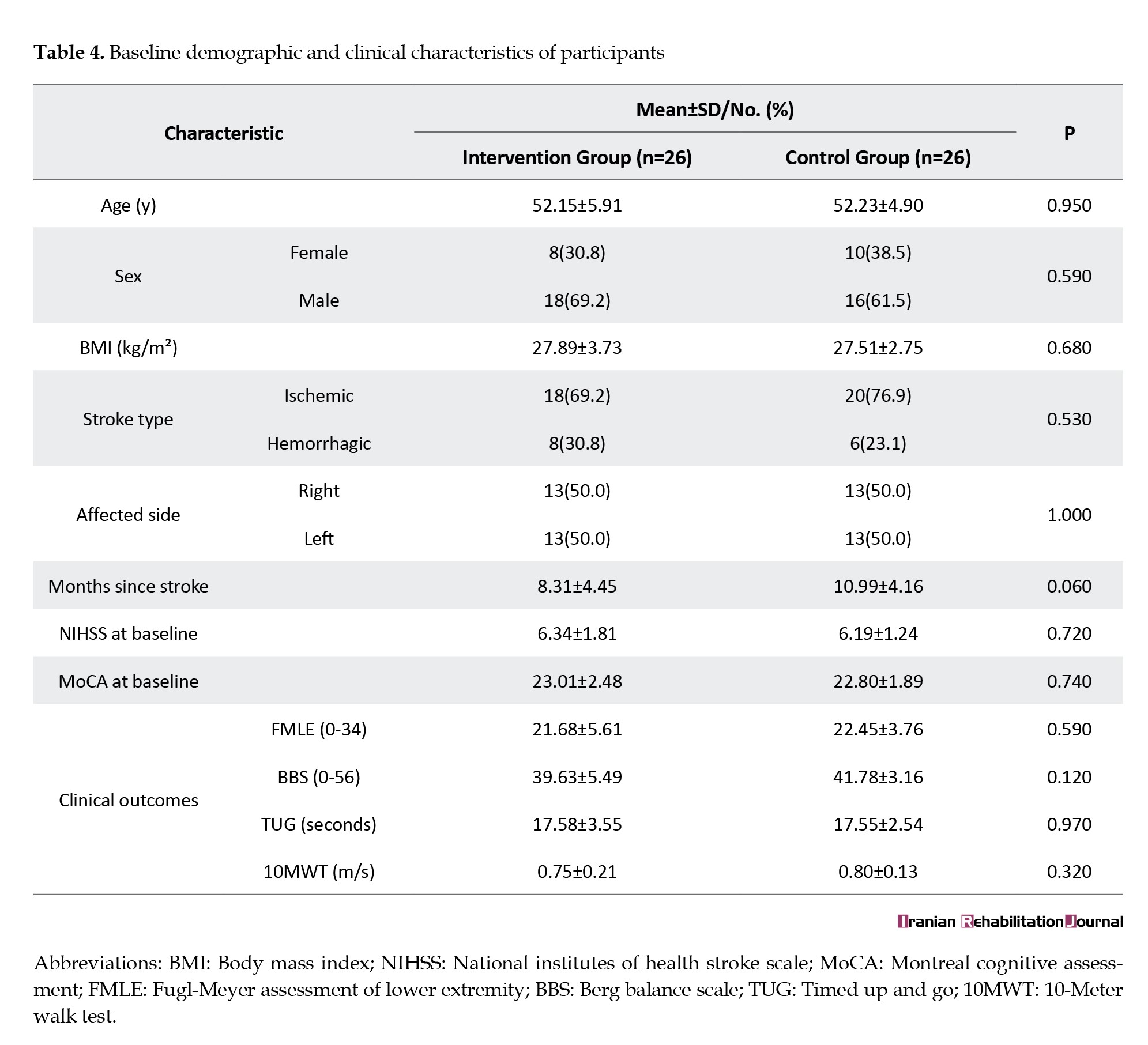
A comparison of the two groups showed that they were a good match. No significant differences were observed in age, gender, body mass index, stroke type, affected side, time since stroke, or initial scores on any clinical or functional outcome measures (all P>0.05).
Primary outcome: Motor coordination
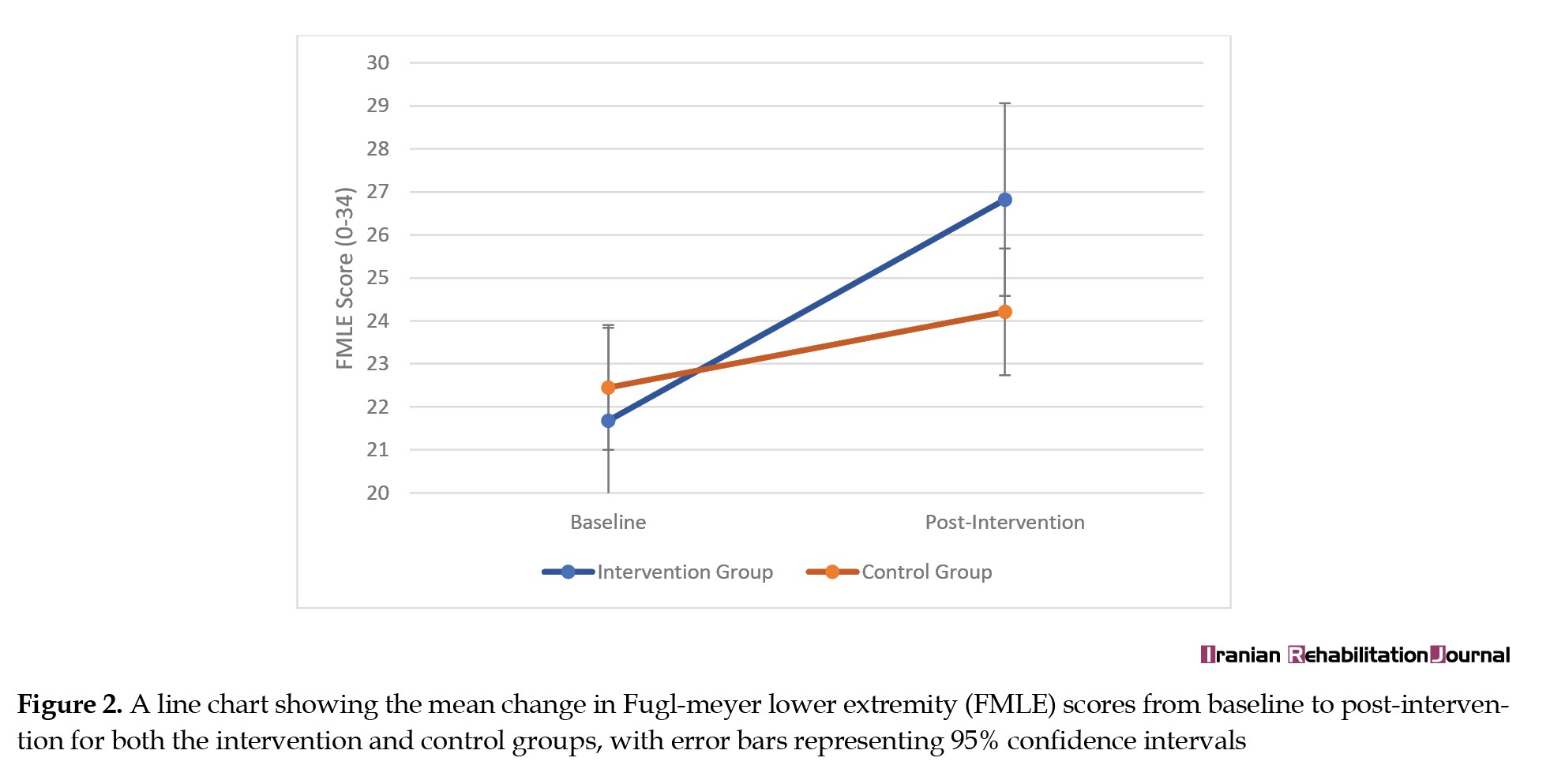
The main result, the FMLE score, showed a significant group×time interaction (F(1, 50)=70.85, P<0.001, P2=0.586), indicating that the two groups’ changes in motor coordination over the 8 weeks were very different (Figure 2).
Full-Text: (165 Views)
Introduction
Stroke remains a major global health problem [1, 2]. It is the second most common cause of death and the main reason for long-term disability in adults [2]. The global burden has grown significantly in the last 30 years, with a large increase in the number of strokes, deaths caused by strokes, and people living with the effects of stroke. Ischemic stroke accounts for most of these events. While initial medical care has gotten better, many of the world’s over 90 million stroke patients are left with long-term disabilities [3].
Some of the most crippling effects are movement delays, which affect approximately 80% of survivors and make it very difficult to move around [4], perform daily tasks independently, and participate in community life. These motor problems manifest as weakness, poor motor control, and, most importantly, a general lack of balance and rhythm [5]. Functional limitations not only lower a person’s quality of life (QoL), but also put a significant and rising financial strain on healthcare services and society as a whole [1-3]. Therefore, developing and testing better neurorehabilitation methods that can help people with these long-term movement problems remains the most important clinical and research goal [4].
After a stroke, people have trouble moving their bodies because the central nervous system (CNS) is damaged, especially the motor cortex and its downward efferent pathways, such as the corticospinal tract [6]. This damage messes up the exact brain commands needed for ordered action, but looking at it only from the point of view of the motor system is not enough [7]. Having coordinated action depends on sensory input and motor output interacting with each other all the time. This is called a sensorimotor feedback loop, and it is often broken after a stroke [8-10]. Many times, people who have poor proprioception do not know where their limbs are or how they are moving. Their brain and spinal cord do not get the real-time knowledge it needs to plan, carry out, and fix acts [11].
Traditional massage is good, but it is not perfect [2]. Strengthening and task-specific training have been used as solutions in the past, but they may not be the best way to fix this basic problem. Physical therapy does work, according to a large Cochrane review. However, the review also finds that there is a lot of difference between studies and low to middling confidence of evidence for many methods [12, 13]. One study says that this shows the need for more thorough methods and studies that are more focused on mechanisms [14].
Muscle training is a type of exercise that meets this need. The idea behind it comes from motor learning and neuroplasticity, which states that the nervous system can be taught new ways to process sensory information and figure out the best ways to move [15]. Proprioceptive stimulation, perturbation training, and dual-task tasks are used in this way to make the sensory system work harder [16]. The idea is to rearrange the cortex and start over with the mental models that help us plan and carry out our movements. The study aimed to determine whether a method that focused on re-integrating the sensorimotor system would work better than a normal treatment method [17].
This randomized controlled study aimed to determine the effectiveness of an 8-week, multicomponent neuromuscular balance training program in improving motor coordination in people who had a stroke and were then given regular exercise at the same time.
Materials and Methods
Study design
This was a single-center, two-group, assessor-blinded randomized controlled trial. The point of the study was to compare an 8-week neuromuscular balance training program (intervention) to a normal physiotherapy program (control) for people with a stroke in the past before the 8 weeks of training (T0, before assignment) and right after it (T1), tests were administered.
Participants
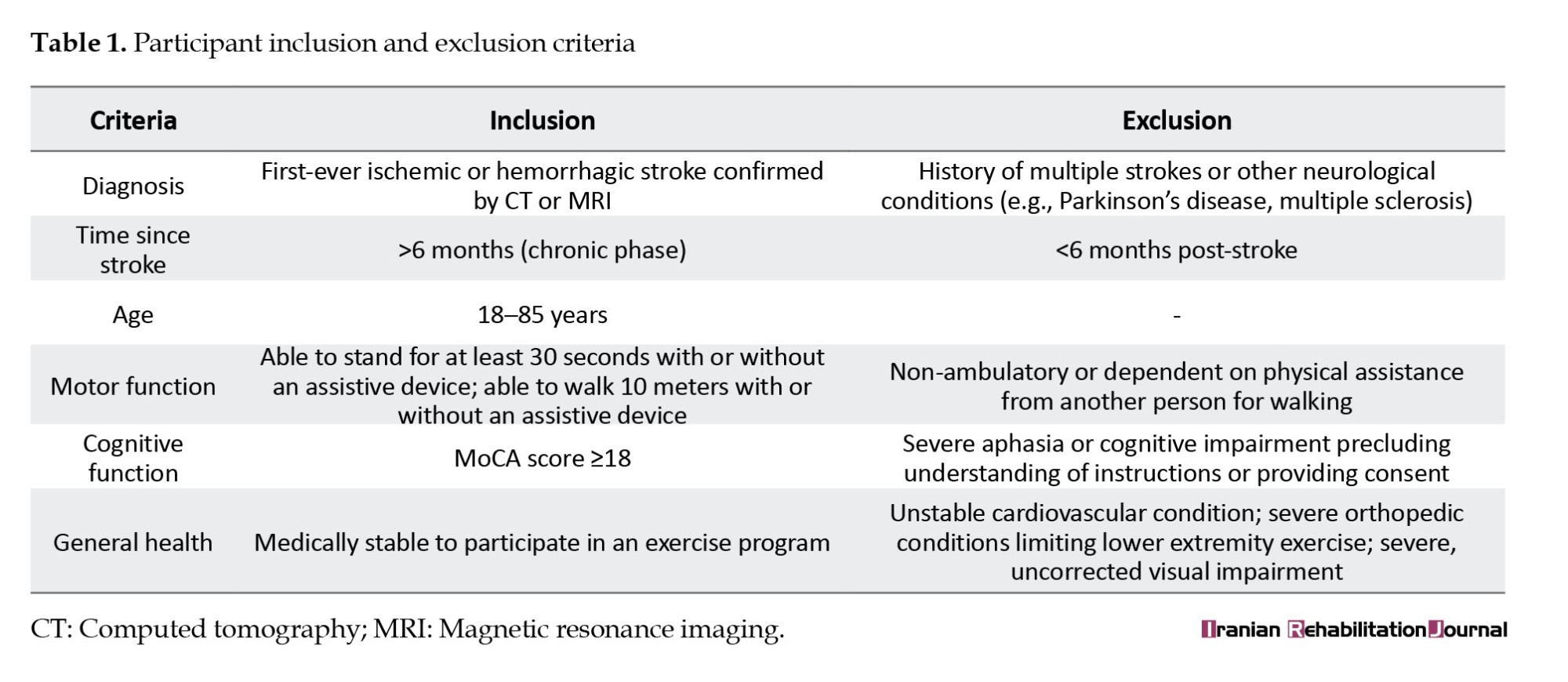
From April to September 2025, people were asked to participate in the study at the Al-Zahraa Teaching Hospital’s outpatient neurorehabilitation centers. Treating therapists identified people who might be interested in participating, and a trained study supervisor ensured that they were eligible. People who met the admission standards and provided written permission were included in the study. Table 1 lists the exact factors for who is included and who is not included [13].
G*Power software, version 3.1 was used to determine the a priori sample size. We used the results of a previous meta-analysis that found a clinically meaningful difference of 3.75 points on the Berg balance scale (BBS) for balance-focused training and assumed a standard deviation of 5.0 points [14]. This meant that 23 people in each group were needed to find this difference with 80% power at a two-sided alpha level of 0.05. To account for a 15% chance of dropping out, the goal for recruitment was set at 26 people per group, for a total sample size of 52.
Randomization and blinding
After the baseline tests were completed, all qualified participants were randomly assigned to either the intervention or the control group in a 1:1 ratio. A biostatistician who was not involved in finding or testing the participants made a computer-generated block randomization sequence with block sizes ranging from 4 to 6. Sequentially numbered, sealed, dark packages were used to hide the assignment. The next available package was opened by an office staff member who was not part of the study team. Each participant’s group selection was inside.
It was not possible to hide the subjects or the physical therapists who were helping them because of how the treatments were set up. During the study, however, the two physical therapists who were in charge of all result measures were not told which group the patients were in. To maintain the blindness honestly, evaluators were told not to talk about the treatment with the participants, and the participants were told not to talk about their therapy sessions with anyone else. At the end of the study, the success of blinding the evaluators was officially tested by asking them to guess which group each person was in.
Intervention protocols
The people in both groups underwent therapy three times a week for eight weeks, for 24 meetings. The length of each lesson was 45 minutes. Physical therapists who were qualified and had experience with neurorehabilitation performed all the procedures.
Experimental group: Neuromuscular balance training program
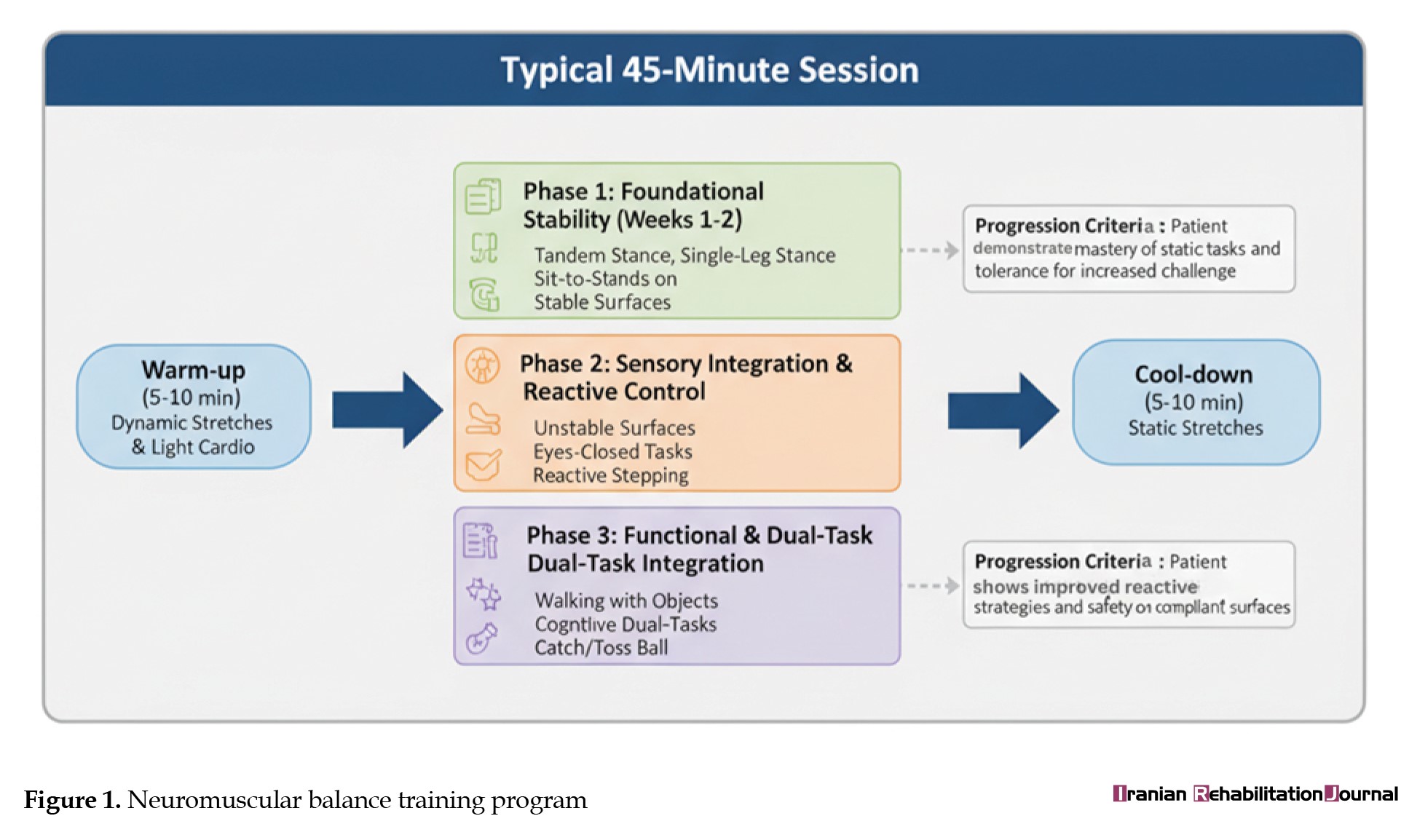
The intervention was a planned, step-by-step routine based on the basic ideas of neuromuscular training, designed to gradually test the sensory system. The program was divided into three overlapping stages. Each patient’s success and tolerance determined the progression to the next stage.
Phase 1 (weeks 1-2): Foundational static and dynamic stability. This part focused on learning basic ways to control posture and move weight without losing control. Controlled sit-to-stands, forward and backward lunges, and weight changes in multiple directions on a stable surface were some of the exercises performed.
Phase 2 (weeks 3-5): Sensory integration and reactive control. During this phase, tasks were added to the sensory systems, and response balance techniques were taught. To raise the demand for proprioceptive skills, exercises from Phase 1 were moved to soft surfaces, such as foam pads and balance discs. During both static and moving tasks, light, random physical changes (pushes and pulls at the hips and shoulders) were used to teach and practice reflexive stepping and balance techniques.
Phase 3 (weeks 6-8): Functional and dual-task integration. The goal of this last step was to use the new skills in more difficult, useful tasks that are similar to things people do in their daily lives. Balance drills were performed at the same time as other tasks. Carrying a tray full of things or throwing and catching a ball were examples of motor dual tasks. Some examples of cognitive dual-tasks were counting backward by threes, naming things in a certain group (e.g. animals or foods), or talking to someone (Figure 1).
Stroke remains a major global health problem [1, 2]. It is the second most common cause of death and the main reason for long-term disability in adults [2]. The global burden has grown significantly in the last 30 years, with a large increase in the number of strokes, deaths caused by strokes, and people living with the effects of stroke. Ischemic stroke accounts for most of these events. While initial medical care has gotten better, many of the world’s over 90 million stroke patients are left with long-term disabilities [3].
Some of the most crippling effects are movement delays, which affect approximately 80% of survivors and make it very difficult to move around [4], perform daily tasks independently, and participate in community life. These motor problems manifest as weakness, poor motor control, and, most importantly, a general lack of balance and rhythm [5]. Functional limitations not only lower a person’s quality of life (QoL), but also put a significant and rising financial strain on healthcare services and society as a whole [1-3]. Therefore, developing and testing better neurorehabilitation methods that can help people with these long-term movement problems remains the most important clinical and research goal [4].
After a stroke, people have trouble moving their bodies because the central nervous system (CNS) is damaged, especially the motor cortex and its downward efferent pathways, such as the corticospinal tract [6]. This damage messes up the exact brain commands needed for ordered action, but looking at it only from the point of view of the motor system is not enough [7]. Having coordinated action depends on sensory input and motor output interacting with each other all the time. This is called a sensorimotor feedback loop, and it is often broken after a stroke [8-10]. Many times, people who have poor proprioception do not know where their limbs are or how they are moving. Their brain and spinal cord do not get the real-time knowledge it needs to plan, carry out, and fix acts [11].
Traditional massage is good, but it is not perfect [2]. Strengthening and task-specific training have been used as solutions in the past, but they may not be the best way to fix this basic problem. Physical therapy does work, according to a large Cochrane review. However, the review also finds that there is a lot of difference between studies and low to middling confidence of evidence for many methods [12, 13]. One study says that this shows the need for more thorough methods and studies that are more focused on mechanisms [14].
Muscle training is a type of exercise that meets this need. The idea behind it comes from motor learning and neuroplasticity, which states that the nervous system can be taught new ways to process sensory information and figure out the best ways to move [15]. Proprioceptive stimulation, perturbation training, and dual-task tasks are used in this way to make the sensory system work harder [16]. The idea is to rearrange the cortex and start over with the mental models that help us plan and carry out our movements. The study aimed to determine whether a method that focused on re-integrating the sensorimotor system would work better than a normal treatment method [17].
This randomized controlled study aimed to determine the effectiveness of an 8-week, multicomponent neuromuscular balance training program in improving motor coordination in people who had a stroke and were then given regular exercise at the same time.
Materials and Methods
Study design
This was a single-center, two-group, assessor-blinded randomized controlled trial. The point of the study was to compare an 8-week neuromuscular balance training program (intervention) to a normal physiotherapy program (control) for people with a stroke in the past before the 8 weeks of training (T0, before assignment) and right after it (T1), tests were administered.
Participants
From April to September 2025, people were asked to participate in the study at the Al-Zahraa Teaching Hospital’s outpatient neurorehabilitation centers. Treating therapists identified people who might be interested in participating, and a trained study supervisor ensured that they were eligible. People who met the admission standards and provided written permission were included in the study. Table 1 lists the exact factors for who is included and who is not included [13].
G*Power software, version 3.1 was used to determine the a priori sample size. We used the results of a previous meta-analysis that found a clinically meaningful difference of 3.75 points on the Berg balance scale (BBS) for balance-focused training and assumed a standard deviation of 5.0 points [14]. This meant that 23 people in each group were needed to find this difference with 80% power at a two-sided alpha level of 0.05. To account for a 15% chance of dropping out, the goal for recruitment was set at 26 people per group, for a total sample size of 52.
Randomization and blinding
After the baseline tests were completed, all qualified participants were randomly assigned to either the intervention or the control group in a 1:1 ratio. A biostatistician who was not involved in finding or testing the participants made a computer-generated block randomization sequence with block sizes ranging from 4 to 6. Sequentially numbered, sealed, dark packages were used to hide the assignment. The next available package was opened by an office staff member who was not part of the study team. Each participant’s group selection was inside.
It was not possible to hide the subjects or the physical therapists who were helping them because of how the treatments were set up. During the study, however, the two physical therapists who were in charge of all result measures were not told which group the patients were in. To maintain the blindness honestly, evaluators were told not to talk about the treatment with the participants, and the participants were told not to talk about their therapy sessions with anyone else. At the end of the study, the success of blinding the evaluators was officially tested by asking them to guess which group each person was in.
Intervention protocols
The people in both groups underwent therapy three times a week for eight weeks, for 24 meetings. The length of each lesson was 45 minutes. Physical therapists who were qualified and had experience with neurorehabilitation performed all the procedures.
Experimental group: Neuromuscular balance training program
The intervention was a planned, step-by-step routine based on the basic ideas of neuromuscular training, designed to gradually test the sensory system. The program was divided into three overlapping stages. Each patient’s success and tolerance determined the progression to the next stage.
Phase 1 (weeks 1-2): Foundational static and dynamic stability. This part focused on learning basic ways to control posture and move weight without losing control. Controlled sit-to-stands, forward and backward lunges, and weight changes in multiple directions on a stable surface were some of the exercises performed.
Phase 2 (weeks 3-5): Sensory integration and reactive control. During this phase, tasks were added to the sensory systems, and response balance techniques were taught. To raise the demand for proprioceptive skills, exercises from Phase 1 were moved to soft surfaces, such as foam pads and balance discs. During both static and moving tasks, light, random physical changes (pushes and pulls at the hips and shoulders) were used to teach and practice reflexive stepping and balance techniques.
Phase 3 (weeks 6-8): Functional and dual-task integration. The goal of this last step was to use the new skills in more difficult, useful tasks that are similar to things people do in their daily lives. Balance drills were performed at the same time as other tasks. Carrying a tray full of things or throwing and catching a ball were examples of motor dual tasks. Some examples of cognitive dual-tasks were counting backward by threes, naming things in a certain group (e.g. animals or foods), or talking to someone (Figure 1).
Control group: Conventional physiotherapy
The people in the control group received regular physiotherapy that was time-matched and busy, as recommended by published rules [18-21]. This procedure was made to show the best ways to provide normal care. It was based on control treatments used in similar high-quality studies. Therapy was conducted one-on-one and was designed to help the person with their specific problems. The main goal was to get stronger, increase the range of motion, and do useful things. Lower body strengthening exercises (such as using resistance bands for hip abduction, knee extension, and ankle dorsiflexion), stretching of spastic or tight muscle groups, and over-ground gait training on stable, predictable surfaces were all part of a typical session. The goal was to improve endurance and gait pattern. There were balance exercises, but most of them were standing or moving jobs that had to be done on hard surfaces.
Outcome measures
All outcome measures were administered at baseline (T0) and post-intervention (T1) by blinded assessors. Table 2 presents the schedule and description of these measures.
Data collection procedures
The tests were done in a study center that was just for that purpose. The testing methods were uniform, and the same tools were used for all tests at both time points to minimize differences. The order in which the tests were given to each individual remained the same. During tasks that could be difficult for balance, such as timed up and go (TUG) and BBS items, the participant wore a safety belt, and a helper stood nearby to ensure that they did not fall. All the information was written down on standard case report forms and then typed twice into a safe computer database to ensure that it was correct.
Statistical analysis
IBM SPSS software, version 28.0 was used for all statistical analyses. It was decided ahead of time that P<0.05 would be the alpha number for statistical significance. A method called intention-to-treat (ITT) was used in the major study. To fill in the blanks, a multiple estimation method was used.
Checking the data to make sure they were correct and met the assumptions of statistical tests came before inferential testing. When we wanted to see how initial demographic and clinical data from different groups compared, we used independent samples t tests for continuous variables and Pearson’s chi-square tests for categorical variables.
We used a 2 (group: Intervention, control)×2 (time: T0, T1) mixed-model analysis of variance (ANOVA) for each continuous outcome measure to test the main and secondary hypotheses. The group time relationship was the most important factor to consider. Cohen’s d and partial eta-squared were used to show the sizes of the effects.
The possible link between better muscle coordination and better balance was tested only in the training group. We found the link between the change score on the fugl-meyer assessment-lower extremity (FMLE) and the change scores on the BBS and TUG by using Pearson product-moment correlation coefficients (r) (Table 3).
Results
Participant flow
A total of 85 people were checked to see if they were eligible. Of these, 33 were excluded because they did not meet the standards (n=21) or because they refused to join (n=12). Randomly, the other 52 people were divided into two groups: The intervention group received muscle balance training, and the control group received regular physiotherapy. During the 8-week intervention period, two people from the intervention group and three people from the control group dropped out of the study for personal reasons unrelated to the intervention. The final ITI study included all 52 randomly selected participants.
Baseline characteristics
Table 4 presents the demographic and clinical details of the participants at the start of the study.
A comparison of the two groups showed that they were a good match. No significant differences were observed in age, gender, body mass index, stroke type, affected side, time since stroke, or initial scores on any clinical or functional outcome measures (all P>0.05).
Primary outcome: Motor coordination
The main result, the FMLE score, showed a significant group×time interaction (F(1, 50)=70.85, P<0.001, P2=0.586), indicating that the two groups’ changes in motor coordination over the 8 weeks were very different (Figure 2).
Table 5 shows that both groups improved from the start of the intervention to the end.
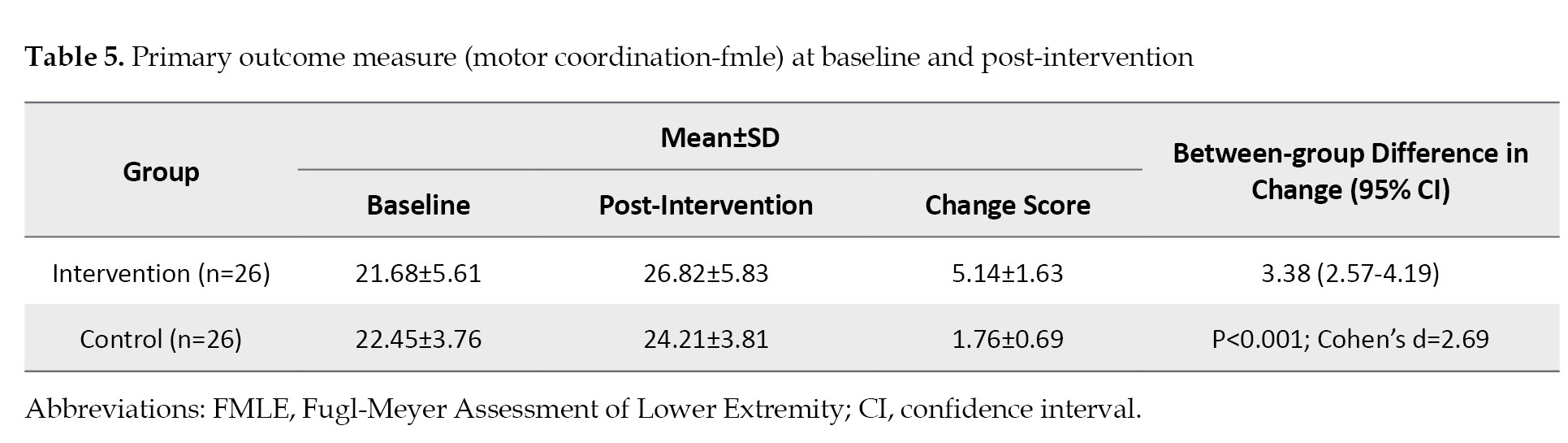
The training group, on the other hand, saw a much larger gain than the control group (Table 5). The intervention group’s mean FMLE score increased by 5.14±1.63 points, while the control group’s score only increased by 1.76±0.69 points. It was statistically significant (P<0.001) that the change scores were 3.38 points different between the groups, which means that the effect was significant (Cohen’s d=2.69).
Secondary outcomes: Balance and gait
As shown in Table 6, the muscle training program also led to better results in all secondary outcomes.
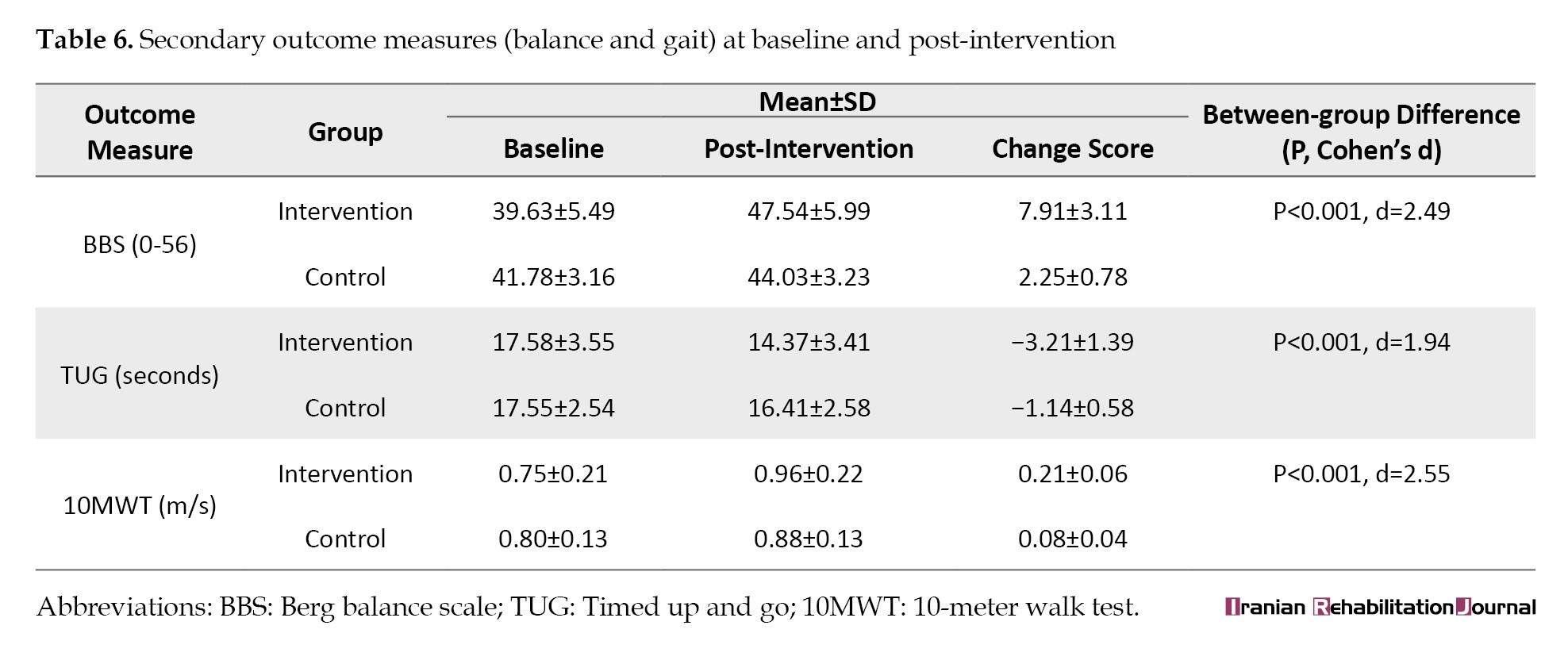
Many relationships between group and time were found for the BBS (F(1, 50)=60.53, P<0.001, P2=0.548), the TUG test (F(1, 50)=36.87, P<0.001, ·P2=0.424), and the 10-meter walk test (10MWT) (F(1, 50)=63.51, P<0.001, ·P2=0.560).
For the BBS, the intervention group improved by an average of 7.91 points, compared to 2.25 points in the control group (P<0.001, d=2.49). For the TUG, the intervention group reduced their time by 3.21 seconds, significantly more than the 1.14-second reduction in the control group (P<0.001, d=1.94). Finally, for the 10MWT, the intervention group increased their gait speed by 0.21 m/s, more than double the 0.08 m/s improvement observed in the control group (P<0.001, d=2.55). All these differences represent large and clinically meaningful effect sizes.
Correlation analysis
Correlation study was conducted on the change scores for only the control group to determine any common processes that might be causing the gains that were observed. Table 7 presents a strong, statistically significant link between the change in balance (BBS) and the change in motor coordination (FMLE) (r=0.68, P<0.001).
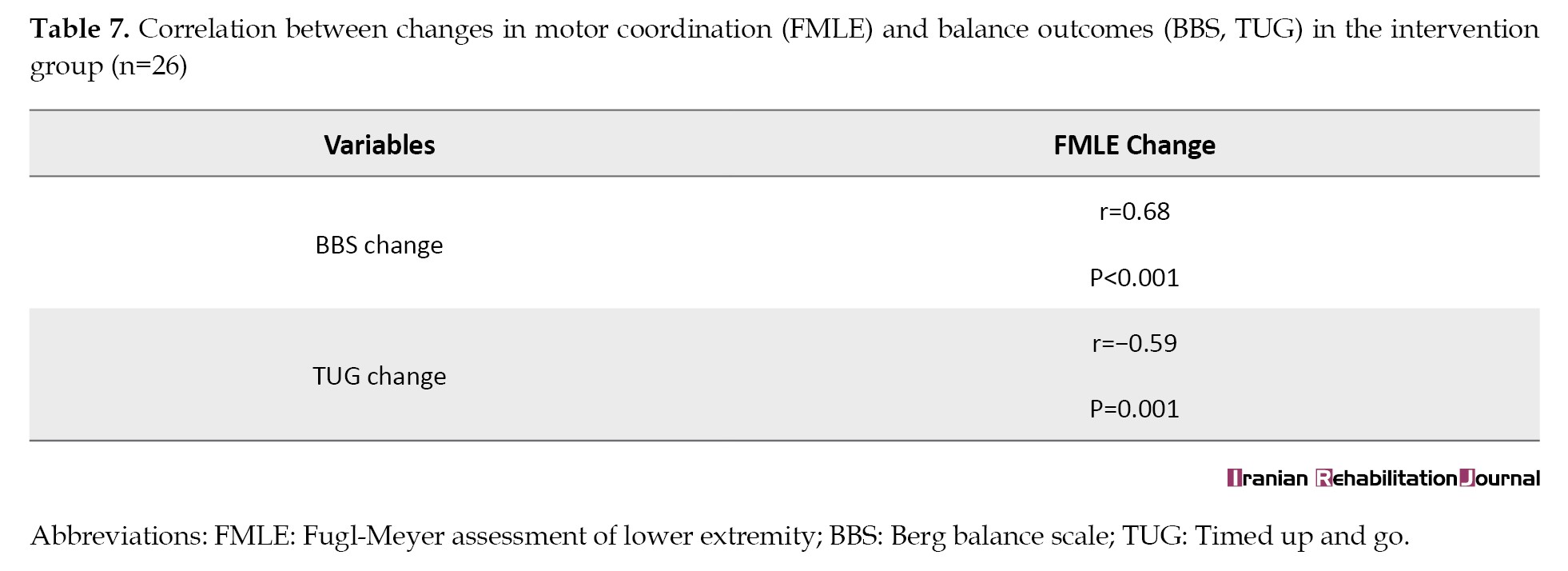
A strong and significant negative association was found between the change in FMLE and the change in TUG time (r=−0.59, P=0.001). This indicates that as coordination improved, the time needed to complete the TUG test decreased.
Adherence and adverse events
Table 8 presents data on how well the intervention was followed and how safe it was.
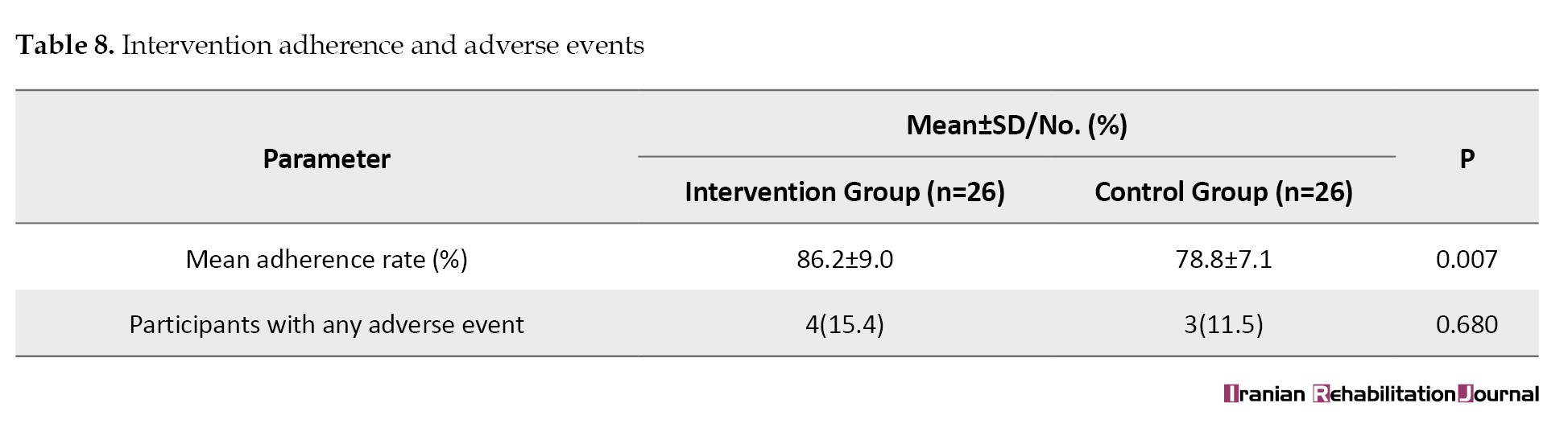
In the training group, the average rate of obedience was 86.2±9.0%, while in the control group, it was only 78.8±7.1% (P=0.007). During the study, there were a total of seven small adverse events. Four occurred in the intervention group and three in the control group. There was no significant difference between groups in the percentage of subjects who experienced an adverse event (P=0.680). All of the events that were recorded were light and short-lived. They mostly involved muscle pain or tiredness and did not require medical help or a break from training. In either group, there were no falls or other major bad things that happened.
Discussion
Principal findings
This randomized controlled study showed that a neuromuscular balance training program with multiple components that lasted for 8 weeks was better than regular physiotherapy that was time-matched in improving motor function in people who had an ongoing stroke. The main idea was proven true because the intervention group made much bigger improvements in motor coordination in their lower limbs, as measured by the FMLE. These changes made a significant difference that is clinically significant.
The study’s extra ideas turned out to be correct, too. functional mobility (TUG), static and dynamic balance (BBS), and leg speed (10MWT) all got a lot better with the muscle training than with the active control condition. The training had a significant impact on many areas of motor skills, as shown by the large effect sizes for these results. Finally, the early results showed that there was a strong connection between the changes in motor coordination and better balance in the intervention group. This finding backs up the main idea of the study. It shows that a single, focused change in the sensory control system most likely caused the various functional gains.
Physiological interpretation and mechanisms of improvement
Therefore, the neuromuscular training program works better because it addresses the main problem that leads to movement damage after a stroke: the broken sense feedback loop [21]. Normal care mostly builds muscles and performs the same action repeatedly, which is on the efferent (movement output) side of this loop. Neuromuscular training, on the other hand, resets the entire system, from sensory input to movement [22]. Muscle and joint mechanoreceptors were likely made more sensitive by using shaky surfaces and less obvious input in the proprioceptive stimulation part [23]. This better sense stream provides more accurate information to the CNS about where the body parts and limbs are and how they are moving. This is needed to keep the internal models that control movement better and up to date [24]. Problems with automatic body control were solved immediately by impact training. By making people lose their balance repeatedly, this training likely helped the parts of the brain that make quick and correct reactions to changes in balance get back to normal [25].
Finally, doing two things at once while training helps with the loss of natural movement control that comes after a stroke. Participants had to split their attention between a balance task and a cognitive or motor task simultaneously as part of the experiment [26]. This tested the prefrontal brain networks that manage executive function and resource distribution. Others believe that doing this regularly makes the main motor job easier to do without thinking about it. One study has reported that this frees up brain power and improves success in more difficult real-life scenarios [27].
The strong link between better balance and coordination supports these shared ideas. It looks like the help did not just improve some skills; it also created a core skill for a better understanding of sense information. This more powerful muscle strength led to better performance in several useful areas, such as the FMLE’s need for fine motor control and the BBS and TUG’s need for dynamic stability [28]. Focused, intense, and varied exercises strongly influence experience-based neuroplasticity. This probably leads to better functional reorganization in the brain’s movement networks that are still present [19].
Comparison with the existing literature
The results of this research corroborate and expand upon the findings of previous meta-analyses that have shown the efficacy of various components of muscle training [22]. The average improvement on the BBS in our research was 7.91 points, which is greater than the 2.22 points observed for general exercise therapy and the 3.75 points found for balance-specific training in the meta-analysis by van Duijnhoven et al. (2016). It is also better than the 4.26-point gain that Zhang et al. (2024) found for dual-task training. This comparison, shows that a program with multiple parts that carefully combines proprioceptive, perturbation, and dual-task elements may work better than treatments that only focus on one of these areas.
Our work also adds to what is known about how this kind of training affects muscle balance as tested by the FMLE [22]. The majority of the research that has been done so far has focused on balance and walking outcomes. However, the large effect size seen for the FMLE shows that improving sensorimotor integration has a direct and positive effect on the return of basic motor control patterns. Network meta-analyses have shown that the best way to improve lower leg motor function is to use a mix of proprioceptive training and other therapy methods. The current study offers Level 1 proof from a head-to-head comparison, which makes the case for this unified method stronger [22].
Conclusion
This research demonstrated that targeted neuromuscular training significantly improves the balance and motor abilities in individuals who have had a stroke. The improvements in all outcomes were both statistically and clinically significant, which means that the therapy worked well. The neuromuscular program likely works by retraining the whole sensorimotor system, enhancing proprioceptive input, refining response positioning methods, and promoting the reestablishment of automatic motor control. These findings advocate for a significant transformation in the rehabilitation process after a stroke. Protocols that are based on several components and mechanisms should become standard clinical practice to enable patients who have had a stroke to be more functionally independent and enhance their QoL.
Ethical Considerations
Compliance with ethical guidelines
This study was conducted in accordance with the ethical principles of the Declaration of Helsinki. This study was approved by the Ethics Committee of Institutional Review Board (Approval No: 10005).
Funding
This research did not receive any grant from funding agencies in the public, commercial, or non-profit sectors.
Authors' contributions
Study design, data analysis and Writing: Talib Saddam Mohsin; Data collection: All authors.
Conflict of interest
The authors declared no conflicts of interest.
The training group, on the other hand, saw a much larger gain than the control group (Table 5). The intervention group’s mean FMLE score increased by 5.14±1.63 points, while the control group’s score only increased by 1.76±0.69 points. It was statistically significant (P<0.001) that the change scores were 3.38 points different between the groups, which means that the effect was significant (Cohen’s d=2.69).
Secondary outcomes: Balance and gait
As shown in Table 6, the muscle training program also led to better results in all secondary outcomes.
Many relationships between group and time were found for the BBS (F(1, 50)=60.53, P<0.001, P2=0.548), the TUG test (F(1, 50)=36.87, P<0.001, ·P2=0.424), and the 10-meter walk test (10MWT) (F(1, 50)=63.51, P<0.001, ·P2=0.560).
For the BBS, the intervention group improved by an average of 7.91 points, compared to 2.25 points in the control group (P<0.001, d=2.49). For the TUG, the intervention group reduced their time by 3.21 seconds, significantly more than the 1.14-second reduction in the control group (P<0.001, d=1.94). Finally, for the 10MWT, the intervention group increased their gait speed by 0.21 m/s, more than double the 0.08 m/s improvement observed in the control group (P<0.001, d=2.55). All these differences represent large and clinically meaningful effect sizes.
Correlation analysis
Correlation study was conducted on the change scores for only the control group to determine any common processes that might be causing the gains that were observed. Table 7 presents a strong, statistically significant link between the change in balance (BBS) and the change in motor coordination (FMLE) (r=0.68, P<0.001).
A strong and significant negative association was found between the change in FMLE and the change in TUG time (r=−0.59, P=0.001). This indicates that as coordination improved, the time needed to complete the TUG test decreased.
Adherence and adverse events
Table 8 presents data on how well the intervention was followed and how safe it was.
In the training group, the average rate of obedience was 86.2±9.0%, while in the control group, it was only 78.8±7.1% (P=0.007). During the study, there were a total of seven small adverse events. Four occurred in the intervention group and three in the control group. There was no significant difference between groups in the percentage of subjects who experienced an adverse event (P=0.680). All of the events that were recorded were light and short-lived. They mostly involved muscle pain or tiredness and did not require medical help or a break from training. In either group, there were no falls or other major bad things that happened.
Discussion
Principal findings
This randomized controlled study showed that a neuromuscular balance training program with multiple components that lasted for 8 weeks was better than regular physiotherapy that was time-matched in improving motor function in people who had an ongoing stroke. The main idea was proven true because the intervention group made much bigger improvements in motor coordination in their lower limbs, as measured by the FMLE. These changes made a significant difference that is clinically significant.
The study’s extra ideas turned out to be correct, too. functional mobility (TUG), static and dynamic balance (BBS), and leg speed (10MWT) all got a lot better with the muscle training than with the active control condition. The training had a significant impact on many areas of motor skills, as shown by the large effect sizes for these results. Finally, the early results showed that there was a strong connection between the changes in motor coordination and better balance in the intervention group. This finding backs up the main idea of the study. It shows that a single, focused change in the sensory control system most likely caused the various functional gains.
Physiological interpretation and mechanisms of improvement
Therefore, the neuromuscular training program works better because it addresses the main problem that leads to movement damage after a stroke: the broken sense feedback loop [21]. Normal care mostly builds muscles and performs the same action repeatedly, which is on the efferent (movement output) side of this loop. Neuromuscular training, on the other hand, resets the entire system, from sensory input to movement [22]. Muscle and joint mechanoreceptors were likely made more sensitive by using shaky surfaces and less obvious input in the proprioceptive stimulation part [23]. This better sense stream provides more accurate information to the CNS about where the body parts and limbs are and how they are moving. This is needed to keep the internal models that control movement better and up to date [24]. Problems with automatic body control were solved immediately by impact training. By making people lose their balance repeatedly, this training likely helped the parts of the brain that make quick and correct reactions to changes in balance get back to normal [25].
Finally, doing two things at once while training helps with the loss of natural movement control that comes after a stroke. Participants had to split their attention between a balance task and a cognitive or motor task simultaneously as part of the experiment [26]. This tested the prefrontal brain networks that manage executive function and resource distribution. Others believe that doing this regularly makes the main motor job easier to do without thinking about it. One study has reported that this frees up brain power and improves success in more difficult real-life scenarios [27].
The strong link between better balance and coordination supports these shared ideas. It looks like the help did not just improve some skills; it also created a core skill for a better understanding of sense information. This more powerful muscle strength led to better performance in several useful areas, such as the FMLE’s need for fine motor control and the BBS and TUG’s need for dynamic stability [28]. Focused, intense, and varied exercises strongly influence experience-based neuroplasticity. This probably leads to better functional reorganization in the brain’s movement networks that are still present [19].
Comparison with the existing literature
The results of this research corroborate and expand upon the findings of previous meta-analyses that have shown the efficacy of various components of muscle training [22]. The average improvement on the BBS in our research was 7.91 points, which is greater than the 2.22 points observed for general exercise therapy and the 3.75 points found for balance-specific training in the meta-analysis by van Duijnhoven et al. (2016). It is also better than the 4.26-point gain that Zhang et al. (2024) found for dual-task training. This comparison, shows that a program with multiple parts that carefully combines proprioceptive, perturbation, and dual-task elements may work better than treatments that only focus on one of these areas.
Our work also adds to what is known about how this kind of training affects muscle balance as tested by the FMLE [22]. The majority of the research that has been done so far has focused on balance and walking outcomes. However, the large effect size seen for the FMLE shows that improving sensorimotor integration has a direct and positive effect on the return of basic motor control patterns. Network meta-analyses have shown that the best way to improve lower leg motor function is to use a mix of proprioceptive training and other therapy methods. The current study offers Level 1 proof from a head-to-head comparison, which makes the case for this unified method stronger [22].
Conclusion
This research demonstrated that targeted neuromuscular training significantly improves the balance and motor abilities in individuals who have had a stroke. The improvements in all outcomes were both statistically and clinically significant, which means that the therapy worked well. The neuromuscular program likely works by retraining the whole sensorimotor system, enhancing proprioceptive input, refining response positioning methods, and promoting the reestablishment of automatic motor control. These findings advocate for a significant transformation in the rehabilitation process after a stroke. Protocols that are based on several components and mechanisms should become standard clinical practice to enable patients who have had a stroke to be more functionally independent and enhance their QoL.
Ethical Considerations
Compliance with ethical guidelines
This study was conducted in accordance with the ethical principles of the Declaration of Helsinki. This study was approved by the Ethics Committee of Institutional Review Board (Approval No: 10005).
Funding
This research did not receive any grant from funding agencies in the public, commercial, or non-profit sectors.
Authors' contributions
Study design, data analysis and Writing: Talib Saddam Mohsin; Data collection: All authors.
Conflict of interest
The authors declared no conflicts of interest.
References
- Apriliyasari RW, Van Truong P, Tsai PS. Effects of proprioceptive training for people with stroke: A meta-analysis of randomized controlled trials. Clinical Rehabilitation. 2022; 36(4):431-48. [DOI:10.1177/02692155211057656] [PMID]
- Arienti C, Lazzarini SG, Pollock A, Negrini S. Rehabilitation interventions for improving balance following stroke: An overview of systematic reviews. PLoS One. 2019; 14(7):e0219781. [DOI:10.1371/journal.pone.0219781] [PMID]
- Curuk E, Aruin AS. Perturbation-based training enhances anticipatory postural control in individuals with chronic stroke: a pilot study. International Journal of Rehabilitation Research. 2022; 45(1):72-8. [DOI:10.1097/MRR.0000000000000515]
- Chiaramonte R, Bonfiglio M, Leonforte P, Coltraro GL, Guerrera CS, Vecchio M. Proprioceptive and dual-task training: The key of stroke rehabilitation-A systematic review. Journal of Functional Morphology and Kinesiology. 2022; 7(3):53. [DOI:10.3390/jfmk7030053] [PMID]
- Chen S, Gao J, Zhou Y, Zheng G, Liu Y, Cao M, et al. Implications of neuromuscular electrical stimulation on gait ability, balance and kinematic parameters after stroke: A systematic review and meta-analysis. Journal of Neuroengineering and Rehabilitation. 2024; 21(1):164. [DOI:10.1186/s12984-024-01462-2] [PMID]
- Daly JJ, Howlett J, Rogers JM, Stewart JC, Poole DA. A randomized controlled trial of functional task practice: The effect of adding coordination training to gait rehabilitation after stroke. Stroke. 2006; 37(9):2365-70.
- Fan S, Ma Y, Pan Y. Stroke patient rehabilitation: An analysis of the effects of perturbation training combined with hip unloading gait strategies. Frontiers in Neurology. 2025; 16:1495071. [DOI:10.3389/fneur.2025.1495071] [PMID]
- Haruyama K, Kawakami M, Otsuka T. Effect of core stability training on trunk function, standing balance, and mobility in stroke patients: A randomized controlled trial. Neurorehabilitation and Neural Repair. 2017; 31(3):240-9. [DOI:10.1177/1545968316675431] [PMID]
- Horak FB. Postural orientation and equilibrium: What do we need to know about neural control of balance to prevent falls? Age and Ageing. 2006; 35 (Suppl 2):ii7-11. [DOI:10.1093/ageing/afl077] [PMID]
- Lanza MB, Fujimoto M, Magder L, McCombe-Waller S, Rogers MW, Gray VL. Is lateral external perturbation training more beneficial for protective stepping responses than voluntary stepping training in stroke? A pilot randomized control study. Journal of Neuroengineering and Rehabilitation. 2024; 21(1):199. [DOI:10.1186/s12984-024-01495-7] [PMID]
- Lee K. Balance training with electromyogram-triggered functional electrical stimulation in the rehabilitation of stroke patients. Brain Sciences. 2020; 10(2):80. [DOI:10.3390/brainsci10020080] [PMID]
- Lee K. Balance training with weight shift-triggered electrical stimulation for stroke patients: A randomized controlled trial. Brain Sciences. 2023; 13(2):225. [DOI:10.3390/brainsci13020225] [PMID]
- Lim C. Multi-sensorimotor training improves proprioception and balance in subacute stroke patients: A randomized controlled pilot trial. Frontiers in Neurology. 2019; 10:157. [DOI:10.3389/fneur.2019.00157] [PMID]
- Mansfield A, Aqui A, Danells CJ, Knorr S, Centen A, DePaul VG, et al. Does perturbation-based balance training prevent falls among individuals with chronic stroke? A randomised controlled trial. BMJ Open. 2018; 8(8):e021510. [DOI:10.1136/bmjopen-2018-021510] [PMID]
- Matjačić Z, Zadravec M, Olenšek A. Feasibility of robot-based perturbed-balance training during treadmill walking in a chronic stroke subject: A case-control pilot. Journal of Neuroengineering and Rehabilitation. 2018; 15(1):32. [DOI:10.1186/s12984-018-0373-z] [PMID]
- Mao Y, Gao Z, Yang H, Song C. Influence of proprioceptive training based on an ankle-foot rehabilitation robot on lower-limb function after stroke. Frontiers in Neurorobotics. 2022; 16:969671. [DOI:10.3389/fnbot.2022.969671] [PMID]
- Palmer JA, Payne AM, Mirdamadi JL, Ting LH, Borich MR. Delayed cortical responses during reactive balance after stroke associated with slower kinetics and clinical balance dysfunction. Neurorehabilitation and Neural Repair. 2025; 39(1):16-30. [DOI:10.1177/15459683241282786]
- Schinkel-Ivy A, Huntley AH, Aqui A, Mansfield A. Does perturbation-based balance training improve control of reactive stepping in individuals with chronic stroke? Journal of Stroke and Cerebrovascular Diseases. 2019; 28(4):935-43. [DOI:10.1016/j.jstrokecerebrovasdis.2018.12.011] [PMID]
- Shu Y, Bi MM, Zhou TT, Liu L, Zhang C. Effect of dual-task training on gait and balance in stroke patients: An updated meta-analysis. American Journal of Physical Medicine & Rehabilitation. 2022; 101(12):1148-55. [DOI:10.1097/PHM.0000000000002016]
- Todhunter-Brown A, Sellers CE, Baer GD, Choo PL, Cowie J, Cheyne JD, et al. Physical rehabilitation approaches for the recovery of function and mobility following stroke. The Cochrane Database of Systematic Reviews. 2025; 2(2):CD001920. [DOI:10.1002/14651858.CD001920.pub4] [PMID]
- van de Port IG, Wevers LE, Lindeman E, Kwakkel G. Effects of circuit training as alternative to usual physiotherapy after stroke: Randomised controlled trial. BMJ. 2012; 344:e2672. [DOI:10.1136/bmj.e2672] [PMID]
- van Duijnhoven HJ, Heeren A, Peters MA, Veerbeek JM, Kwakkel G, Geurts ACH, et al. Effects of exercise therapy on balance capacity in chronic stroke: Systematic review and meta-analysis. Stroke. 2016; 47(10):2603-10. [DOI:10.1161/STROKEAHA.116.013839] [PMID]
- Wiśniowska-Szurlej A, Leszczak J, Brożonowicz J, Ciąpała G, Hernández-Lázaro H, Sozańska A. Effectiveness of a rehabilitation program involving functional proprioceptive stimulation for postural control and motor recovery among stroke patients: a double-blinded, randomized, controlled trial. Journal of Neuroengineering and Rehabilitation. 2025; 22(1):147. [PMID]
- Winstein CJ, Stein J, Arena R, Bates B, Cherney LR, Cramer SC, et al. Guidelines for Adult Stroke Rehabilitation and Recovery: A Guideline for Healthcare Professionals From the American Heart Association/American Stroke Association. Stroke. 2016; 47(6):e98-169. [DOI:10.1161/STR.0000000000000098] [PMID]
- Yanohara R, Teranishi T, Tomita Y, Tanino G, Ueno Y, Sonoda S. Recovery process of standing postural control in hemiplegia after stroke. Journal of Physical Therapy Science. 2014; 26(11):1761–5. [DOI:10.1589/jpts.26.1761] [PMID]
- Zhang L, Ma J, Liu X, Jin A, Wang K, Yin X. Cognitive-motor dual-task training on gait and balance in stroke patients: meta-analytic report and trial sequential analysis of randomized clinical trials. Journal of Neuroengineering and Rehabilitation. 2024; 21(1):227. [DOI:10.1186/s12984-024-01507-6] [PMID]
- Zhang T, Zheng J. Enhancing postural control in stroke patients: Advances in mechanisms and functional recovery analysis of core stability training. Neurological Sciences. 2025; 46(8):3457-67. [DOI:10.1007/s10072-025-08119-5] [PMID]
- Zheng K, Li L, Zhou Y, Gong X, Zheng G, Guo L. Optimal proprioceptive training combined with rehabilitation regimen for lower limb dysfunction in stroke patients: A systematic review and network meta-analysis. Frontiers in Neurology. 2024; 15:1503585. [DOI:10.3389/fneur.2024.1503585] [PMID]
Article type: Original Research Articles |
Subject:
Occupational therapy
Received: 2025/07/11 | Accepted: 2025/12/7 | Published: 2026/04/1
Received: 2025/07/11 | Accepted: 2025/12/7 | Published: 2026/04/1
Send email to the article author

Copyright © The Author(s);
This is an open access article distributed under the terms of the Creative Commons Attribution-NonCommercial 4.0 (CC-By-NC 4.0), which permits use, distribution, and reproduction in any medium, provided the original work is properly cited and is not used for commercial purposes.
Contact Information
