
988368
Sat, Nov 7, 2026

Volume 24, Issue 3 (September 2026)
Iranian Rehabilitation Journal 2026, 24(3): 345-356 |
Back to browse issues page



Ethics code: IR.UMA.REC.1401.081


Download citation:
BibTeX | RIS | EndNote | Medlars | ProCite | Reference Manager | RefWorks
Send citation to:


BibTeX | RIS | EndNote | Medlars | ProCite | Reference Manager | RefWorks
Send citation to:
Barghamadi M, Barzegarfar L, Piri E. Comparison of Push-off Muscle Electromyography Mean Frequency Before and After Running-induced Fatigue in Pronated-foot Runners Wearing Carbon-plated or Cushioned Shoes. Iranian Rehabilitation Journal 2026; 24 (3) :345-356
URL: http://irj.uswr.ac.ir/article-1-2829-en.html
URL: http://irj.uswr.ac.ir/article-1-2829-en.html

1- Department of Sport Biomechanics, Faculty of Educational Sciences and Psychology, University of Mohaghegh Ardabili, Ardabil, Iran.
Full-Text [PDF 1249 kb]
(124 Downloads)
| Abstract (HTML) (650 Views)
Randomization and group allocation
All footwear was supplied by the investigators, and prior experience with either shoe was not required. Electromyographic recordings were anonymized and stored using coded identifiers. Data processing and statistical analyses were performed on coded datasets without access to participant identities. Due to visible differences between shoe conditions, neither participants nor testing personnel were blinded to group allocation.
Foot pronation assessment
Foot posture was assessed before randomization using the FPI-6 by a trained specialist at the Health Center of the Faculty of Sports Sciences, University of Mohaghegh Ardabili. Each of the six FPI-6 items was scored from −2 to +2, resulting in a total score of −12 to +12. Participants were considered to have a PF posture when the dominant right foot scored ≥6. Because EMG measurements were obtained from the dominant right lower limb, eligibility was based on the right-foot score. The mean FPI-6 values were 8.3±1.4 for the right foot and 8.1±1.2 for the left foot, confirming PF posture at the group level.
Footwear conditions
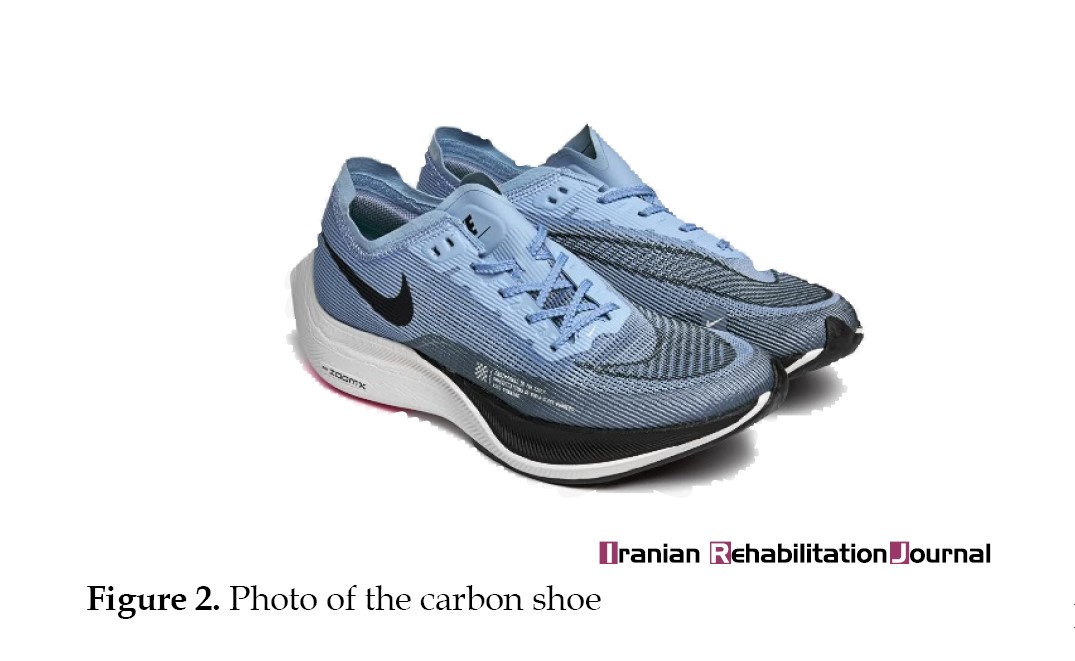
The ATF condition consisted of a Nike ZoomX Vaporfly Next% 2 (Nike Inc., Beaverton, OR, USA) featuring a full-length curved carbon-fiber plate embedded in a Pebax-based ZoomX midsole. The shoe also incorporates a rocker-shaped sole and increased longitudinal bending stiffness, which may modify forefoot mechanics and propulsion during running. Heel and forefoot stack heights were approximately 39 and 31 mm, respectively, with an 8-mm heel-to-toe drop (Figure 2).
Reference
Full-Text: (55 Views)
Introduction
Pronated foot (PF) is a common lower-extremity alignment characteristic with a prevalence of approximately one-third among physically active adults [1]. Excessive rearfoot eversion and its coupling with tibial internal rotation may alter lower-extremity mechanics and increase the muscular demands required to control foot motion and segmental stability during running [2-4]. The push-off phase is particularly relevant for examining neuromuscular responses because it requires coordinated muscle activity to stabilize the lower limb, transfer forces through the foot and ankle, and generate forward propulsion [5, 6]. In runners with a PF posture, prolonged rearfoot eversion and altered medial foot and forefoot mechanics may influence force transmission and the mechanical demands placed on the lower-limb musculature during propulsion [7-9]. However, it remains unclear how these demands are reflected in the frequency-domain characteristics of lower-limb muscle activity when runners with pronated feet use different footwear constructions.
Advanced technology footwear (ATF), particularly carbon-plated shoes, combines a relatively stiff curved plate with a compliant and resilient midsole, increasing longitudinal bending stiffness and altering forefoot deformation, rollover mechanics, and the effective lever function of the foot during push-off [6, 10]. Experimental studies have reported altered plantar-flexor muscle activity in carbon-plated footwear, including lower medial gastrocnemius (MG) activity during push-off in Vaporfly-type shoes compared to conventional running shoes, and plate geometry may further influence the magnitude and timing of muscle activation [6, 11, 12].
However, most footwear studies have examined general running populations without specifically considering foot posture. Runners with PF may require different muscular strategies to control rearfoot motion, tibial rotation, and ankle stability than runners with neutral foot posture [1, 13]. Therefore, findings from neutral-footed runners cannot necessarily be generalized to runners with PF, particularly when comparing a carbon-plated racing shoe such as the Nike Vaporfly Next% 2 with a highly cushioned non-plated shoe such as the Nike Invincible Run 3.
Electromyography (EMG) is a non-invasive method for examining these neuromuscular responses. Mean frequency (MNF), the weighted average frequency of the EMG power spectrum, has been used to examine spectral changes during locomotor tasks [14]. EMG spectral characteristics may be influenced by motor-unit behavior, conduction properties, locomotor demands, and fatigue [14-16]. Running-induced fatigue may further modify these neuromuscular strategies. Experimental studies have reported reductions in EMG median or mean power frequency in several lower-limb muscles, including the MG, vastus lateralis (VL), rectus femoris, and tibialis anterior (TA), during prolonged or exhaustive running [15-18]. Despite increasing interest in carbon-plated footwear, limited evidence is available regarding its effects on EMG frequency-domain measures, particularly push-off MNF, in runners with PF. Accordingly, the present study investigated the effects of the Nike Vaporfly Next% 2 and Nike Invincible Run 3 on push-off lower-limb muscle EMG-MNF during running in runners with PF.
Materials and Methods
Study design
A randomized laboratory-based study was conducted to compare push-off lower-limb EMG-MNF between two footwear conditions in recreational male runners with PF. Participants were assigned to either an ATF condition (n=15) or a conventional running shoe condition (n=15).
Participants
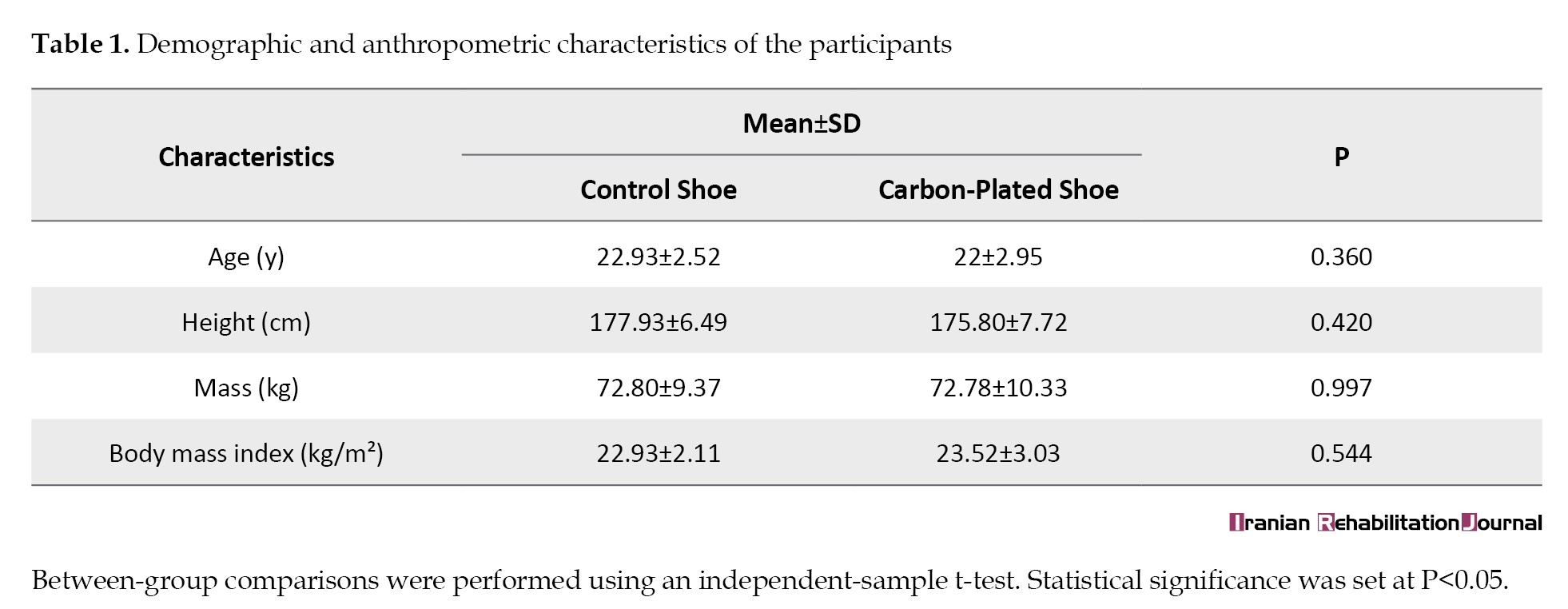
Thirty male recreational runners with PF participated in this study (Table 1).
Limb dominance was identified according to the leg preferred for kicking a ball; all enrolled participants were classified as right-leg dominant [19]. Electromyographic recordings were obtained from muscles of the dominant lower limb and used for all subsequent analyses. Participants were recruited from local running clubs and were required to have at least three years of recreational running experience, a minimum weekly frequency of three running sessions, and an average weekly running mileage of approximately 30 km. Their usual training was performed at a self-selected pace corresponding to their typical training intensity.
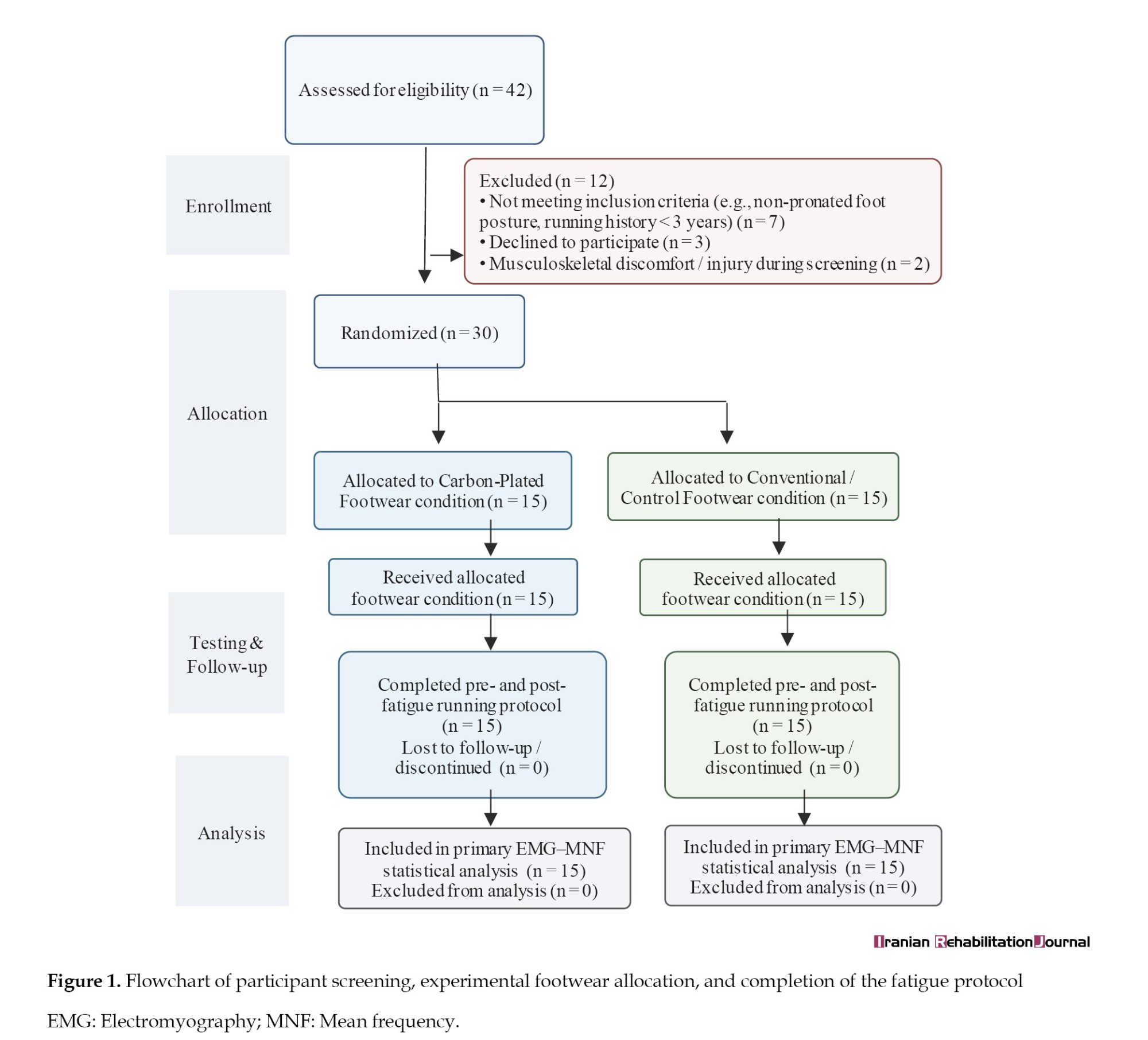
The inclusion criteria were age between 18 and 35 years, at least 3 years of recreational running experience, participation in running training at least three times per week, and PF posture confirmed by the foot posture index (FPI). The exclusion criteria included lower-extremity injury within the previous 12 months, previous lower-extremity surgery, severe trunk deformity, withdrawal from the study, or injury occurring during the testing session [20-23]. An a priori sample size calculation was conducted using G*Power software, version 3.1.9.7 for a mixed-model repeated-measures analysis of variance (ANOVA) (within-between interaction: two groups × two time points). Based on effect sizes reported in prior footwear and electromyographic fatigue investigations during running [20-23], a moderate-to-large effect size of Cohen’s f=0.28 was assumed. All participants successfully completed the pre- and post-fatigue running protocols and were included in the final statistical analysis without any dropouts (Figure 1).
Pronated foot (PF) is a common lower-extremity alignment characteristic with a prevalence of approximately one-third among physically active adults [1]. Excessive rearfoot eversion and its coupling with tibial internal rotation may alter lower-extremity mechanics and increase the muscular demands required to control foot motion and segmental stability during running [2-4]. The push-off phase is particularly relevant for examining neuromuscular responses because it requires coordinated muscle activity to stabilize the lower limb, transfer forces through the foot and ankle, and generate forward propulsion [5, 6]. In runners with a PF posture, prolonged rearfoot eversion and altered medial foot and forefoot mechanics may influence force transmission and the mechanical demands placed on the lower-limb musculature during propulsion [7-9]. However, it remains unclear how these demands are reflected in the frequency-domain characteristics of lower-limb muscle activity when runners with pronated feet use different footwear constructions.
Advanced technology footwear (ATF), particularly carbon-plated shoes, combines a relatively stiff curved plate with a compliant and resilient midsole, increasing longitudinal bending stiffness and altering forefoot deformation, rollover mechanics, and the effective lever function of the foot during push-off [6, 10]. Experimental studies have reported altered plantar-flexor muscle activity in carbon-plated footwear, including lower medial gastrocnemius (MG) activity during push-off in Vaporfly-type shoes compared to conventional running shoes, and plate geometry may further influence the magnitude and timing of muscle activation [6, 11, 12].
However, most footwear studies have examined general running populations without specifically considering foot posture. Runners with PF may require different muscular strategies to control rearfoot motion, tibial rotation, and ankle stability than runners with neutral foot posture [1, 13]. Therefore, findings from neutral-footed runners cannot necessarily be generalized to runners with PF, particularly when comparing a carbon-plated racing shoe such as the Nike Vaporfly Next% 2 with a highly cushioned non-plated shoe such as the Nike Invincible Run 3.
Electromyography (EMG) is a non-invasive method for examining these neuromuscular responses. Mean frequency (MNF), the weighted average frequency of the EMG power spectrum, has been used to examine spectral changes during locomotor tasks [14]. EMG spectral characteristics may be influenced by motor-unit behavior, conduction properties, locomotor demands, and fatigue [14-16]. Running-induced fatigue may further modify these neuromuscular strategies. Experimental studies have reported reductions in EMG median or mean power frequency in several lower-limb muscles, including the MG, vastus lateralis (VL), rectus femoris, and tibialis anterior (TA), during prolonged or exhaustive running [15-18]. Despite increasing interest in carbon-plated footwear, limited evidence is available regarding its effects on EMG frequency-domain measures, particularly push-off MNF, in runners with PF. Accordingly, the present study investigated the effects of the Nike Vaporfly Next% 2 and Nike Invincible Run 3 on push-off lower-limb muscle EMG-MNF during running in runners with PF.
Materials and Methods
Study design
A randomized laboratory-based study was conducted to compare push-off lower-limb EMG-MNF between two footwear conditions in recreational male runners with PF. Participants were assigned to either an ATF condition (n=15) or a conventional running shoe condition (n=15).
Participants
Thirty male recreational runners with PF participated in this study (Table 1).
Limb dominance was identified according to the leg preferred for kicking a ball; all enrolled participants were classified as right-leg dominant [19]. Electromyographic recordings were obtained from muscles of the dominant lower limb and used for all subsequent analyses. Participants were recruited from local running clubs and were required to have at least three years of recreational running experience, a minimum weekly frequency of three running sessions, and an average weekly running mileage of approximately 30 km. Their usual training was performed at a self-selected pace corresponding to their typical training intensity.
The inclusion criteria were age between 18 and 35 years, at least 3 years of recreational running experience, participation in running training at least three times per week, and PF posture confirmed by the foot posture index (FPI). The exclusion criteria included lower-extremity injury within the previous 12 months, previous lower-extremity surgery, severe trunk deformity, withdrawal from the study, or injury occurring during the testing session [20-23]. An a priori sample size calculation was conducted using G*Power software, version 3.1.9.7 for a mixed-model repeated-measures analysis of variance (ANOVA) (within-between interaction: two groups × two time points). Based on effect sizes reported in prior footwear and electromyographic fatigue investigations during running [20-23], a moderate-to-large effect size of Cohen’s f=0.28 was assumed. All participants successfully completed the pre- and post-fatigue running protocols and were included in the final statistical analysis without any dropouts (Figure 1).
Randomization and group allocation
All footwear was supplied by the investigators, and prior experience with either shoe was not required. Electromyographic recordings were anonymized and stored using coded identifiers. Data processing and statistical analyses were performed on coded datasets without access to participant identities. Due to visible differences between shoe conditions, neither participants nor testing personnel were blinded to group allocation.
Foot pronation assessment
Foot posture was assessed before randomization using the FPI-6 by a trained specialist at the Health Center of the Faculty of Sports Sciences, University of Mohaghegh Ardabili. Each of the six FPI-6 items was scored from −2 to +2, resulting in a total score of −12 to +12. Participants were considered to have a PF posture when the dominant right foot scored ≥6. Because EMG measurements were obtained from the dominant right lower limb, eligibility was based on the right-foot score. The mean FPI-6 values were 8.3±1.4 for the right foot and 8.1±1.2 for the left foot, confirming PF posture at the group level.
Footwear conditions
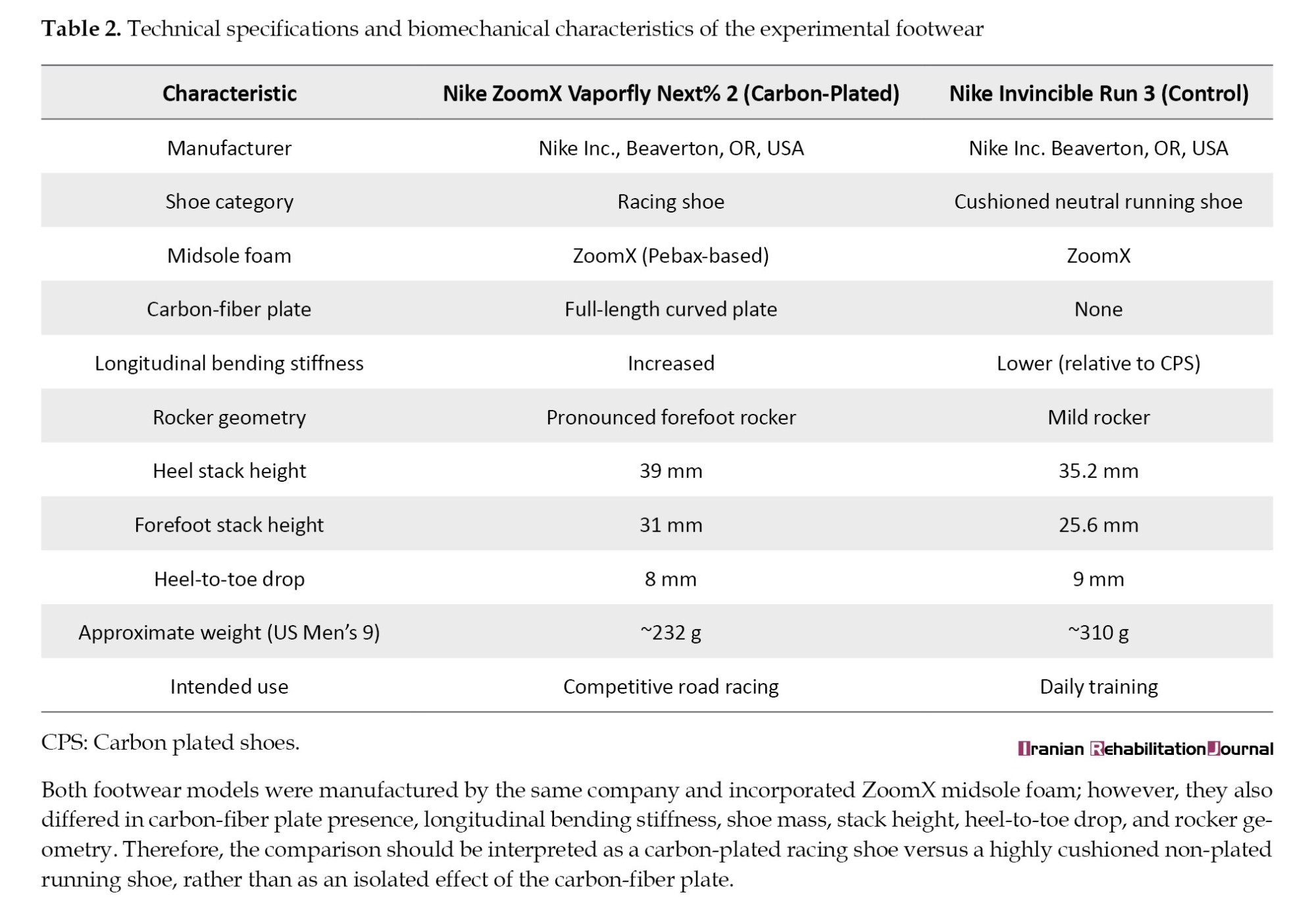
The ATF condition consisted of a Nike ZoomX Vaporfly Next% 2 (Nike Inc., Beaverton, OR, USA) featuring a full-length curved carbon-fiber plate embedded in a Pebax-based ZoomX midsole. The shoe also incorporates a rocker-shaped sole and increased longitudinal bending stiffness, which may modify forefoot mechanics and propulsion during running. Heel and forefoot stack heights were approximately 39 and 31 mm, respectively, with an 8-mm heel-to-toe drop (Figure 2).
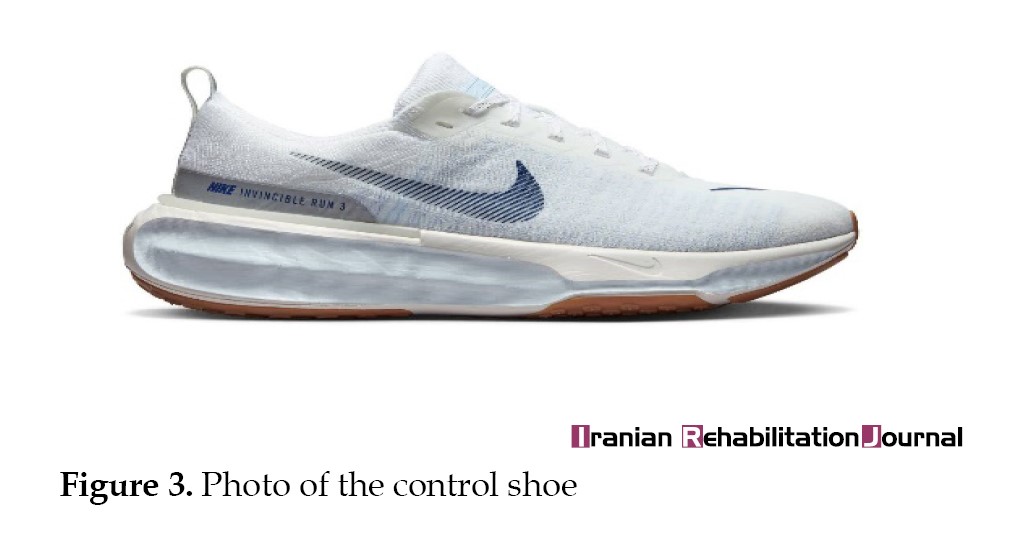
The comparison condition was the Nike Invincible Run 3 (Nike Inc., Beaverton, OR, USA), a highly cushioned neutral daily-training shoe that uses a full-length ZoomX foam midsole but does not contain a carbon-fiber plate. Thus, the two footwear conditions differed in several shoe-level characteristics, including the presence or absence of a full-length carbon-fiber plate, shoe mass, stack height, heel-to-toe drop, rocker geometry, and longitudinal bending stiffness. Accordingly, the present study compared two distinct footwear constructions rather than isolating the effect of the carbon-fiber plate. Therefore, any differences observed between the footwear conditions should be interpreted as responses to the overall biomechanical characteristics of the two shoe constructions and cannot be attributed solely to the carbon-fiber plate (Figure 3).
To minimize footwear-fit effects on neuromuscular measurements, shoe size was individually matched to foot dimensions, with equivalent European sizes (EU 41–42.5) used across both models. Table 2 summarizes the main technical and biomechanically relevant characteristics.
Before testing, footwear was inspected for visible wear or structural defects, and participants completed a standardized 5-min familiarization run on the laboratory runway to become accustomed to the assigned shoe and overground running protocol [24].
Fatigue protocol
Running-induced fatigue was induced using a standardized treadmill protocol while participants wore their assigned footwear. The treadmill (Horizon Fitness, Omega GT, USA) was set at 0% incline and 4.0 m/s, following a brief familiarization period. Perceived exertion was monitored using the Borg 6–20 rating of perceived exertion (RPE) scale [25], with participants reporting RPE at regular intervals. Fatigue was defined as RPE≥17 combined with inability to maintain the prescribed speed despite standardized verbal encouragement. Heart rate (HR) was continuously monitored using a telemetry chest strap (Polar H10, Polar Electro Oy, Kempele, Finland). The average duration to reach the fatigue criterion was 14.8±3.2 minutes. At the cessation of the protocol, the participants attained a mean terminal HR of 184.5±6.8 bpm (corresponding to approximately 94.2±3.1% of their age-predicted maximal HR), objectively confirming high physiological strain alongside the subjective RPE threshold.
Data collection
Testing was conducted under standardized laboratory conditions. Surface EMG was recorded during shod overground running using a wireless system (Biometrics Ltd., Newport, UK) at 1000 Hz. Bipolar Ag/AgCl surface electrodes (11-mm diameter, 25-mm inter-electrode distance) were placed over the selected lower-limb muscle bellies according to standardized recommendations (Table 3).
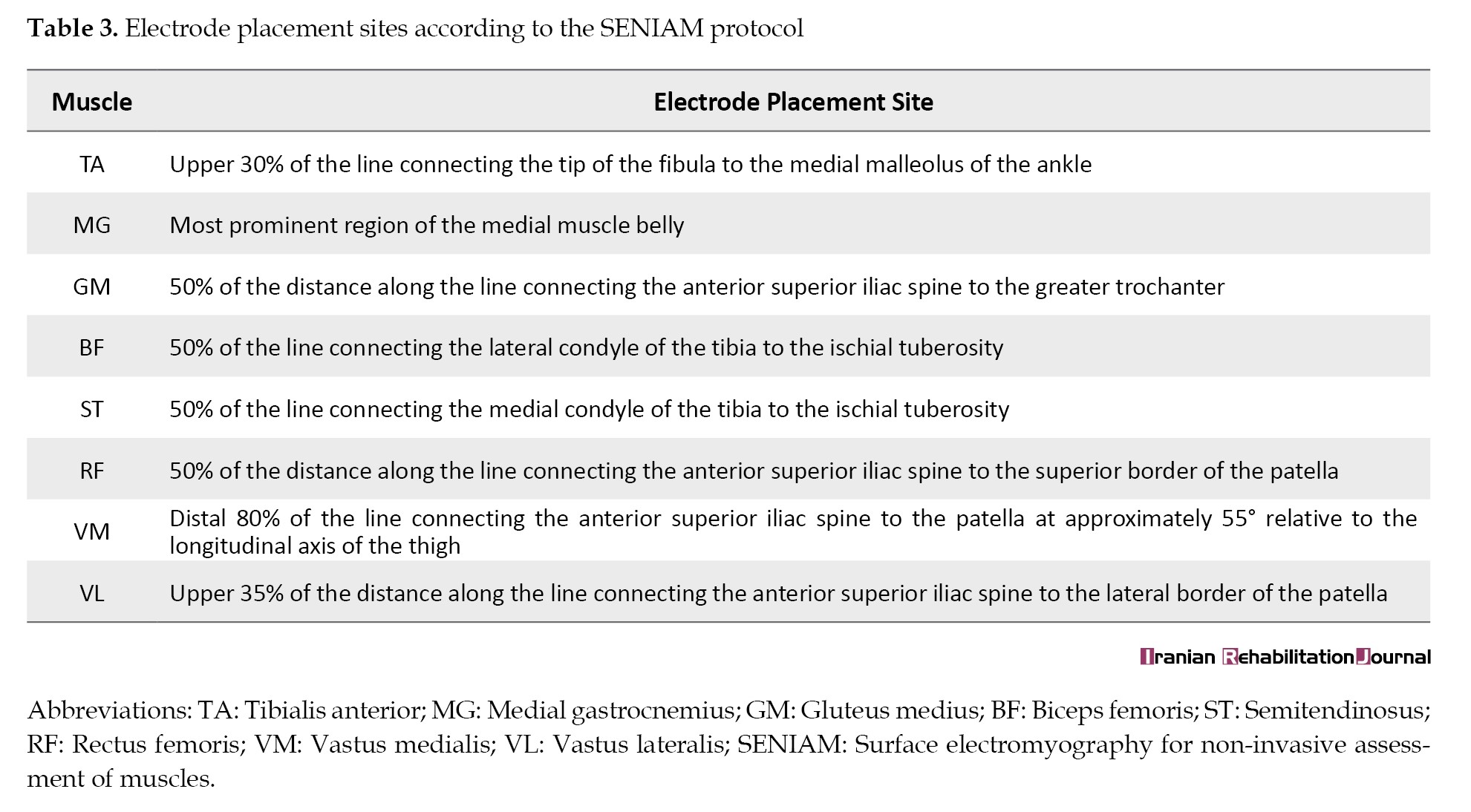
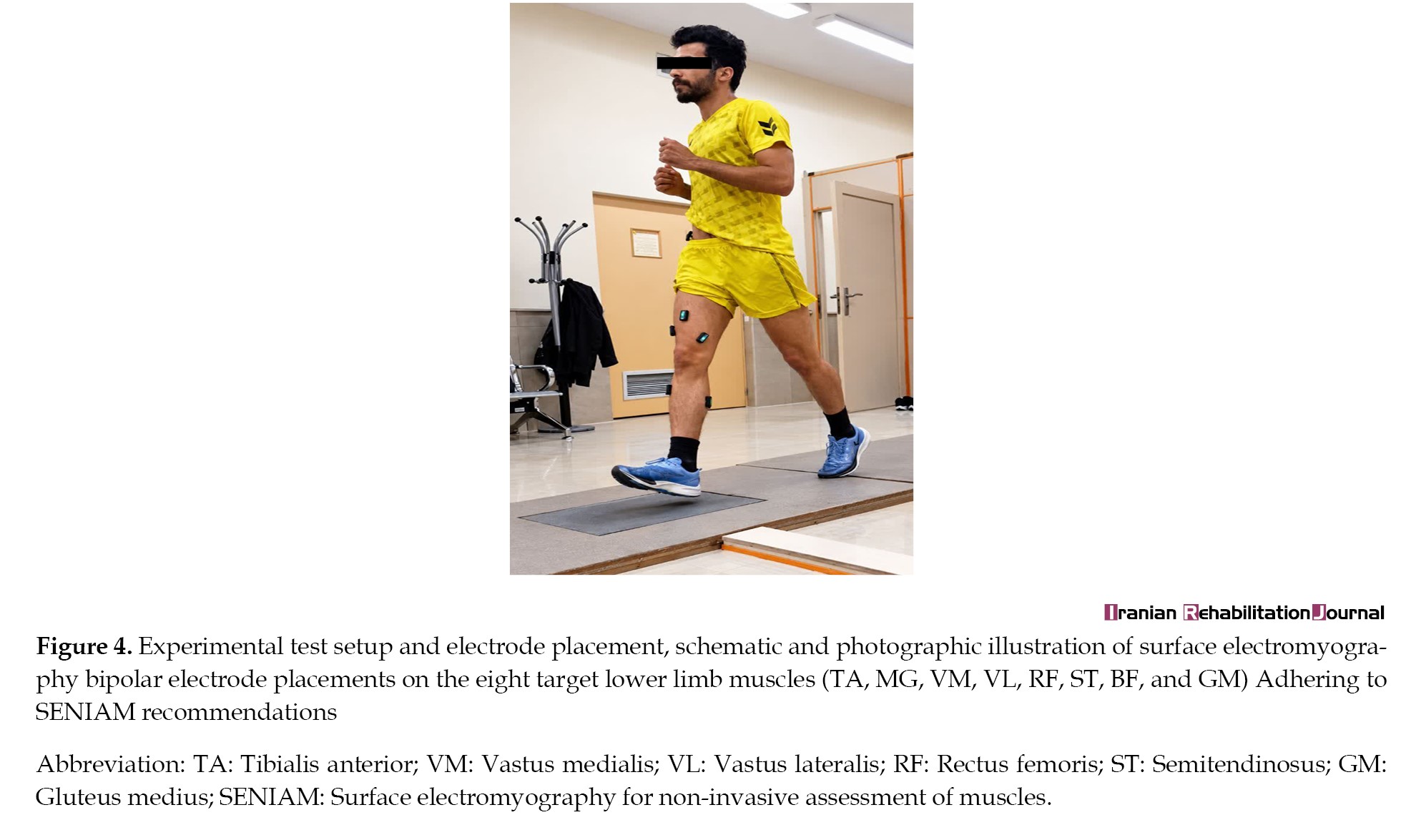
Figure 4 shows the experimental setup, including sEMG electrode placements on the selected lower extremity muscles according to surface EMG for the non-invasive assessment of muscles (SENIAM) guidelines.
Before testing, footwear was inspected for visible wear or structural defects, and participants completed a standardized 5-min familiarization run on the laboratory runway to become accustomed to the assigned shoe and overground running protocol [24].
Fatigue protocol
Running-induced fatigue was induced using a standardized treadmill protocol while participants wore their assigned footwear. The treadmill (Horizon Fitness, Omega GT, USA) was set at 0% incline and 4.0 m/s, following a brief familiarization period. Perceived exertion was monitored using the Borg 6–20 rating of perceived exertion (RPE) scale [25], with participants reporting RPE at regular intervals. Fatigue was defined as RPE≥17 combined with inability to maintain the prescribed speed despite standardized verbal encouragement. Heart rate (HR) was continuously monitored using a telemetry chest strap (Polar H10, Polar Electro Oy, Kempele, Finland). The average duration to reach the fatigue criterion was 14.8±3.2 minutes. At the cessation of the protocol, the participants attained a mean terminal HR of 184.5±6.8 bpm (corresponding to approximately 94.2±3.1% of their age-predicted maximal HR), objectively confirming high physiological strain alongside the subjective RPE threshold.
Data collection
Testing was conducted under standardized laboratory conditions. Surface EMG was recorded during shod overground running using a wireless system (Biometrics Ltd., Newport, UK) at 1000 Hz. Bipolar Ag/AgCl surface electrodes (11-mm diameter, 25-mm inter-electrode distance) were placed over the selected lower-limb muscle bellies according to standardized recommendations (Table 3).
Figure 4 shows the experimental setup, including sEMG electrode placements on the selected lower extremity muscles according to surface EMG for the non-invasive assessment of muscles (SENIAM) guidelines.
The participants performed running trials along an 18-m runway while wearing their assigned footwear. Running speed was standardized at 4.5 m/s and was monitored by timing each participant over the 18-m runway; running speed was calculated by dividing the runway distance by the recorded time. Because running speed can influence lower-limb kinematics and kinetics, standardized speed across footwear conditions was used to minimize speed-related variability and ensure that observed differences were examined under the same running-speed condition. Trials were accepted when running speed remained within ±5% of the target, and three valid trials were collected for both pre- and post-fatigue conditions.
Outcome variables
The primary outcome variable was the MNF of the surface EMG signals during the push-off phase of running, calculated from the EMG power spectrum for eight muscles of the dominant lower limb: Vastus medialis (VM), VL, RF, BF, semitendinosus (ST), MG, TA, and gluteus medius (GM). Raw sEMG signals were bandpass filtered using a zero-lag fourth-order Butterworth filter at 20–450 Hz to eliminate motion artifacts and high-frequency noise. The push-off phase was operationalized as the terminal 40% of the stance phase (60–100% of stance duration, immediately prior to toe-off) identified via synchronized vertical ground reaction force from the force plate. The EMG power spectrum and MNF were derived using a FFT with a 256-ms Hamming window and 50% overlap [26, 27]. For each participant and testing condition (pre-fatigue and post-fatigue), MNF values were obtained from three valid running trials and averaged for statistical analysis.
Statistical analysis
The distribution of all outcome variables was assessed using the Shapiro–Wilk test, and no significant departures from normality were observed (P>0.05). To examine the effects of footwear and fatigue on EMG-MNF, a two-way mixed repeated-measures ANOVA was performed for each analyzed muscle. Footwear condition (ATF vs non-plated cushioned footwear) was treated as the between-subjects factor, whereas fatigue condition (pre-fatigue vs post-fatigue) was considered the within-subjects factor. Equality of variances between groups was checked using Levene’s test. When significant main effects or interaction effects were identified, Bonferroni-adjusted pairwise comparisons were applied to determine the locations of differences. The magnitude of ANOVA effects was expressed as partial eta squared (η²p), and Cohen’s d was calculated for pairwise comparisons to facilitate interpretation of effect magnitude. Partial eta squared values of 0.01, 0.06, and 0.14 were interpreted as small, medium, and large effects, respectively [28]. The Bonferroni-adjusted significance threshold was 0.05/8=0.0062. Statistical analyses were conducted using SPSS software, version 26.0 (IBM Corp., Armonk, NY, USA).
Results
No significant between-group differences were observed at baseline for age, body mass, height, body mass index, or FPI-6 scores (all P>0.05), confirming successful randomization and baseline homogeneity between the two footwear groups. The mixed-design ANOVA revealed significant between-group main effects for the VM (P<0.001, η²p=0.291, large effect size), VL (P<0.001, η²p=0.220, large effect size), and biceps femoris (BF) (P<0.001, η²p=0.251, large effect size) (Table 4).
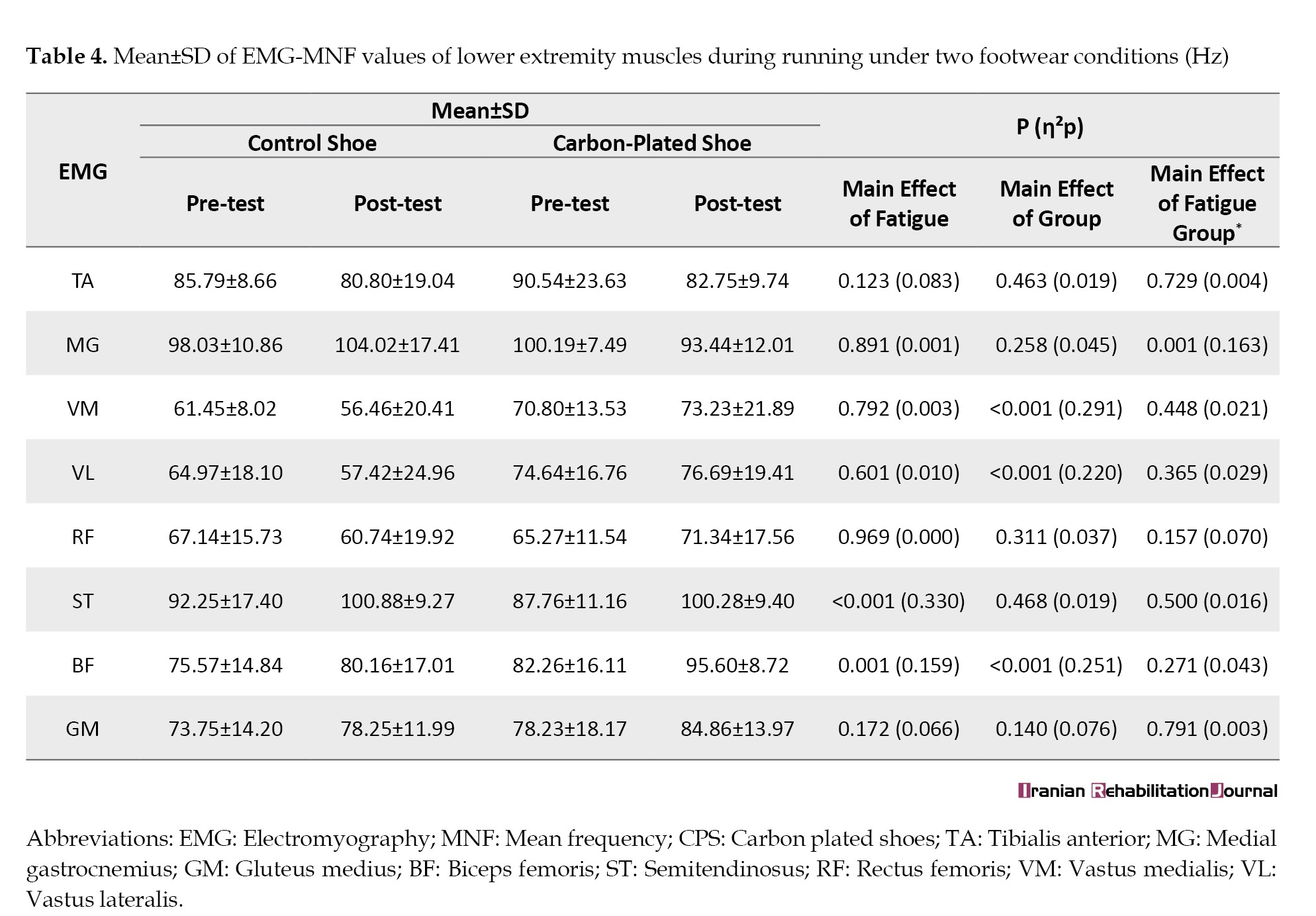
Pairwise comparisons demonstrated that the carbon-plated footwear group exhibited significantly higher overall push-off MNF values compared with the non-plated cushioned footwear group for the VM (mean difference=13.06 Hz, P<0.001) and the VL (mean difference=14.47 Hz, P<0.001). Similarly, overall BF MNF was significantly greater in the carbon-plated footwear group than in the non-plated cushioned footwear group (mean difference=11.07 Hz, P<0.001).
Regarding the main effect of running-induced fatigue, significant differences were observed for the ST (P<0.001, η²p=0.330, large effect size) and BF (P=0.001, η²p=0.159, large effect size) (Table 4). Pairwise comparisons showed that the fatigue protocol significantly increased ST MNF from pre- to post-fatigue conditions, with post-fatigue values exceeding pre-fatigue values by an average of 10.58 Hz (P<0.001). Fatigue also significantly increased BF MNF, with post-fatigue values being 8.96 Hz greater than pre-fatigue baseline values (P<0.001). No significant main effects of fatigue were detected for the TA (P=0.123, η²p=0.083), MG (P=0.891, η²p=0.001), VM (P=0.792, η²p=0.003), VL (P=0.601, η²p=0.010), RF (P = 0.969, η²p=0.000), and GM (P=0.172, η²p=0.066).
A significant footwear group×fatigue interaction was observed exclusively for the MG (P=0.001, η²p=0.163, large effect size) (Table 4). Subsequent post-hoc simple main effects analysis (with Bonferroni adjustment) revealed that within the carbon-plated footwear group, the pre-to-post decrease in MG MNF (100.19±7.49 Hz to 93.44±12.01 Hz) reached statistical significance (P=0.038), whereas the increase observed in the non-plated cushioned footwear group (98.03±10.86 Hz to 104.02±17.41 Hz) did not reach statistical significance (P=0.086). Furthermore, between-group comparisons showed no significant differences at pre-fatigue baseline (P=0.609) or at post-fatigue (P=0.088), confirming that the observed significance was primarily driven by the crossover interaction effect and the selective decrease within the carbon-plated group. No significant footwear group×fatigue interactions were observed for the TA (P=0.729, η²p=0.004), VM (P=0.448, η²p=0.021), VL (P=0.365, η²p=0.029), RF (P=0.157, η²p=0.070), ST (P=0.500, η²p=0.016), BF (P=0.271, η²p=0.043), or GM (P=0.791, η²p=0.003).
Decomposition of the significant interaction for MG: Pre-to-post change in the carbon-plated shoe group: Mean difference=-6.75 Hz (95% confidence interval [CI], -13.12%, -0.38%, P=0.038); Pre-to-post change in the control shoe group: Mean difference=+5.99 Hz (95% CI, -0.85%, 12.83%, P=0.086). Between-group difference at post-test: Mean difference=-10.58 Hz (95% CI, -22.80%, 1.64%, P=0.088). *P<0.05.
Discussion
The main findings were that the carbon-plated shoe was associated with higher push-off MNF in the VM, VL, and BF; fatigue increased ST and BF-MNF; and a significant footwear×fatigue interaction was observed only for the MG, with opposite post-fatigue changes between footwear conditions. The higher quadriceps and BF-MNF observed in the carbon-plated condition is biomechanically plausible, although the underlying mechanisms cannot be directly confirmed. The tested carbon-plated footwear model likely differed from the non-plated cushioned footwear model in longitudinal bending stiffness, rocker geometry, mass, and forefoot mechanics, which may have contributed to the observed differences in neuromuscular demands during late stance [29, 30]. In runners with pronated feet, these footwear-related mechanical differences may also be associated with altered knee and hip stabilization demands during push-off. Importantly, MNF reflects the spectral organization of muscle activity and neuromuscular function rather than providing a direct measure of muscle fiber type or motor-unit recruitment alone [31, 32].
Consistent with previous literature [33-35], our findings indicate that carbon-plated footwear modulates neuromuscular demands. Unlike prior studies often focused on EMG amplitude [11, 34], we observed significant footwear effects on push-off MNF specifically in the VM, VL, and BF, whereas the TA and MG remained unaffected. Differences in participant characteristics, including the presence of a PF posture in the present sample, may also have contributed to the different findings.
With respect to fatigue, MNF increased significantly following the fatigue protocol in the ST and BF, whereas no significant main effect of fatigue was observed for the quadriceps, TA, MG, or GM. This finding differs from the spectral slowing commonly reported during prolonged or exhaustive exercise, in which a reduction in EMG spectral frequency has frequently been interpreted as a consequence of fatigue-related changes in neuromuscular function [15-18, 31, 36]. One possible explanation is that the present post-fatigue measurement represented a task-specific neuromuscular response during a brief push-off phase immediately following treadmill running to the predefined fatigue criterion, rather than the sustained contraction conditions commonly used in fatigue studies. The mechanical and temporal demands of push-off may require rapid modulation of motor-unit activity to maintain lower-limb stability and propulsion after fatigue.
The increase in MNF may potentially reflect changes in motor-unit recruitment, discharge behavior, and action-potential conduction properties. The recruitment of higher-threshold motor units can contribute to changes in EMG spectral characteristics, partly because larger motor units generally have higher conduction velocities [37, 38]. Fatigue may also alter motor-unit recruitment and discharge strategies as the neuromuscular system attempts to maintain force production despite changes in the force-generating capacity of active motor units [38, 39]. However, MNF derived from conventional surface EMG is influenced by multiple physiological and methodological factors and cannot be considered a specific marker of motor-unit recruitment or muscle-fiber type [37, 40]. Therefore, the present increase in MNF should not be interpreted as direct evidence of selective recruitment of fast-twitch motor units.
Motor-unit synchronization may provide an additional consideration when interpreting fatigue-related changes in MNF. Experimental studies have shown that fatigue can increase synchronization or coherence among simultaneously active motor units [39], while greater synchronization has generally been associated with increased low-frequency spectral content [40]. Consequently, increased synchronization alone would not be expected to explain the increase in MNF observed in the present study. Rather, the observed increase may represent the combined influence of changes in motor-unit recruitment, discharge characteristics, synchronization, and action-potential conduction properties. Because the present study used conventional bipolar surface EMG rather than motor-unit decomposition techniques, the relative contribution of these mechanisms cannot be distinguished. Accordingly, the increased MNF observed in the ST and BF should be interpreted as a protocol-specific change in the frequency-domain characteristics of muscle activity following running-induced fatigue, rather than as evidence that fatigue universally increases MNF. The only significant interaction occurred in the MG, whose MNF increased after fatigue in the non-plated shoe but decreased in the carbon-plated shoe. This finding suggests that footwear construction may influence plantar-flexor spectral responses to fatigue. Differences in plate, rocker, and midsole construction may have altered forefoot bending behavior and terminal-stance mechanics, thereby changing the role of the MG under fatigued conditions [6, 29, 35]. Because similar interactions have not been consistently reported, this finding should be interpreted cautiously and not as evidence of superiority or injury protection [6, 16].
This study has several limitations. The controlled laboratory setting and relatively small sample of recreational male runners with pronated feet limit generalizability to women, elite runners, and neutral-foot populations. The two footwear models differed in several characteristics beyond the presence of a carbon plate; therefore, the findings represent comparisons between footwear constructions rather than isolated carbon-plate effects. No kinematic, plantar-pressure, or internal loading measurements were obtained; therefore, the proposed biomechanical mechanisms cannot be confirmed directly. Finally, only acute responses before and immediately after fatigue were examined, precluding conclusions regarding long-term adaptations or injury risk.
Conclusion
This study aimed to compare push-off lower-limb EMG-MNF between carbon-plated and non-plated cushioned footwear in recreational male runners with pronated feet before and after running-induced fatigue. Compared with non-plated footwear, carbon-plated footwear was associated with higher push-off EMG-MNF in the VM, VL, and BF. Fatigue was associated with increases in ST and BF MNF, while a significant footwear-by-fatigue interaction was observed only for the MG, indicating different post-fatigue spectral responses between footwear conditions.
Ethical Considerations
Compliance with ethical guidelines
This study was approved by the Ethics Committee of University of Mohaghegh Ardabili, Ardabil, Iran (Code: IR.UMA.REC.1401.081). All procedures involving human participants complied with institutional ethical standards and the 1964 Declaration of Helsinki and its subsequent amendments.
Funding
This research did not receive any specific grants from funding agencies in the public, commercial, or notforprofit sectors.
Authors' contributions
Conceptualization, methodology, supervision, review and editing: Mohsen Barghamadi; Data curation, formal analysis, investigation, writing, original draft: Ladan Barzegarfar and Ebrahim Piri.
Conflict of interest
The authors declared no conflicts of interest.
Acknowledgments
The authors sincerely thank all participants for their voluntary participation.
Outcome variables
The primary outcome variable was the MNF of the surface EMG signals during the push-off phase of running, calculated from the EMG power spectrum for eight muscles of the dominant lower limb: Vastus medialis (VM), VL, RF, BF, semitendinosus (ST), MG, TA, and gluteus medius (GM). Raw sEMG signals were bandpass filtered using a zero-lag fourth-order Butterworth filter at 20–450 Hz to eliminate motion artifacts and high-frequency noise. The push-off phase was operationalized as the terminal 40% of the stance phase (60–100% of stance duration, immediately prior to toe-off) identified via synchronized vertical ground reaction force from the force plate. The EMG power spectrum and MNF were derived using a FFT with a 256-ms Hamming window and 50% overlap [26, 27]. For each participant and testing condition (pre-fatigue and post-fatigue), MNF values were obtained from three valid running trials and averaged for statistical analysis.
Statistical analysis
The distribution of all outcome variables was assessed using the Shapiro–Wilk test, and no significant departures from normality were observed (P>0.05). To examine the effects of footwear and fatigue on EMG-MNF, a two-way mixed repeated-measures ANOVA was performed for each analyzed muscle. Footwear condition (ATF vs non-plated cushioned footwear) was treated as the between-subjects factor, whereas fatigue condition (pre-fatigue vs post-fatigue) was considered the within-subjects factor. Equality of variances between groups was checked using Levene’s test. When significant main effects or interaction effects were identified, Bonferroni-adjusted pairwise comparisons were applied to determine the locations of differences. The magnitude of ANOVA effects was expressed as partial eta squared (η²p), and Cohen’s d was calculated for pairwise comparisons to facilitate interpretation of effect magnitude. Partial eta squared values of 0.01, 0.06, and 0.14 were interpreted as small, medium, and large effects, respectively [28]. The Bonferroni-adjusted significance threshold was 0.05/8=0.0062. Statistical analyses were conducted using SPSS software, version 26.0 (IBM Corp., Armonk, NY, USA).
Results
No significant between-group differences were observed at baseline for age, body mass, height, body mass index, or FPI-6 scores (all P>0.05), confirming successful randomization and baseline homogeneity between the two footwear groups. The mixed-design ANOVA revealed significant between-group main effects for the VM (P<0.001, η²p=0.291, large effect size), VL (P<0.001, η²p=0.220, large effect size), and biceps femoris (BF) (P<0.001, η²p=0.251, large effect size) (Table 4).
Pairwise comparisons demonstrated that the carbon-plated footwear group exhibited significantly higher overall push-off MNF values compared with the non-plated cushioned footwear group for the VM (mean difference=13.06 Hz, P<0.001) and the VL (mean difference=14.47 Hz, P<0.001). Similarly, overall BF MNF was significantly greater in the carbon-plated footwear group than in the non-plated cushioned footwear group (mean difference=11.07 Hz, P<0.001).
Regarding the main effect of running-induced fatigue, significant differences were observed for the ST (P<0.001, η²p=0.330, large effect size) and BF (P=0.001, η²p=0.159, large effect size) (Table 4). Pairwise comparisons showed that the fatigue protocol significantly increased ST MNF from pre- to post-fatigue conditions, with post-fatigue values exceeding pre-fatigue values by an average of 10.58 Hz (P<0.001). Fatigue also significantly increased BF MNF, with post-fatigue values being 8.96 Hz greater than pre-fatigue baseline values (P<0.001). No significant main effects of fatigue were detected for the TA (P=0.123, η²p=0.083), MG (P=0.891, η²p=0.001), VM (P=0.792, η²p=0.003), VL (P=0.601, η²p=0.010), RF (P = 0.969, η²p=0.000), and GM (P=0.172, η²p=0.066).
A significant footwear group×fatigue interaction was observed exclusively for the MG (P=0.001, η²p=0.163, large effect size) (Table 4). Subsequent post-hoc simple main effects analysis (with Bonferroni adjustment) revealed that within the carbon-plated footwear group, the pre-to-post decrease in MG MNF (100.19±7.49 Hz to 93.44±12.01 Hz) reached statistical significance (P=0.038), whereas the increase observed in the non-plated cushioned footwear group (98.03±10.86 Hz to 104.02±17.41 Hz) did not reach statistical significance (P=0.086). Furthermore, between-group comparisons showed no significant differences at pre-fatigue baseline (P=0.609) or at post-fatigue (P=0.088), confirming that the observed significance was primarily driven by the crossover interaction effect and the selective decrease within the carbon-plated group. No significant footwear group×fatigue interactions were observed for the TA (P=0.729, η²p=0.004), VM (P=0.448, η²p=0.021), VL (P=0.365, η²p=0.029), RF (P=0.157, η²p=0.070), ST (P=0.500, η²p=0.016), BF (P=0.271, η²p=0.043), or GM (P=0.791, η²p=0.003).
Decomposition of the significant interaction for MG: Pre-to-post change in the carbon-plated shoe group: Mean difference=-6.75 Hz (95% confidence interval [CI], -13.12%, -0.38%, P=0.038); Pre-to-post change in the control shoe group: Mean difference=+5.99 Hz (95% CI, -0.85%, 12.83%, P=0.086). Between-group difference at post-test: Mean difference=-10.58 Hz (95% CI, -22.80%, 1.64%, P=0.088). *P<0.05.
Discussion
The main findings were that the carbon-plated shoe was associated with higher push-off MNF in the VM, VL, and BF; fatigue increased ST and BF-MNF; and a significant footwear×fatigue interaction was observed only for the MG, with opposite post-fatigue changes between footwear conditions. The higher quadriceps and BF-MNF observed in the carbon-plated condition is biomechanically plausible, although the underlying mechanisms cannot be directly confirmed. The tested carbon-plated footwear model likely differed from the non-plated cushioned footwear model in longitudinal bending stiffness, rocker geometry, mass, and forefoot mechanics, which may have contributed to the observed differences in neuromuscular demands during late stance [29, 30]. In runners with pronated feet, these footwear-related mechanical differences may also be associated with altered knee and hip stabilization demands during push-off. Importantly, MNF reflects the spectral organization of muscle activity and neuromuscular function rather than providing a direct measure of muscle fiber type or motor-unit recruitment alone [31, 32].
Consistent with previous literature [33-35], our findings indicate that carbon-plated footwear modulates neuromuscular demands. Unlike prior studies often focused on EMG amplitude [11, 34], we observed significant footwear effects on push-off MNF specifically in the VM, VL, and BF, whereas the TA and MG remained unaffected. Differences in participant characteristics, including the presence of a PF posture in the present sample, may also have contributed to the different findings.
With respect to fatigue, MNF increased significantly following the fatigue protocol in the ST and BF, whereas no significant main effect of fatigue was observed for the quadriceps, TA, MG, or GM. This finding differs from the spectral slowing commonly reported during prolonged or exhaustive exercise, in which a reduction in EMG spectral frequency has frequently been interpreted as a consequence of fatigue-related changes in neuromuscular function [15-18, 31, 36]. One possible explanation is that the present post-fatigue measurement represented a task-specific neuromuscular response during a brief push-off phase immediately following treadmill running to the predefined fatigue criterion, rather than the sustained contraction conditions commonly used in fatigue studies. The mechanical and temporal demands of push-off may require rapid modulation of motor-unit activity to maintain lower-limb stability and propulsion after fatigue.
The increase in MNF may potentially reflect changes in motor-unit recruitment, discharge behavior, and action-potential conduction properties. The recruitment of higher-threshold motor units can contribute to changes in EMG spectral characteristics, partly because larger motor units generally have higher conduction velocities [37, 38]. Fatigue may also alter motor-unit recruitment and discharge strategies as the neuromuscular system attempts to maintain force production despite changes in the force-generating capacity of active motor units [38, 39]. However, MNF derived from conventional surface EMG is influenced by multiple physiological and methodological factors and cannot be considered a specific marker of motor-unit recruitment or muscle-fiber type [37, 40]. Therefore, the present increase in MNF should not be interpreted as direct evidence of selective recruitment of fast-twitch motor units.
Motor-unit synchronization may provide an additional consideration when interpreting fatigue-related changes in MNF. Experimental studies have shown that fatigue can increase synchronization or coherence among simultaneously active motor units [39], while greater synchronization has generally been associated with increased low-frequency spectral content [40]. Consequently, increased synchronization alone would not be expected to explain the increase in MNF observed in the present study. Rather, the observed increase may represent the combined influence of changes in motor-unit recruitment, discharge characteristics, synchronization, and action-potential conduction properties. Because the present study used conventional bipolar surface EMG rather than motor-unit decomposition techniques, the relative contribution of these mechanisms cannot be distinguished. Accordingly, the increased MNF observed in the ST and BF should be interpreted as a protocol-specific change in the frequency-domain characteristics of muscle activity following running-induced fatigue, rather than as evidence that fatigue universally increases MNF. The only significant interaction occurred in the MG, whose MNF increased after fatigue in the non-plated shoe but decreased in the carbon-plated shoe. This finding suggests that footwear construction may influence plantar-flexor spectral responses to fatigue. Differences in plate, rocker, and midsole construction may have altered forefoot bending behavior and terminal-stance mechanics, thereby changing the role of the MG under fatigued conditions [6, 29, 35]. Because similar interactions have not been consistently reported, this finding should be interpreted cautiously and not as evidence of superiority or injury protection [6, 16].
This study has several limitations. The controlled laboratory setting and relatively small sample of recreational male runners with pronated feet limit generalizability to women, elite runners, and neutral-foot populations. The two footwear models differed in several characteristics beyond the presence of a carbon plate; therefore, the findings represent comparisons between footwear constructions rather than isolated carbon-plate effects. No kinematic, plantar-pressure, or internal loading measurements were obtained; therefore, the proposed biomechanical mechanisms cannot be confirmed directly. Finally, only acute responses before and immediately after fatigue were examined, precluding conclusions regarding long-term adaptations or injury risk.
Conclusion
This study aimed to compare push-off lower-limb EMG-MNF between carbon-plated and non-plated cushioned footwear in recreational male runners with pronated feet before and after running-induced fatigue. Compared with non-plated footwear, carbon-plated footwear was associated with higher push-off EMG-MNF in the VM, VL, and BF. Fatigue was associated with increases in ST and BF MNF, while a significant footwear-by-fatigue interaction was observed only for the MG, indicating different post-fatigue spectral responses between footwear conditions.
Ethical Considerations
Compliance with ethical guidelines
This study was approved by the Ethics Committee of University of Mohaghegh Ardabili, Ardabil, Iran (Code: IR.UMA.REC.1401.081). All procedures involving human participants complied with institutional ethical standards and the 1964 Declaration of Helsinki and its subsequent amendments.
Funding
This research did not receive any specific grants from funding agencies in the public, commercial, or notforprofit sectors.
Authors' contributions
Conceptualization, methodology, supervision, review and editing: Mohsen Barghamadi; Data curation, formal analysis, investigation, writing, original draft: Ladan Barzegarfar and Ebrahim Piri.
Conflict of interest
The authors declared no conflicts of interest.
Acknowledgments
The authors sincerely thank all participants for their voluntary participation.
Reference
- Zhang X, Aeles J, Vanwanseele B. Comparison of foot muscle morphology and foot kinematics between recreational runners with normal feet and with asymptomatic over-pronated feet. Gait & posture. 2017; 54:290-4. [DOI:10.1016/j.gaitpost.2017.03.030] [PMID]
- Mousavi SH, Khorramroo F, Jafarnezhadgero A. Gait retraining targeting foot pronation: A systematic review and meta-analysis. Plos One. 2024; 19(3):e0298646. [DOI:10.1371/journal.pone.0298646] [PMID] [PMCID]
- Flores N, Morio CY-M. Which pronator are you? New perspectives from an unsupervised clustering approach in running. Frontiers in Sports and Active Living. 2025; 7:1682315. [DOI:10.3389/fspor.2025.1682315] [PMID] [PMCID]
- Mei Q, Gu Y, Xiang L, Baker JS, Fernandez J. Foot pronation contributes to altered lower extremity loading after long distance running. Frontiers in physiology. 2019; 10:573. [DOI:10.3389/fphys.2019.00573] [PMID] [PMCID]
- Novacheck TF. The biomechanics of running. Gait & Posture. 1998; 7(1):77-95. [DOI:10.1016/S0966-6362(97)00038-6] [PMID]
- Xu Y, Zhu C, Fang Y, Lu Z, Song Y, Hu C, et al. The effects of different carbon-fiber plate shapes in shoes on lower limb biomechanics following running-induced fatigue. Frontiers in Bioengineering and Biotechnology. 2025; 13:1539976. [DOI:10.3389/fbioe.2025.1539976] [PMID] [PMCID]
- Fasihi L, Siahkouhian M, Jafarnezhadgero A, Fasihi A. The effect of fatigue induced by running at heart rate deflection point in people with pronated versus healthy feet. Communications Medicine. 2025; 5(1):471. [DOI:10.1038/s43856-025-01176-z] [PMID] [PMCID]
- Jafarnezhadgero A, Fatollahi A, Sheykholeslami A, Dionisio VC, Akrami M. Long-term training on sand changes lower limb muscle activities during running in runners with over-pronated feet. Biomedical Engineering Online. 2021; 20(1):118. [DOI:10.1186/s12938-021-00955-8] [PMID] [PMCID]
- Piri E, Sobhani V, Jafarnezhadgero A, Arabzadeh E, Shamsoddini A, Zago M, et al. Effect of double-density foot orthoses on ground reaction forces and lower limb muscle activities during running in adults with and without pronated feet. BMC Sports Science, Medicine and Rehabilitation. 2025; 17(1):54. [DOI:10.1186/s13102-025-01095-5] [PMID] [PMCID]
- Hoogkamer W, Kipp S, Frank JH, Farina EM, Luo G, Kram R. A comparison of the energetic cost of running in marathon racing shoes. Sports Medicine. 2018; 48(4):1009-19. [DOI:10.1007/s40279-017-0811-2] [PMID]
- Hata K, Hamamura Y, Noro H, Yamazaki Y, Nagato S, Kanosue K, et al. Plantar flexor muscle activity and fascicle behavior in gastrocnemius Medialis during running in highly cushioned shoes with carbon-fiber plates. Journal of Applied Biomechanics. 2024; 40(3):192-200. [DOI:10.1123/jab.2023-0170] [PMID]
- Reynolds SR, Hastert LM, Nodland NM, Matthews IR, Wilkins BW, Gidley AD. The effect of carbon fiber plated shoes on submaximal running mechanics in non-elite runners. Footwear Science. 2023; 15(3):171-7. [DOI:10.1080/19424280.2023.2218316]
- Mousavi SH, van Kouwenhove L, Rajabi R, Zwerver J, Hijmans JM. The effect of changing foot progression angle using real-time visual feedback on rearfoot eversion during running. PloS One. 2021; 16(2):e0246425. [DOI:10.1371/journal.pone.0246425] [PMID] [PMCID]
- Chan CK, Timothy GF, Yeow CH. Comparison of mean frequency and median frequency in evaluating muscle fiber type selection in varying gait speed across healthy young adult individuals. Annual International Conference of the IEEE Engineering in Medicine and Biology Society. 2016; 2016:1725-8. [DOI:10.1109/EMBC.2016.7591049] [PMID]
- Chalitsios C, Mylonas V, Stergiou N, Nikodelis T. Stride‐to‐stride fluctuations and temporal patterns of muscle activity exhibit a stronger relationship in running‐induced fatigue. Scandinavian Journal of Medicine & Science in Sports. 2026; 36(2):e70223. [DOI:10.1111/sms.70223] [PMID] [PMCID]
- Apte S, Prigent G, Stöggl T, Martínez A, Snyder C, Gremeaux-Bader V, et al. Biomechanical response of the lower extremity to running-induced acute fatigue: A systematic review. Frontiers in Physiology. 2021; 12:646042. [DOI:10.3389/fphys.2021.646042] [PMID] [PMCID]
- Bergstrom HC, Housh TJ, Dinyer TK, Byrd MT, Jenkins ND, Cochrane-Snyman KC, et al. Neuromuscular responses of the superficial quadriceps femoris muscles: Muscle specific fatigue and inter-individual variability during severe intensity treadmill running. Journal of Musculoskeletal & Neuronal Interactions. 2020; 20(1):77. [PMID]
- Honert EC, Ostermair F, von Tscharner V, Nigg BM. Changes in ankle work, foot work, and tibialis anterior activation throughout a long run. Journal of Sport and Health Science. 2022; 11(3):330-8. [DOI:10.1016/j.jshs.2021.02.003] [PMID] [PMCID]
- Shimotashiro Y, Shinya M. Quantification in shooting precision for preferred and non-preferred foot in college soccer players using the 95% equal confidence ellipse. Frontiers in Sports and Active Living. 2024; 6:1434096. [DOI:10.3389/fspor.2024.1434096] [PMID] [PMCID]
- Evans AM, Copper AW, Scharfbillig RW, Scutter SD, Williams MT. Reliability of the foot posture index and traditional measures of foot position. Journal of the American Podiatric Medical Association. 2003; 93(3):203-13. [DOI:10.7547/87507315-93-3-203] [PMID]
- Keenan M, Peabody T, Gronley J, Perry J. Valgus deformities of the feet and characteristics of gait in patients who have rheumatoid arthritis. Journal of Bone and Joint Surgery. 1991; 73(2):237-47. [DOI:10.2106/00004623-199173020-00012]
- Redmond AC, Crosbie J, Ouvrier RA. Development and validation of a novel rating system for scoring standing foot posture: The foot posture index. Clinical Biomechanics. 2006; 21(1):89-98. [DOI:10.1016/j.clinbiomech.2005.08.002] [PMID]
- Shih YF, Chen CY, Chen WY, Lin HC. Lower extremity kinematics in children with and without flexible flatfoot: A comparative study. BMC Musculoskeletal Disorders. 2012; 13(1):31. [DOI:10.1186/1471-2474-13-31] [PMID] [PMCID]
- Lavcanska V, Taylor NF, Schache AG. Familiarization to treadmill running in young unimpaired adults. Human Movement Science. 2005; 24(4):544-57. [DOI:10.1016/j.humov.2005.08.001] [PMID]
- Borg G. Borg’s perceived exertion and pain scales. Champaign: Human kinetics; 1998. [Link]
- De Luca CJ, Gilmore LD, Kuznetsov M, Roy SH. Filtering the surface EMG signal: Movement artifact and baseline noise contamination. Journal of Biomechanics. 2010; 43(8):1573-9. [DOI:10.1016/j.jbiomech.2010.01.027] [PMID]
- Phinyomark A, Thongpanja S, Hu H, Phukpattaranont P, Limsakul C. The usefulness of mean and median frequencies in electromyography analysis. In: Naik GR, editors. Computational intelligence in electromyography analysis: A perspective on current applications and future challenges. London: IntechOpen; 2012. [Link]
- Cohen J. Statistical power analysis. Current Directions in Psychological Science. 1992; 1(3):98-101. [DOI:10.1111/1467-8721.ep10768783]
- Ortega JA, Healey LA, Swinnen W, Hoogkamer W. Energetics and biomechanics of running footwear with increased longitudinal bending stiffness: A narrative review. Sports Medicine. 2021; 51(5):873-94. [DOI:10.1007/s40279-020-01406-5] [PMID]
- Giachetti Martin S, Kobayashi EN, Amaral Coelho de Azevedo L, Bonini Vieira Campanhã D, Escudeiro de Oliveira D, et al. Carbon plates in running shoes biomechanics: systematic review and meta-analysis. Frontiers in Sports and Active Living. 2026; 8:1764338. [DOI:10.3389/fspor.2026.1764338] [PMID] [PMCID]
- Gonzalez-Izal M, Malanda A, Navarro-Amézqueta I, Gorostiaga E, Mallor F, Ibanez J, et al. EMG spectral indices and muscle power fatigue during dynamic contractions. Journal of Electromyography and Kinesiology. 2010; 20(2):233-40. [DOI:10.1016/j.jelekin.2009.03.011] [PMID]
- Corvini G, Conforto S. A simulation study to assess the factors of influence on mean and median frequency of sEMG signals during muscle fatigue. Sensors. 2022; 22(17):6360. [DOI:10.3390/s22176360] [PMID] [PMCID]
- Chen H, Shao E, Sun D, Xuan R, Baker JS, Gu Y. Effects of footwear with different longitudinal bending stiffness on biomechanical characteristics and muscular mechanics of lower limbs in adolescent runners. Frontiers in Physiology. 2022; 13:907016. [DOI:10.3389/fphys.2022.907016] [PMID] [PMCID]
- Ghanbari A, Fletcher JR, Bradshaw A, Nigg BM. Effects of the curved carbon fibre plate and PEBA foam on the energy cost of running and muscle activation. Footwear Science. 2025; 17(2):107-16. [DOI:10.1080/19424280.2025.2471420]
- Čigoja S. Shoe bending stiffness and muscle-tendon unit function in running [doctoral dissertation]. Calgary: University of Calgary; 2021. [Link]
- Willer J, Allen SJ, Burden RJ, Folland JP. Neuromechanics of middle-distance running fatigue: A key role of the plantarflexors? Medicine & Science in Sports & Exercise. 2021; 53(10):2119-30. [DOI:10.1249/MSS.0000000000002695] [PMID]
- Del Vecchio A, Negro F, Felici F, Farina D. Associations between motor unit action potential parameters and surface EMG features. Journal of Applied Physiology. 2017; 123(4):835-43. [DOI:10.1152/japplphysiol.00482.2017] [PMID]
- Solomonow M, Baten C, Smit J, Baratta R, Hermens H, D’Ambrosia R, et al. Electromyogram power spectra frequencies associated with motor unit recruitment strategies. Journal of Applied Physiology. 1990; 68(3):1177-85. [DOI:10.1152/jappl.1990.68.3.1177] [PMID]
- McManus L, Hu X, Rymer WZ, Lowery MM, Suresh NL. Changes in motor unit behavior following isometric fatigue of the first dorsal interosseous muscle. Journal of Neurophysiology. 2015; 113(9):3186-96. [DOI:10.1152/jn.00146.2015] [PMID] [PMCID]
- McManus L, Hu X, Rymer WZ, Suresh NL, Lowery MM. Muscle fatigue increases beta-band coherence between the firing times of simultaneously active motor units in the first dorsal interosseous muscle. Journal of Neurophysiology. 2016; 115(6):2830-9. [DOI:10.1152/jn.00097.2016] [PMID]
Article type: Original Research Articles |
Subject:
Rehabilitation
Received: 2026/08/11 | Accepted: 2026/09/27 | Published: 2026/09/13
Received: 2026/08/11 | Accepted: 2026/09/27 | Published: 2026/09/13
Send email to the article author

Copyright © The Author(s);
This is an open access article distributed under the terms of the Creative Commons Attribution-NonCommercial 4.0 (CC-By-NC 4.0), which permits use, distribution, and reproduction in any medium, provided the original work is properly cited and is not used for commercial purposes.
Contact Information
